

This morning, the Labor Department released figures of hiring and unemployment for the month of September. In line with economists’ expectation that the report would reflect a relatively low rate of wage gains and a considerable public sector jobs gap, the New York Times stated that the official figures reflect a decrease in wages for private sector employees and a significant shortage of newly created jobs. The mere 136,000 jobs created by the economy fall well short of the 173,000 that were originally predicted.
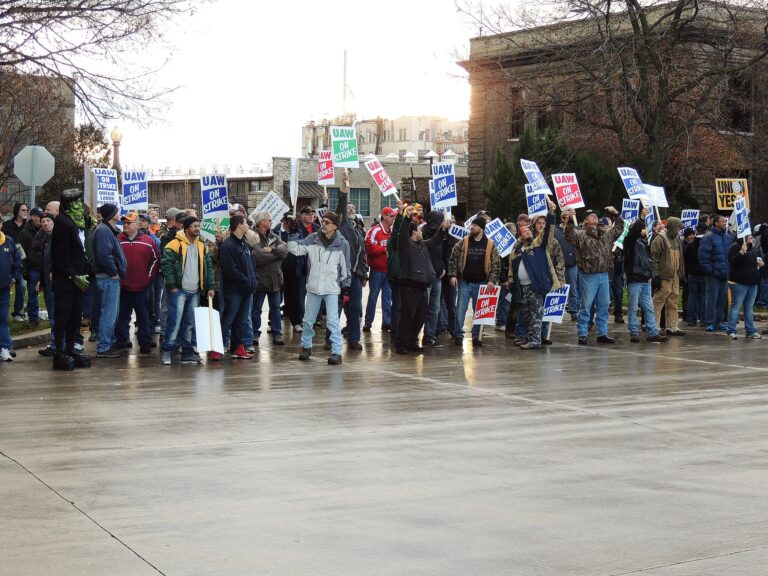
Consistent with earlier speculation that Fiat Chrysler’s recently-announced pact with the United Auto Workers Union (UAW) may be in danger, USA Today confirmed yesterday that the union members voted down the contract proposed by its leaders. Significantly, sixty five percent of the Fiat Chrysler workers voted against the proposed four-year contract, constituting the UAW’s first rejection of a national contract in modern times (unprecedented since 1982). While Fiat Chrysler was quick to issue a statement contemplating its intent to maintain a continuing dialogue with the UAW and work toward an agreement, tensions between UAW workers and plant management remained high on Thursday in the wake of the defeated contract, with many speculating about whether the union would initiate a strike. One union insider confirmed that the union has already made strike preparations at most of its local units.
For now, all eyes remain on the elected union officials who are currently saddled with a tough decision about the most prudent next move for the union—to strike and demand a better deal at the bargaining table, to request that members re-vote on the existing agreement, or to move on to contract talks with Ford or GM. Although union officials conferred at various plants yesterday afternoon to talk through the issues, the Detroit Free Press reported that, at least as of six hours into the meetings, the officials had not announced any decisions or next steps.
In other news, the L.A. Times reports that, despite the emergence of apps and gadgets that have increased companies’ ability to connect with customers directly and revolutionized the way people offer and consumer goods and services, the nation’s productivity remains puzzlingly sluggish. In fact, research suggests that the productivity falloff is actually concentrated in producers of information techniology and dependent industries. Essentially, while the use of apps and gadgets have spurred sweeping changes to the business models of various wholesalers, the resulting output gains petered out after just a few years. Although experts disagree about whether the nation’s disappointing productivity gains are a permanent rather than temporary trend, some speculate that companies will soon seek to achieve growth by investing in labor-saving technologies, such as driverless trucks or the utilization of an Uber-like service for the distribution of goods. This prediction rings especially credible given Amazon.com Inc.’s recent announcement that it will be joining the gig economy and offering businesses a new service—“Amazon Flex,” which can aptly be described as “an Uber-like service for the distribution of goods” utilizing “independent contractors.”




Daily News & Commentary
Start your day with our roundup of the latest labor developments. See all
March 18
Meatpacking workers go on strike; SCOTUS grants cert on TPS cases; updates on litigation over DOL in-house agency adjudication
March 17
West Virginia passes a bill for gig drivers, the Tenth Circuit rejects an engineer's claims of race and age bias, and a discussion on the spread of judicial curtailment of NLRB authority.
March 16
Starbucks' union negotiations are resurrected; jobs data is released.
March 15
A U.S. District Court issues a preliminary injunction against the Department of Veterans Affairs for terminating its collective bargaining agreement, and SEIU files a lawsuit against DHS for effectively terminating immigrant workers at Boston Logan International Airport.
March 13
Republican Senators urge changes on OSHA heat standard; OpenAI and building trades announce partnership on data center construction; forced labor investigations could lead to new tariffs
March 12
EPA terminates contract with second-largest union; Florida advances bill restricting public sector unions; Trump administration seeks Supreme Court assistance in TPS termination.