
Fran Swanson is a student at Harvard Law School.
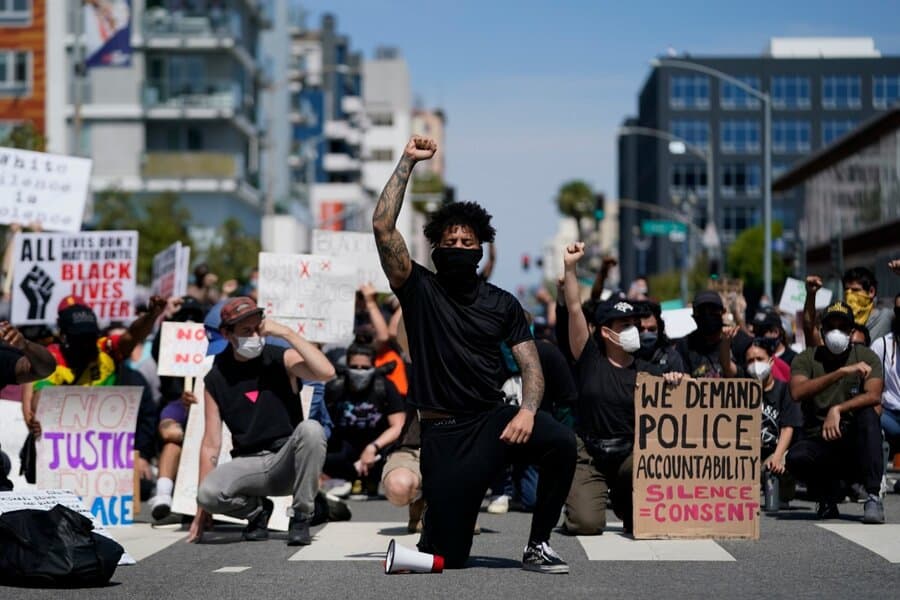
In Los Angeles, union members whose friends and family have been killed by the police are organizing with Black Lives Matter LA against the powerful police union there. The Guardian reports that this includes calling on the Los Angeles County Federation of Labor to eject the Los Angeles Police Protective League (LAPPL) from the umbrella labor organization. Across the country, police unions have negotiated contracts that require departments to erase misconduct allegations, wait days for statements after an officer has killed someone, and conduct abuse investigations in secrecy.
Republican-controlled legislatures are pursuing legislation that would make it much more difficult for ballot initiatives to pass. Though ballot initiatives have been used to advance causes across the political spectrum, they’ve notably led to progressive victories—like increasing the minimum wage and expanding Medicaid—in even deep-red states. The New York Times found that 144 bills to restrict ballot initiatives were introduced across 32 states, with 19 signed into law in 9 states. A new law in South Dakota, for example, mandates both a 14-point font minimum on ballot initiative petitions and that everything (including petition signatures) fits on a single piece of paper. The result? Organizers will have to carry beach-towel-sized petitions.
A union representing workers at Renault-Nissan’s plant in the southern Indian state of Tamil Nadu has called for a strike this Wednesday, Reuters reports. Hyundai Motor employees in the region have already stopped work and are staging a sit-in protest. The region, India’s auto-manufacturing hub, has been devastated by COVID-19. These factories were exempted from a state-wide, mandatory lockdown. Workers allege that Renault-Nissan has flouted health protocols, putting their lives and their families’ lives at risk. A petition before the Madras High Court to halt operations is currently pending.
Finally, Chicago is considering an ordinance that would require hotels to give notice to laid-off employees when jobs become available, with 10 days to consider the offer. In endorsing the “Right to Return to Work” ordinance, the Chicago Sun-Times Editorial Board noted that the Illinois Hotel and Lodging Association opposed the ordinance at the same time its Chicago-area hotels called on the local government to subsidize $75 million in re-opening costs. Several cities have passed similar ordinances for workers in hard-hit industries and Nevada casino workers are pushing for a statewide measure similar to the one already adopted by California. However, as Juan noted in a post earlier this month, such measures do “not eliminate the costs that an at-will employment regime imposes on millions of workers across the country,” particularly the most vulnerable.





Daily News & Commentary
Start your day with our roundup of the latest labor developments. See all
October 18
Federal judge again halts cancellation of the Bureau of Prisons’ CBA; tabletop gaming workers face roadblocks in union recognition.
October 16
Department of Labor reduces wage-and-hour enforcement at unionized workplaces; Fain's victory poses question of federal monitor's extension.
October 15
New reporting examines the rollback of child labor protections; California tries to block a strike; NLRB charges Wisconsin mental health provider with firing workers during union drive.
October 14
Eleventh Circuit overturns ERISA exhaustion rule; DHS finalizes removal of automatic renewal for work permits; AFGE challenges SSA over flexible scheduling policy.
October 13
Chicago hotel workers remain on strike; a coalition of Democratic states sues the Labor Department over canceled unemployment insurance grants; the Federal Labor Relations Authority establishes a new mediation framework for federal worker disputes.
October 12
Workers at the Obama Foundation begin organizing; MLB submits its latest collective bargaining agreement proposal; Brigham & Women's nurses postpone strike.