
Jon Levitan is a student at Harvard Law School and a member of the Labor and Employment Lab.
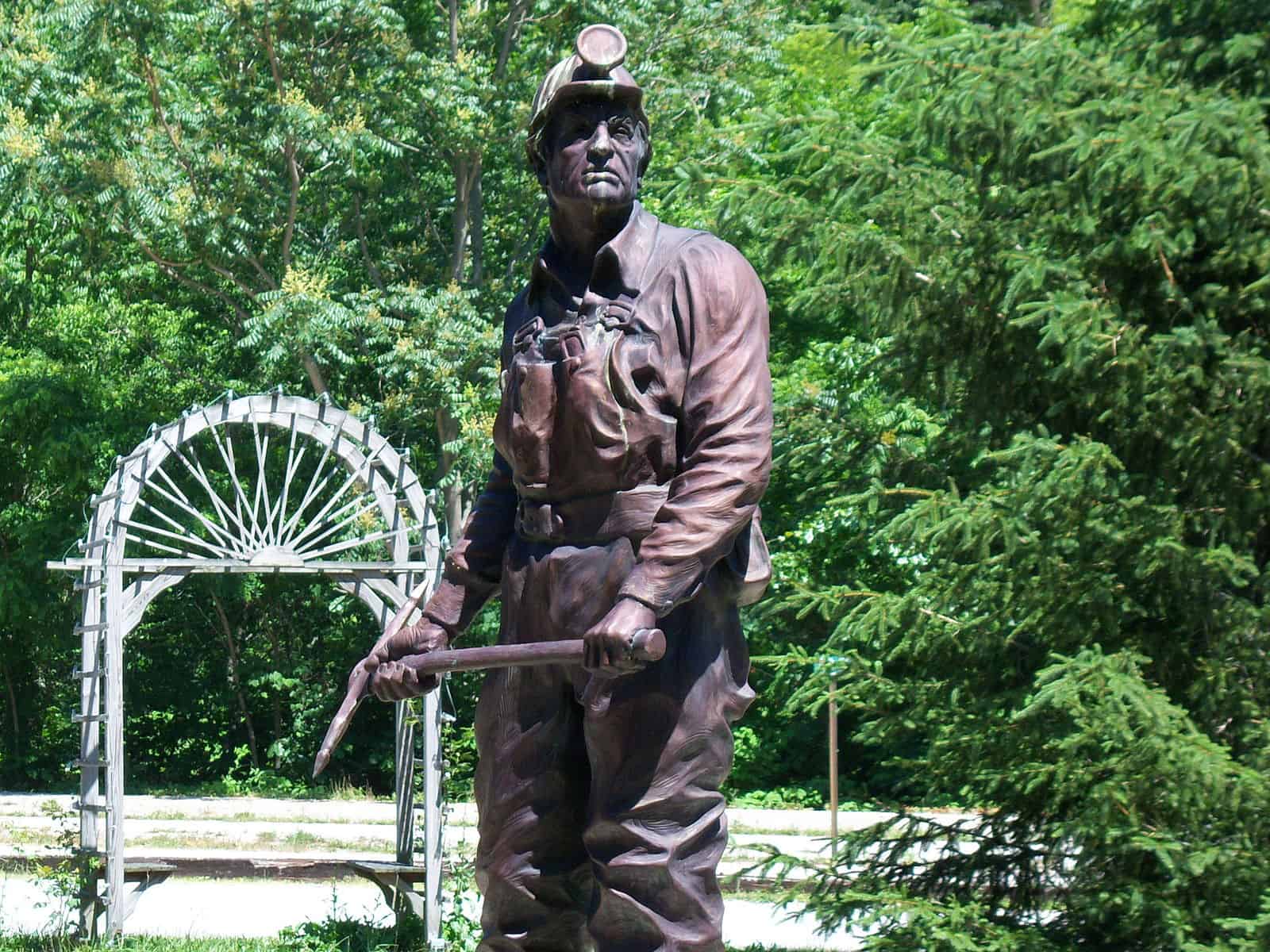
The divide between the labor and environmental justice movements took a huge step towards closing yesterday. In a surprise announcement, the United Mine Workers of America (UMWA) indicated that it supported a just transition away from fossil fuels. Specifically, the UMWA is calling on the federal government to subsidize solar panel and wind turbine manufacturing in Appalachia, provide financial support to former miners who lose their jobs, and invest in research into so-called carbon capture and storage technology, which would allow coal mines to store carbon underground rather than release it into the atmosphere. It’s an announcement that could help bridge a major gap in the progressive coalition. Climate justice advocates demanding an immediate transition away from fossil fuels have found their efforts opposed by workers and their unions trying to hold onto jobs in a relatively high paying industry – and one that has provided the labor movement with some of its most powerful mythology. The UMWA knows which way the wind is blowing, “change is coming, whether we seek it or not,” the union said; but it made clear that the miners need a seat at the table to plan the transition. The impact on climate policy could be enormous, the announcement was made right before the Green New Deal is reintroduced today.
Still, the impact on electoral politics of the Mine Workers’ announcement shouldn’t be ignored. Republicans have long exploited the split between the environmental justice movement and white workers in coal country by promising to keep the mines open. Donald Trump, as a candidate in 2016, told miners to “get ready because you’re going to be working your asses off!” As Paul Waldman and Greg Sargent write in The Washington Post, Trump’s promise was not merely about jobs: “[i]t was also a nostalgia play, an argument that Democrats and elites are trying to uproot a way of life, superciliously unconcerned with the carnage it might create in local communities.” The UMWA announcement signals a way for the left to appeal to those workers who have been voting more and more for the GOP, if miners have a real role in the reimagination of the economy. Of course, Waldman and Sargent’s point about nostalgia suggests the issue runs deeper, and cannot be separated from the GOP’s naked appeals to white supremacy driving white union members into their arms.
At the same event where the UMWA made its announcement, Senator Joe Machin (D-W.Va) announced that he was co-sponsoring the PRO Act. It’s a major boost for the legislation, which would give labor law its first pro-union reform in nearly a century. Manchin, typically seen as the most conservative Democrat in the Senate, was one of only four members of his caucus who had yet to sign onto the bill. The three remaining holdouts are Kyrsten Sinema (D-Ariz.), Mark Kelly (D-Ariz.), and Mark Warner (D-Va.). Senate Majority Leader Chuck Schumer (D-N.Y.) has said that the PRO Act will get a vote on the Senate floor if it gets 50 cosponsors – the same number of votes needed to pass it if Democrats can somehow get around (or eliminate) the filibuster. Manchin’s support puts the list of cosponsors at 47, and unions and progressives will now focus on Sinema, Kelly, and Warner.
Finally, Defector reported yesterday on the horrifying rising trend of violence against gig workers, and how their misclassification as independent contractors allows their employers to skirt responsibility for their injuries and deaths. After Francisco Villalva Vitinio was killed while working a shift for DoorDash in March, the company refused to admit Vitonio was working for DoorDash at the time of his death despite his family having screenshots of his account being deactivated because he missed a delivery that coincided with the time of his death. The on-demand model employed by the gig giants like DoorDash, Uber and Grubhub allows them to perform this sleight of hand. By paying workers only for the time actually spent moving customers or making deliveries, the companies can avoid any sense of responsibility for the time before, after, and in between gigs, even if the workers are simply waiting for their next task during their shift. And by misclassifying their workers, the companies avoid paying into workers compensation systems that provide workers and their families with compensation when those workers are injured on the job. So when tragedy strikes and a gig worker dies on the job, their family is left with nothing.

Daily News & Commentary
Start your day with our roundup of the latest labor developments. See all
May 25
Intuit announces layoffs; CA Governor Newsom issues executive order.
May 24
A majority of House Representatives sign a discharge petition for the Faster Labor Contracts Act, and the House Transportation Committee adopts a railroad safety amendment in the Build America 250 Act.
May 22
U.S. employers spend $1.7B on union avoidance each year and the ICJ declares the right to strike a protected activity.
May 21
UAW backs legal challenge to Trump “gold card” visa; DOL requests unemployment fraud technology funding; Samsung reaches eleventh-hour union agreement.
May 20
LIRR strike ends after three-day shutdown; key senators reject Trump's proposed 26% cut to Labor Department budget; EEOC moves to eliminate employer demographic reporting requirement.
May 19
Amazon urges 11th Circuit to overturn captive-audience meeting ban; DOL scraps Biden overtime rule; SCOTUS to decide on Title IX private right of action for school employees