
Henry Green is a student at Harvard Law School.
In today’s news and commentary, a union argues that the NLRB’s quorum rule is unconstitutional; the California building trades back a state law promoting housing near transit stations; and Missouri considers raising the standard to pass citizen-initiated ballot proposals.
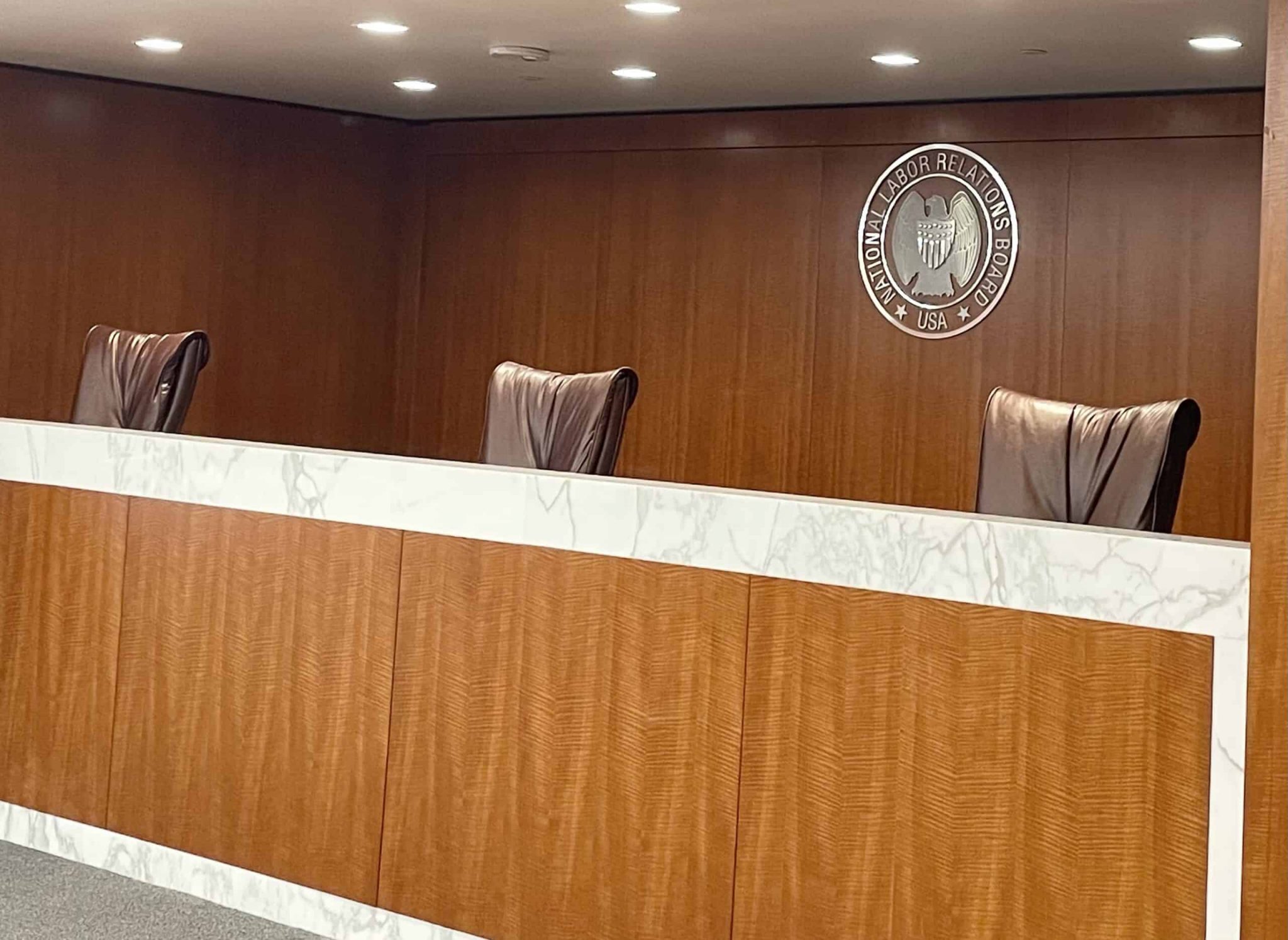
Bricklayers, Tilesetters and Allied Craft Workers Local 3 argue in a motion to the NLRB that the agency’s quorum rule is unconstitutional, urging the Board’s lone remaining member to take up their representation election case. The union says that if removal protections for Board members conflict with Article II’s “take care” clause, so too does the requirement that the Board have a quorum to act, per Law360. The union further argues that New Process Steel (2010), which held that the Board needed three members to act, has been “effectively overruled” by 2020’s Seila Law v. Consumer Financial Protection Bureau.
In California, the state’s Building Trades Council recently struck a deal to support a bill that will allow more housing near transit stations, paving the way for its passage last week. SB 79, which awaits signature from Governor Newsom, would allow developers to build more dense housing within a half mile of well-trafficked public transit stops, according to CalMatters. CalMatters calls the bill “one of the largest state-imposed housing densification efforts in recent memory.” Per the article, the Building Trades’ support for the law came in return for a requirement to hire “skilled and trained” workers for projects over 85-feet high, or on transit agency-owned land. The article says that UNITE HERE also backed the bill, which excludes hotel development projects.
Bloomberg reports that a ballot question in Missouri will ask voters whether to raise the standard to pass a citizen-initiated ballot proposal. The proposed changes would require a majority in each of Missouri’s Congressional districts, rather than a simple statewide majority. The effort follows ballot measures requiring a $15 minimum wage and paid sick leave that passed in Missouri last fall. Although those measures passed, legislators passed subsequent laws that weakened them, per the article. The article notes that minimum wage advocates turned to the ballot initiatives in Missouri after a minimum wage in St. Louis was blocked under state preemption law.




Daily News & Commentary
Start your day with our roundup of the latest labor developments. See all
October 11
UAW President Shawn Fain succeeds in his reelection bid, and Spanish unions call for a general strike.
October 9
DHS proposes a $100k fee for the foreign grad employment program; Trump suspends tech company access to green card program; and private equity perpetuates poor working conditions for home care workers.
October 8
NLRB judge finds UPS unlawfully restricted union insignia; Harvard graduate workers authorize second strike; OSHA orders Union Pacific to pay $300,000 in damages in whistleblower case.
October 7
DOL scraps plan to remove decades-old wage-and-hour guidance from federal regulations; New York enacts personnel records access law; Starbucks loses bid to dismiss Workers United trademark suit.
October 6
Protect College Sports Act dampens athlete unionization outlook; Stanford RA union decides to withdraw petition
October 5
Delaware bans captive audience meetings; EEOC settles remote work national origin discrimination claim; First Circuit stays enforcement order in VA's dispute with AFGE.