
Sophia is a student at Harvard Law School and a member of the Labor and Employment Lab.
In today’s news and commentary, Zohran Mamdani calls on FIFA to end dynamic pricing for the World Cup; the San Francisco Office of Labor Standards Enforcement opens a probe into Scale AI’s labor practices; and union members organize immigration defense trainings.
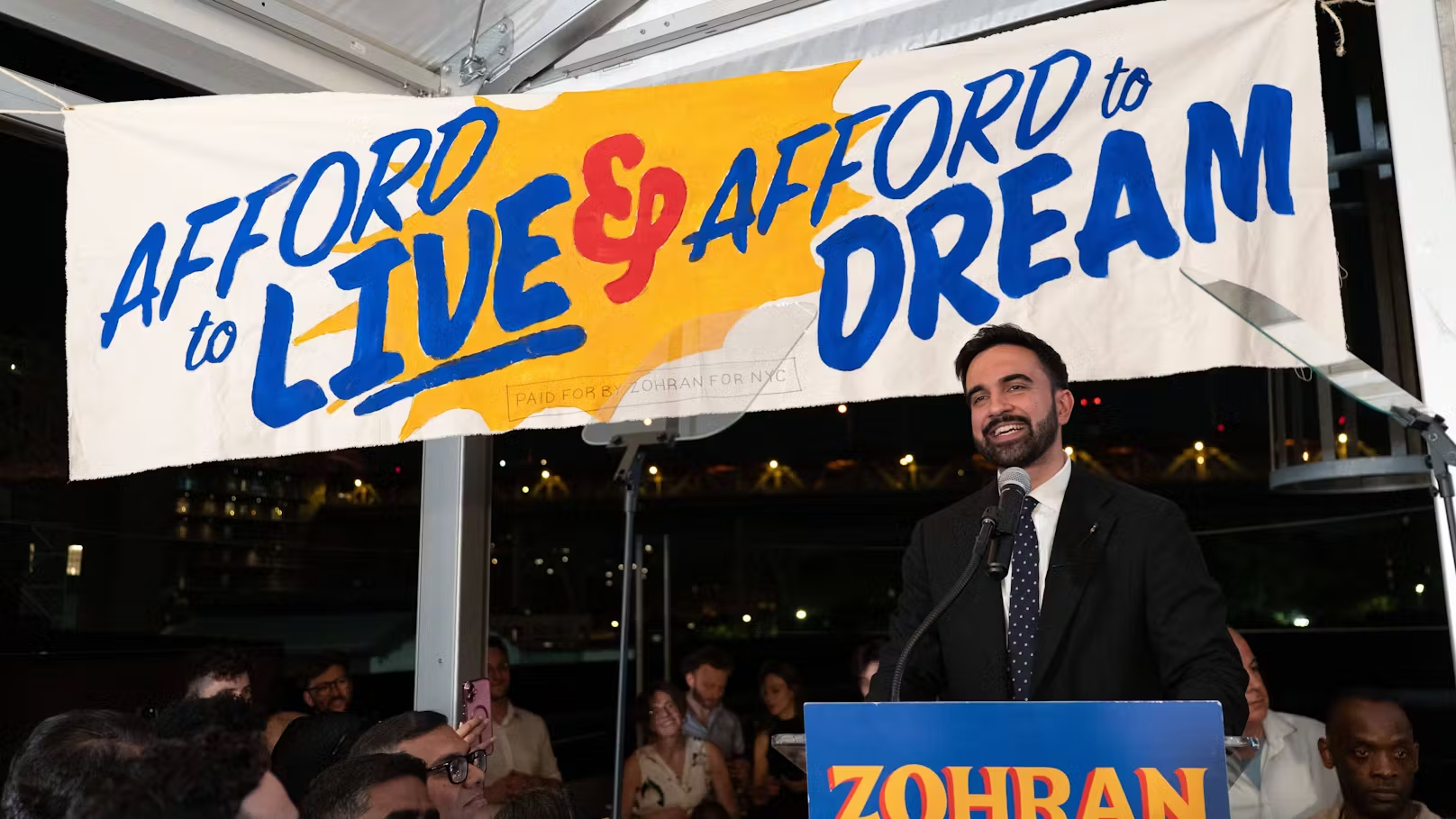
This week, New York City Mayoral Candidate Zohran Mamdani has introduced a petition calling on the Fédération Internationale de Football Association (FIFA) to meet three demands regarding the 2026 World Cup: 1) scrap its plan to use dynamic pricing for ticket sales; 2) set a price cap on resale tickets; and 3) reserve 15% of tickets at a discounted rate for local New Yorkers. The FIFA World Cup is an international soccer tournament that has occurred almost every four years since its inaugural tournament in 1930, and is slated to come to cities across the United States, Mexico, and Canada next year. One FIFA official stated that ticket prices would start at $60 for the cheapest seats at the earliest round of games and could sell for as high as $6,730 for the priciest tickets at the final match. These prices are merely predictions given that FIFA, for the first time ever, is adopting a dynamic pricing model where ticket prices will fluctuate depending on demand. Dynamic pricing in tandem with a no-cap resale market will likely make attendance further out of reach for many working class New Yorkers.
Scale AI – an American technology company that offers high-quality training data for artificial intelligence applications – is under investigation by the San Francisco Office of Labor Standards Enforcement (OLSE) for its labor practices. The public probe centers on Scale AI’s classification of San Francisco residents who have worked for the company sometime over the past three years as “taskers” or “freelancers” rather than employees. While further details on the investigation are not currently available, OLSE is charged with enforcing sick leave, minimum wage, overtime pay, and other labor laws, which suggests that the Office might be looking into whether the contractor classification is accurate or just a method to avoid the increased employer duties that come with an employee classification.
Since returning to the White House, President Trump has aggressively ramped up U.S. Immigration and Customs Enforcement (ICE) raids in addition to rescinding the Biden-era policy that protected certain areas – such as hospitals, schools, and churches – from immigration enforcement. In response to the surge of raids and heightened fear pervading the lives of many immigrants since January 2020, union members have taken action into their own hands. In Durham, North Carolina, an electrical worker and member of IBEW Local 553 organized an immigrant defense training at his union hall. The event taught attendees how to verify the identity of suspected ICE officials and how to proactively make one’s workplace safer before immigration enforcement even shows up in a training called “4th Amendment Workplaces.”



Daily News & Commentary
Start your day with our roundup of the latest labor developments. See all
October 13
Chicago hotel workers remain on strike; a coalition of Democratic states sues the Labor Department over canceled unemployment insurance grants; the Federal Labor Relations Authority establishes a new mediation framework for federal worker disputes.
October 12
Workers at the Obama Foundation begin organizing; MLB submits its latest collective bargaining agreement proposal; Brigham & Women's nurses postpone strike.
October 11
UAW President Shawn Fain succeeds in his reelection bid, and Spanish unions call for a general strike.
October 9
DHS proposes a $100k fee for the foreign grad employment program; Trump suspends tech company access to green card program; and private equity perpetuates poor working conditions for home care workers.
October 8
NLRB judge finds UPS unlawfully restricted union insignia; Harvard graduate workers authorize second strike; OSHA orders Union Pacific to pay $300,000 in damages in whistleblower case.
October 7
DOL scraps plan to remove decades-old wage-and-hour guidance from federal regulations; New York enacts personnel records access law; Starbucks loses bid to dismiss Workers United trademark suit.