
Iman Masmoudi is a student at Harvard Law School.
An overnight fire at an Amazon warehouse leads to the union’s first collective action: a sit-in in the break room followed by a “march on the boss.” A recent study published by Princeton researchers attributes plateauing income inequality in the U.S. to gains made by the lowest-wage workers and labor movements. And the NLRB rules against Activision Blizzard, finding that it withheld wage increases from workers because of union activity.
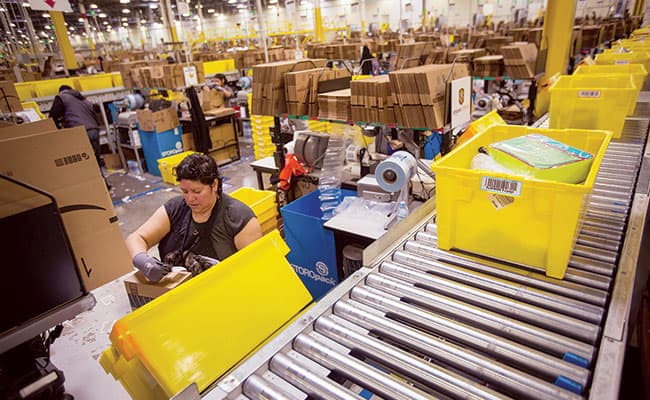
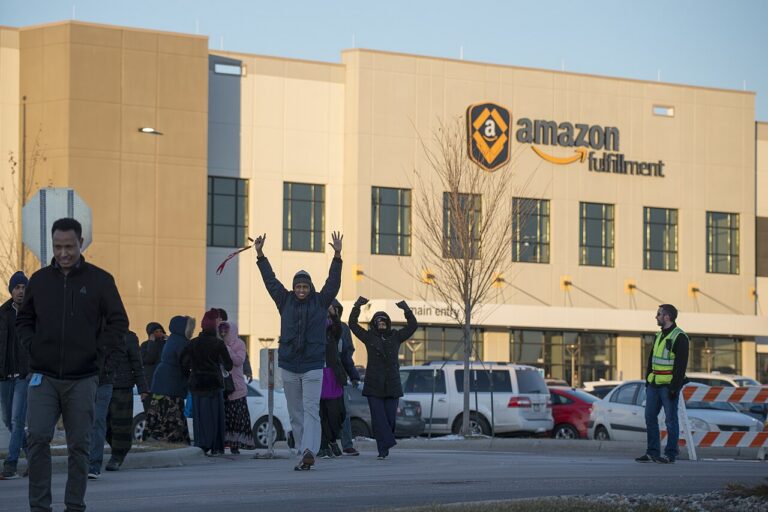
Reports are still emerging, but Christian Smalls, President of the Amazon labor union, tweeted overnight that a fire had broken at on a ship dock at the JFK8 Amazon warehouse in New York, during a night shift. Due to the smoke and fumes, 500 workers staged a walkout, sit-in in the break room, and a “march on the boss,” demanding to be sent home with pay. This marks the first instance of worker mobilization since the establishment of the Amazon union.
A recently published study by researchers at Princeton University analyzes trends in income inequality in the United States over the past decade. The study reveals that US wage inequality, whose rose for thirty straight years, has slowed and halted over the past decade. The researchers attribute this to increased inequality being offset by significant gains made by the lowest wage workers and speculate that increased labor organizing may have contributed to this shift.
The Washington Post reports that the NLRB ruled against Activision Blizzard for unfair labor practices after it withheld raises from quality testers who had participated in union activity. The win for the union comes amidst continued efforts to reach a collective bargaining agreement. The union’s complaint alleged that Activision Blizzard laid off 12 quality assurance testers, reorganized the studio to remove the quality assurance department, withheld benefits, and solicited grievances. The NLRB is still investigating other allegations in the complaint. In May, workers won a union, a new foray for labor into the gaming industry, and it remains to be seen what kind of collective bargaining agreement can be reached with Activision Blizzard.

Daily News & Commentary
Start your day with our roundup of the latest labor developments. See all
July 3
Unions seek a preliminary injunction to prevent USDA downsizing; the D.C. District Court issues a preliminary injunction against new student loan regulations; Matt Bruenig releases an analysis of Starbucks’ ongoing legal battle against Starbucks Workers United.
July 2
First Circuit denies federal worker unions’ mandamus petition; federal court denies preliminary injunction against new union reporting rule; House introduces the Securing Agriculture’s Workforce Act.
July 1
Trump nominates Keith Sonderling as Labor Secretary; DOL eliminates disparate-impact liability from Title VI regulations; OPM finalizes rule allowing suitability-based removal of federal employees for post-appointment conduct.
June 30
SCOTUS ends removal protections for agencies; staff at NYC cocktail bar vote to unionize.
June 29
In today’s News and Commentary, student-athletes file a class action suit challenging the NCAA’s new Age-Based Rule, a federal judge declines to issue a preliminary injunction against FEMA’s reduction in force but expedites proceedings, and Gavin Newsom opposes California’s proposed billionaire tax in favor of a federal approach. On Thursday, DeJuan Campbell, at basketball player […]
June 28
Philadelphia utility workers announce July 4 strike; national parks workers vote to unionize; Michigan considers “right to disconnect” bill.