
Tascha Shahriari-Parsa is a government lawyer enforcing workers’ rights laws. He clerked on the Supreme Court of California after graduating from Harvard Law School in 2024. His writing on this blog reflects his personal views only.
In today’s news and commentary: The GC Abruzzo releases a memo on 10(j) settlements; Amazon workers vote against unionization; an internal Starbucks survey shows office workers’ faith in the company is at an all-time low.
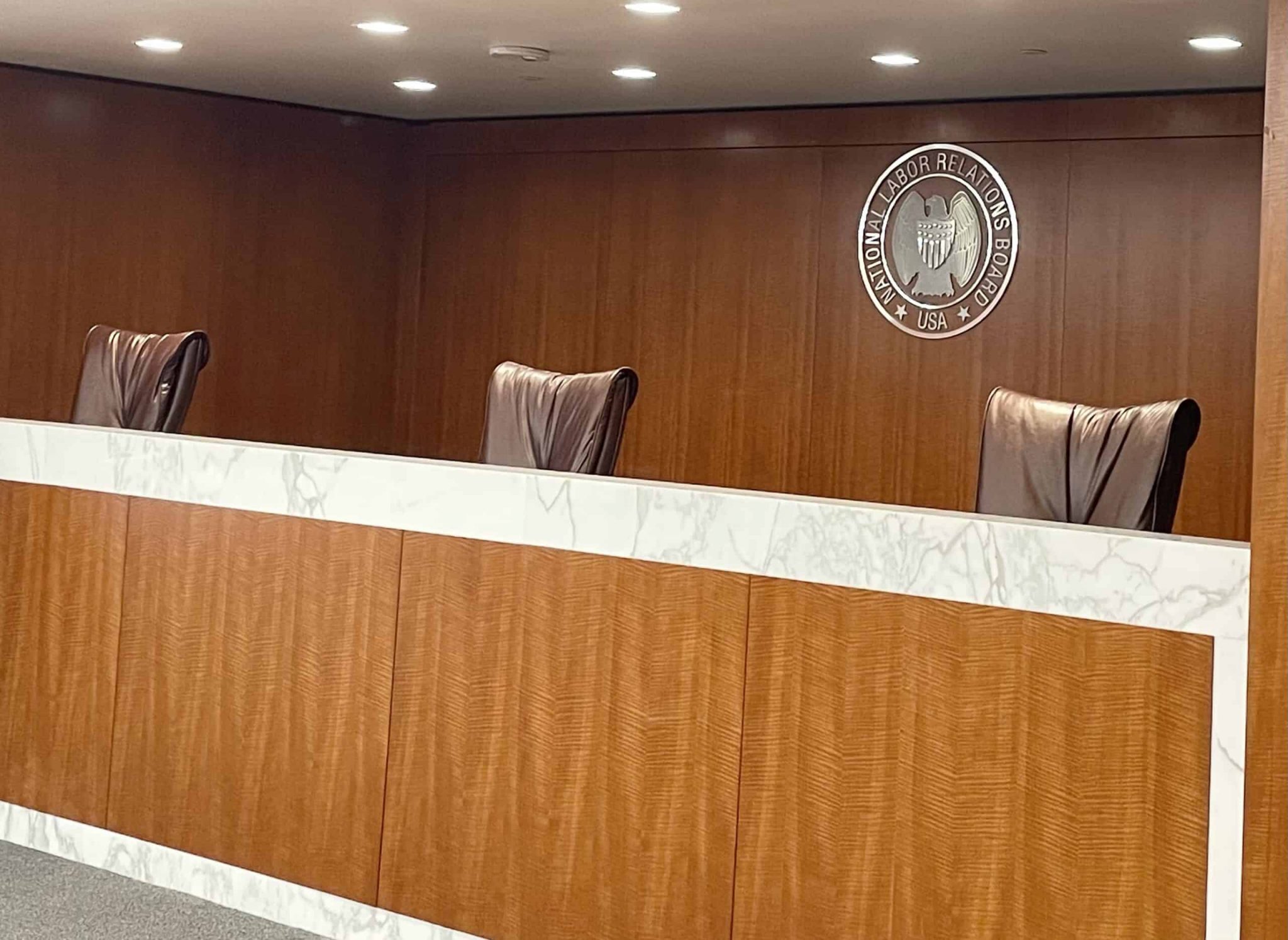
Jennifer Abruzzo, General Counsel of the NLRB, released a memo yesterday instructing Regions to attempt to reach settlements with employers on interim remedies even when they cannot reach an overall settlement on the entire case. Section 10(j) of the NLRA gives the Board the power to petition a federal district court to seek an injunction for temporary relief or for a restraining order. Previous memos have referred to 10(j) as “one of the most important tools available to effectively enforce the Act.” Back in February, Abruzzo released a memo calling for the earlier and more frequent utilization of 10(j), writing that “it is incumbent upon the Agency to consider seeking Section 10(j) injunctions immediately after determining that workers have been subject to threats or other coercive conduct during an organizing campaign, before an employer follows through on its threats or coercion when it becomes more challenging to fully erase the chilling impact on organizing activity.” In August, another GC memo highlighted specific types of ULPs that “are more likely than others to lead to remedial failure” and thus should be prioritized for 10(j) proceedings, including: “discharges that occur during an organizing campaign, violations during organizing campaigns that lead to a need for a Gissel bargaining order, violations that occur during the period following certification when parties should be attempting to negotiate their first collective bargaining agreement, cases involving withdrawals of recognition from incumbent unions, and cases involving a successor’s refusal to bargain and/or refusal to hire.”
This new memo covers the topic of 10(j) settlements. Where Regions are unable to settle an entire administrative case, the memo asks them to give charged parties “the opportunity to voluntarily agree to an interim settlement that includes remedies, such as reinstating alleged discriminates or agreeing to bargain, pending final resolution of the administrative case by the Board.” Though in some instances, if Regions “determine that taking the time and resources to seek an interim settlement is futile, as in cases where the Region has reason to believe that a charged party would not agree or adhere to the terms of an interim settlement,” the Region can recommend bringing a 10(j) proceeding directly to court. And even where a 10(j) settlement is reached, “should a charged party breach the terms of the settlement, Regions will retain the right to recommend initiation of 10(j) proceedings in court.”
On Tuesday, workers at an Amazon warehouse in Schodack, New York voted against unionization with the Amazon Labor Union (ALU). Workers at the facility received a $1.30 hourly raise last month, bringing their wages up to $17/hour. But as the campaign’s lead organizer Heather Goodall put it, workers have been “missing the mark on quality of life” and deserve to have better wages, working conditions, and “breaks consistent with the work that we are doing.” In response to the defeat, ALU founder Chris Smalls affirmed that this “won’t be the end of ALU at ALB1.” ALU plans to challenge the election as being tainted by employer intimidation and retaliation “on a daily basis.” Amazon fired many pro-union workers at the warehouse leading up to the election, and subjected workers to anti-union propaganda in captive audience meetings.
An internal survey at Starbucks showed that white collar employees’ faith in management is at a historic low. Nearly half of office workers filling out a survey said they didn’t believe Starbucks “behaves in an ethical and responsible manner,” and more than half did not think Starbucks “lives up to its mission and values” and over three-quarters did not believe that “Starbucks leaders make the right decisions for the company.” Starbucks has meanwhile been the subject of dozens of complaints at the NLRB, with a recent ALJ decision finding that Starbucks unlawfully targeted and discriminated against workers for engaging in union activity by telling them they wouldn’t get wage increases promised to non-union workers if they unionized, illegally terminating and constructively discharging workers for union activity, changing their enforcement of a dress code and rule regarding calling out drink orders, suggesting to employees that engaging in union activity was essentially compatible with their continued employment, refusing to accommodate work schedules that they had allowed prior to a union election, and even asking a hotel manager to call police on employees congregating in front of the hotel.

Daily News & Commentary
Start your day with our roundup of the latest labor developments. See all
September 30
Harvard grad union wins in First Circuit; AI data trainers initiate misclassification suits; Trader Joe’s found liable under ERISA.
September 29
Unions, AI companies, and private equity firms form a new coalition to shape data center policies; unions express support for the Paramount-Warner Bros. merger.
September 28
The Protect College Sports Act nears passage in the Senate; San Francisco municipal workers agree to contract extensions.
September 27
The Trump Administration reaches a settlement with federal unions on reduction in force actions; the United Auto Workers file an en banc petition seeking review of a Second Circuit decision regarding labor arbitrations.
September 25
Healthcare workers rally to restore legal status for TPS holders; nurses at a Maine hospital overwhelmingly vote to form their union despite alleged aggressive union busting tactics.
September 24
NLRB abandons rule for offensive conduct during protected activity; New York home care workers seek a union election; maritime deck officers endure long fight for first contracts.