
Mila Rostain is a student at Harvard Law School and the Digital Director of OnLabor.
In today’s News and Commentary, AFGE and AFSCME sue in response to the threat of mass firings, a judge issues another preliminary injunction preventing Trump from stripping some federal workers of collective bargaining rights, and challenges to state laws banning captive audience meetings have inconsistent results.
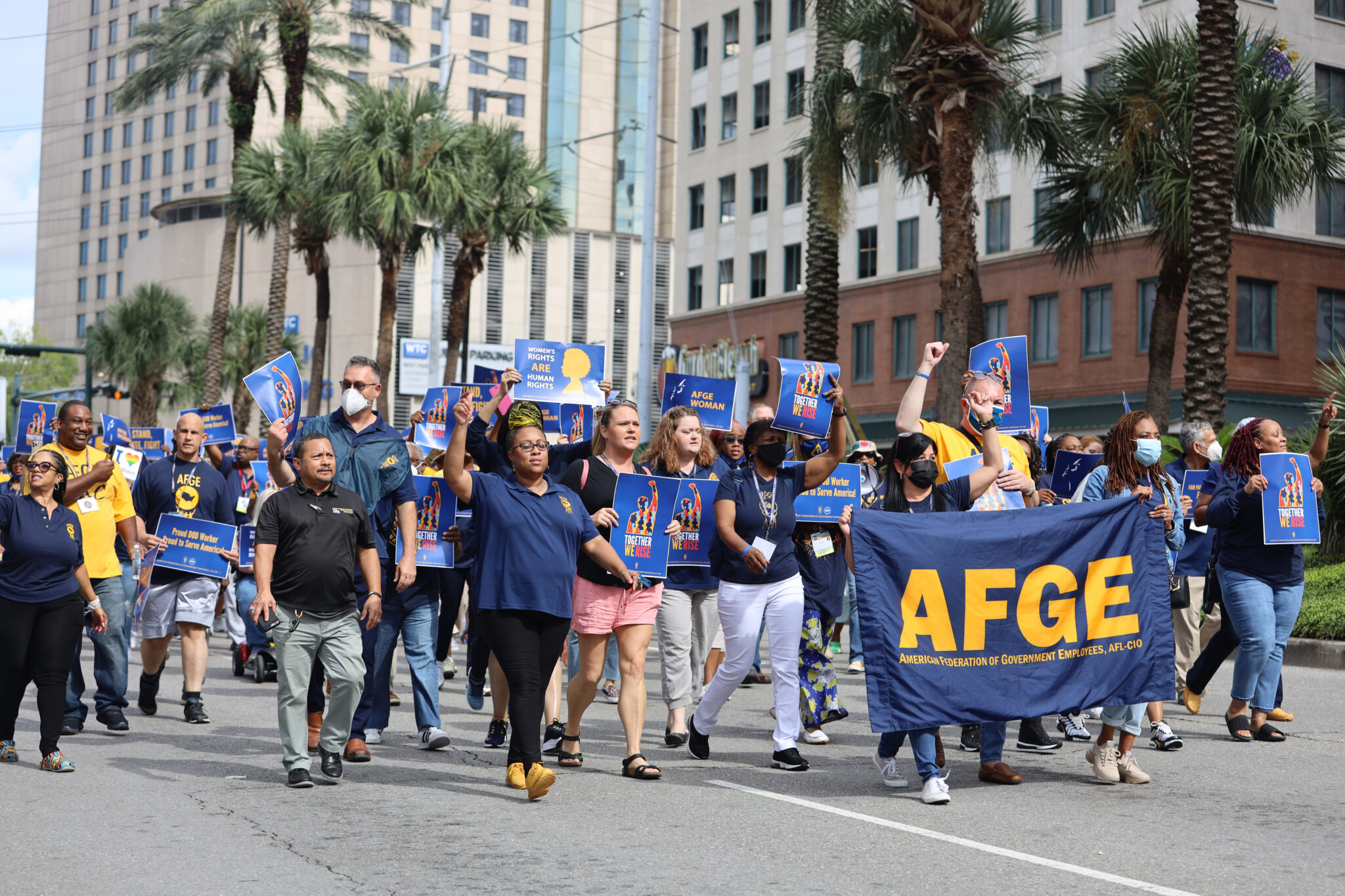
On Tuesday, AFGE and AFSCME filed suit in the District Court for the Northern District of California in response to the Office of Management and Budget’s threat of firing government employees as part of the government shutdown. According to their complaint, OMB issued a memorandum prior to the shutdown directing agencies to prepare to engage in reductions in force. The unions allege that OMB lacks the statutory authority to undertake the reductions in force during a shutdown. AFSCME President Lee Saunders stated that the Trump administration is “illegally targeting federal workers with threats of mass firings due to the federal government shutdown,” jeopardizing the livelihoods of federal workers. Yesterday, the Trump administration reiterated its plans to use the shutdown to fire federal workers.
Also on Tuesday, Judge Paul Friedman issued a preliminary injunction from the bench following oral arguments in AFL-CIO v. Trump, the most recent case challenging Trump’s attempt to strip federal workers of collective bargaining rights. Judge Friedman enjoined the administration from disregarding collective bargaining agreements covering workers represented by several AFL-CIO unions during the litigation. IFPTE, AFT, and Machinists workers, among others, would continue to have collective bargaining rights under the preliminary injunction. Prior similar preliminary injunctions issued by Judge Friedman, however, have been stayed by the Court of Appeals for the DC Circuit.
Earlier this week, Judge Daniel Calabretta of the District Court for the Eastern District of California granted a preliminary injunction that blocks California from implementing its law banning captive audience meetings, SB 399. Judge Calabretta concluded that the law likely infringed on the first amendment free speech rights of employers and was likely both Garmon and Machinists preempted. And while California had argued that the law restricted conduct, rather than content, Judge Calabretta found that the law was a content-based restriction requiring strict scrutiny. Groups challenging Illinois’ law banning captive audience meetings, on the other hand, had their case dismissed Tuesday after Judge Franklin Valderrama concluded that the court lacked subject matter jurisdiction. According to Judge Valderrama, the plaintiffs’ suit challenging Illinois’ law was barred by sovereign immunity.





Daily News & Commentary
Start your day with our roundup of the latest labor developments. See all
October 15
New reporting examines the rollback of child labor protections; California tries to block a strike; NLRB charges Wisconsin mental health provider with firing workers during union drive.
October 14
Eleventh Circuit overturns ERISA exhaustion rule; DHS finalizes removal of automatic renewal for work permits; AFGE challenges SSA over flexible scheduling policy.
October 13
Chicago hotel workers remain on strike; a coalition of Democratic states sues the Labor Department over canceled unemployment insurance grants; the Federal Labor Relations Authority establishes a new mediation framework for federal worker disputes.
October 12
Workers at the Obama Foundation begin organizing; MLB submits its latest collective bargaining agreement proposal; Brigham & Women's nurses postpone strike.
October 11
UAW President Shawn Fain succeeds in his reelection bid, and Spanish unions call for a general strike.
October 9
DHS proposes a $100k fee for the foreign grad employment program; Trump suspends tech company access to green card program; and private equity perpetuates poor working conditions for home care workers.