
Justin Cassera is a student at Harvard Law School.
In today’s news and commentary, labor leaders meet to critique tariffs, the Trump Administration cancels the October jobs report, and student labor organizers announce a chaperone program for noncitizens.
On Saturday, labor leaders from across the country met at a rally at the Port of Oakland to voice their concerns over President Trump’s tariffs. The activists claimed that the tariffs have incited a trade war and led to increased prices for Americans. “Honestly, [the tariffs] seem to be serving the billionaire class, and not the working class,” said John Palmer, International Vice President at Large of the International Brotherhood of Teamsters. Despite the flurry of lawsuits challenging the tariffs, the leaders are calling on lawmakers to step in as well. “What I would like to see is Congress take hold of its responsibility, which is they have the right to regulate tariffs,” said Palmer.
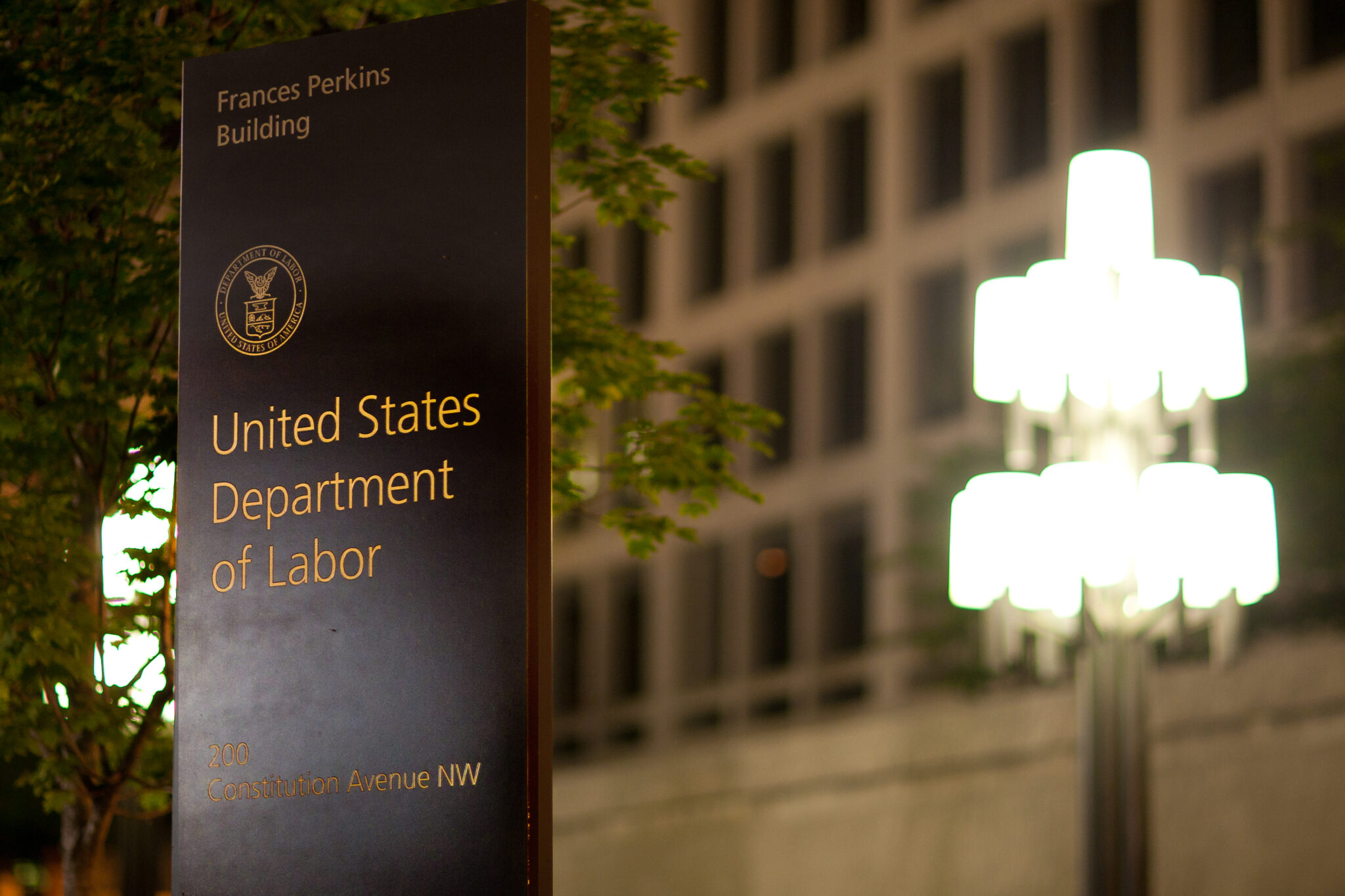
Last week, the Department of Labor confirmed that it will not release an October jobs report due to difficulties caused by the government shutdown. In a notice posted to its website, the Department claimed that the household survey data normally relied upon to produce the report could not be retroactively collected. The day after the announcement, the Labor Department released stronger-than-expected September jobs information showing that the economy added 119,000 new jobs. The news, and lack thereof, will weigh heavily on the Federal Reserve’s decision to cut or hold steady interest rates at its December meeting. The Department plans to include some data in the November report.
Labor organizers at Brown University recently announced their plans to launch a “walking chaperone” program that uses student volunteers to “escort noncitizens as needed between campus locations and nearby sites.” The organizers hope the program will combat ICE enforcement efforts within the university’s community. Union members have also been working with the Deportation Defense Network to patrol courthouses and warn visitors of ICE presence. Local 6516 Chair of Communications Adit Sabnis GS said that while the organization “can’t prevent ICE from coming here,” they hope to make community members “less scared to go about their daily lives.”





Daily News & Commentary
Start your day with our roundup of the latest labor developments. See all
February 24
In today’s news and commentary, the NLRB uses the Obama-era Browning-Ferris standard, a fired National Park ranger sues the Department of Interior and the National Park Service, the NLRB closes out Amazon’s labor dispute on Staten Island, and OIRA signals changes to the Biden-era independent contractor rule. The NLRB ruled that Browning-Ferris Industries jointly employed […]
February 23
In today’s news and commentary, the Trump administration proposes a rule limiting employment authorization for asylum seekers and Matt Bruenig introduces a new LLM tool analyzing employer rules under Stericycle. Law360 reports that the Trump administration proposed a rule on Friday that would change the employment authorization process for asylum seekers. Under the proposed rule, […]
February 22
A petition for certiorari in Bivens v. Zep, New York nurses end their historic six-week-strike, and Professor Block argues for just cause protections in New York City.
February 20
An analysis of the Board's decisions since regaining a quorum; 5th Circuit dissent criticizes Wright Line, Thryv.
February 19
Union membership increases slightly; Washington farmworker bill fails to make it out of committee; and unions in Argentina are on strike protesting President Milei’s labor reform bill.
February 18
A ruling against forced labor in CO prisons; business coalition lacks standing to challenge captive audience ban; labor unions to participate in rent strike in MN