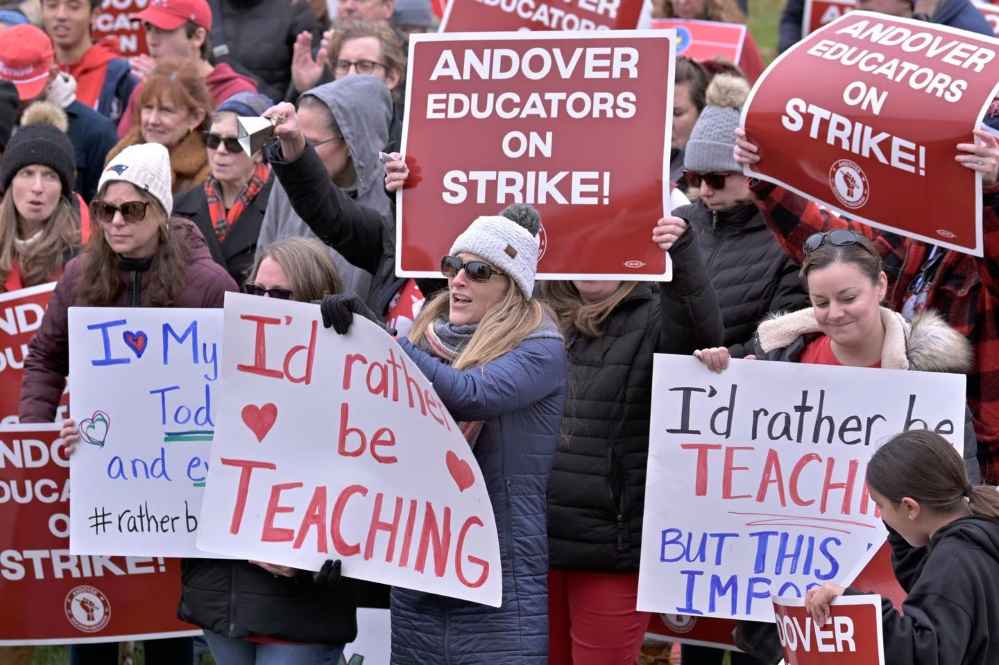

In today’s News and Commentary, teachers unions in Massachusetts and Oregon are bargaining new contracts, with educators on both coasts continuing strikes after failed negotiations this weekend.
The Andover Education Association (AEA) enter their fourth day of striking after negotiations this weekend failed. After more than nine months of contract negotiations, on Thursday night, union membership voted overwhelmingly to approve a strike action. Andover Public Schools closed Friday, the first day of the strike. The AEA and the Andover School Committee engaged in bargaining sessions over the weekend, but both sides point to the other for failure to reach an agreement. One sticking point in these negotiations is the union’s demand for a significant raise and improved benefits for instructional aides. These employees currently earn between $25,000 and $38,000, salaries the union says is “far below what is considered a living wage for the region.” The School Committee claims the union’s demands will “tie the hands of the district and the town for years to come” and would require “significant budget cuts that will negatively impact teachers, students, families, and other town residents.” Massachusetts public employees, including teachers, are not legally allowed to strike. The last time AEA engaged in this labor action, the labor relations board ruled the strike illegal.
Students on the other side of the country will also be held home from school again today, as the Portland Association of Teachers (PAT) enters the third week of their first-ever strike. Portland Public Schools’ (PPS) students have not had a single instructional day in the month of November due to holidays, planning days, and the PAT strike. The union’s 103-page proposal includes rules for teachers in early childhood programs and changes to how the district limits class sizes. Because the district’s administration chose not to open permissive subjects of bargaining, PPS’s proposal is substantially shorter, at only 58 pages. The two sides met over the weekend for mediated sessions, but remain millions of dollars apart on compensation alone. Negotiations will resume on Tuesday. Educators across the state of Oregon are facing similar labor strains, with over 70 districts engaging in contract negotiations this school year. The Portland negotiations will be instructive for the upcoming bargaining sessions across the state.





Daily News & Commentary
Start your day with our roundup of the latest labor developments. See all
October 13
Chicago hotel workers remain on strike; a coalition of Democratic states sues the Labor Department over canceled unemployment insurance grants; the Federal Labor Relations Authority establishes a new mediation framework for federal worker disputes.
October 12
Workers at the Obama Foundation begin organizing; MLB submits its latest collective bargaining agreement proposal; Brigham & Women's nurses postpone strike.
October 11
UAW President Shawn Fain succeeds in his reelection bid, and Spanish unions call for a general strike.
October 9
DHS proposes a $100k fee for the foreign grad employment program; Trump suspends tech company access to green card program; and private equity perpetuates poor working conditions for home care workers.
October 8
NLRB judge finds UPS unlawfully restricted union insignia; Harvard graduate workers authorize second strike; OSHA orders Union Pacific to pay $300,000 in damages in whistleblower case.
October 7
DOL scraps plan to remove decades-old wage-and-hour guidance from federal regulations; New York enacts personnel records access law; Starbucks loses bid to dismiss Workers United trademark suit.