
Jacqueline Rayfield is a student at Harvard Law School.
In today’s News and Commentary, Los Angeles hotel workers march through downtown on strike for better wages, benefits, and working conditions, the Teamsters’ union announced it has reached a tentative agreement with UPS on three major economic issues, and a pause in negotiations between the British Columbia Maritime Employers Association (BCMEA) and the International Longshore and Warehouse Union (ILWU) left $19 billion in goods stranded off of Canada’s west coast.
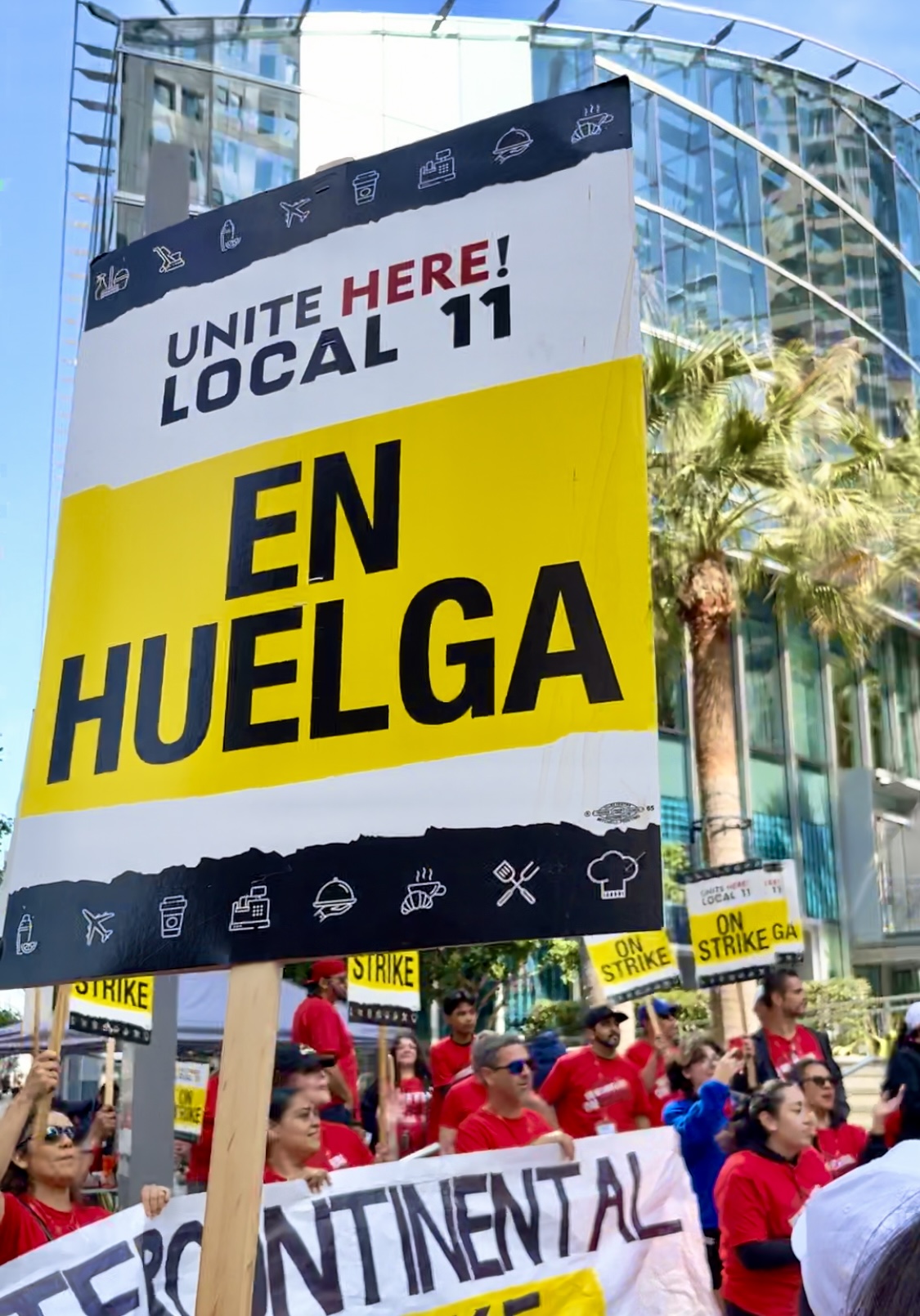
Unite Here Local 11 hotel workers walked off the job on Sunday and have since been picketing across downtown Los Angeles and Santa Monica. Yesterday, workers marched through the streets of downtown Los Angeles to demand better economic provisions in their contract. The union represents about 15,000 cooks, servers, housekeepers and more in hotels across Southern California, though not all Local 11 hotel workers are part of the strike.
The Teamsters announced over the weekend that they have reached an agreement with UPS on three major economic issues which could affect more than 340,000 employees, including ending forced overtime on days off, establishing Martin Luther King Jr. Day as a paid holiday, and getting rid of the two-tier wage system. However, a strike is still not off the table as both parties near the July 31st contract expiration. Teamsters previously passed a strike authorization vote with 97% approval.
After four days of negotiations between BCMEA and ILWU Canada, negotiations have been put on pause. In the meantime, $19 billion in trade waits off of 29 ports along Canada’s west coast, and this total continues to rise. Canadian Labor Minister Seamus O’Regan called for both parties to return to the bargaining table to allow trade to continue.


Daily News & Commentary
Start your day with our roundup of the latest labor developments. See all
May 7
DOL drops litigation of Biden-era overtime rule; EEOC sues NYT for discrimination against white male employee; New Jersey finalizes employee classification rule.
May 6
Trump Administration exempts foreign doctors from travel ban; job openings hold steady at 6.9 million; 30,000 healthcare workers prepare to strike across University of California hospitals.
May 5
SAG-AFTRA strikes tentative deal; DOL set to decide on Biden overtime rule; IATSE files unfair labor practice charges against the Kennedy Center
May 4
Trump signs order to expand retirement plan access; Eleventh Circuit upholds NLRB determination that security guard lieutenants can unionize; REI workers launch consumer boycott.
May 3
Florida further restricts public employee unions; Yale begins negotiations with postdoc union, and online tabletop game developers seek to unionize.
May 1
Workers and unions organize May Day; and Volkswagen challenges NLRB regional directors.