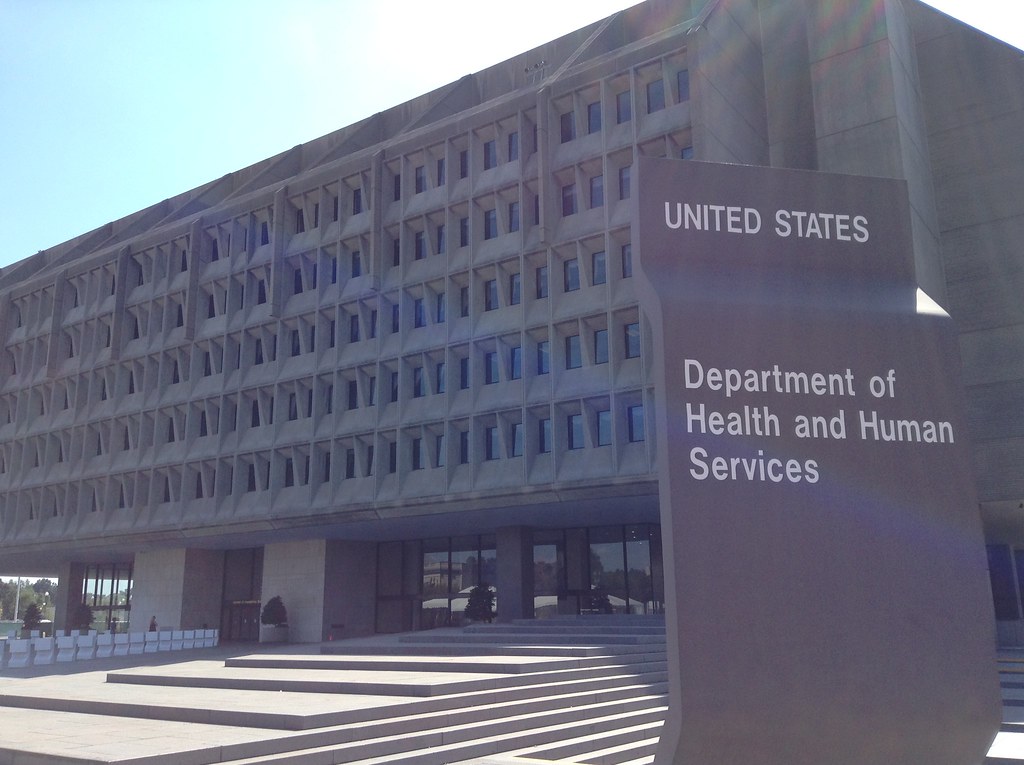

Gurtaran Johal is a student at Harvard Law School.
In today’s news and commentary, the U.S. Department of Health and Human Services lays off thousands of employees; attorneys for the Trump Administration argue against revealing plans to reduce the workforce of federal agencies; and the Fourth Circuit grants an emergency stay on the termination of temporary protected status (TPS) for thousands of Afghans in the United States.
On Monday, the U.S. Department of Health and Human Services officially laid off thousands of employees, which comes after the Supreme Court lifted a lower court order that had blocked President Trump’s ability to order mass layoffs of federal employees. The department first endured layoffs in late March, cutting 10,000 employees in the National Institutes of Health, the Food and Drug Administration, the Centers for Disease Control and Prevention, and other federal health agencies. The Health Secretary, Robert F. Kennedy Jr., pursued these layoffs in order to conduct a restructuring of the department, including by consolidating the department’s 28 divisions into 15. These layoffs will continue to face legal hurdles, as there remains an ongoing federal lawsuit in Rhode Island challenging the firings and reorganization.
Meanwhile, in AFGE v. Trump, attorneys for the Trump Administration argued that the administration does not have to reveal its plans to reduce the workforce of federal agencies. Specifically, they contend that the plaintiffs’ claims fall under the Administrative Procedure Act (APA), which only entitles the plaintiffs to review of the administrative record. The attorneys also reasoned that the plans are privileged, asserting that they include strategies for negotiations with unions, reorganization, and regulatory changes. As the mass layoffs become public, the Trump Administration’s reorganization plans remain largely private.
Lastly, on Friday, July 11th, Judge Theodore Chuang of the U.S. District Court for the District of Maryland ruled that a lawsuit challenging the revocation of TPS for Afghans could move forward, but protections for these immigrants would not be preserved throughout the litigation. Judge Chuang held that the plaintiffs had not demonstrated a “likelihood of success on the merits” necessary to stay removal of the protections. However, CASA, a nonprofit immigrant advocacy group, appealed the decision on Monday and received a stay, allowing Afghans to retain TPS. While the Fourth Circuit did not provide reasoning for its decision, the stay is in place for one week. Both sides will now file briefs supporting their positions.




Daily News & Commentary
Start your day with our roundup of the latest labor developments. See all
October 22
SCOTUS declines Wilcox appeal; Penn State research assistants win bargaining rights; SEIU sued over military leave firing.
October 21
DOL withdraws tipped-worker rule; Instacart settles hiring-bias claims; Phillips 66 locks out New Jersey refinery workers.
October 20
Korean unions oppose labor exemption bill; Portland city workers prepare for strike; UPenn grad student union looks to dismiss university filing
October 19
FDA reverses course on policy prohibiting off-duty union activity; FAA and NATCA reach deal to secure pay increase for air traffic controllers.
October 18
Federal judge again halts cancellation of the Bureau of Prisons’ CBA; tabletop gaming workers face roadblocks in union recognition.
October 16
Department of Labor reduces wage-and-hour enforcement at unionized workplaces; Fain's victory poses question of federal monitor's extension.