
Sophia is a student at Harvard Law School and a member of the Labor and Employment Lab.
In today’s news and commentary, the Ninth Circuit allows Trump to dismantle certain government unions based on national security concerns; and the DOL set to focus enforcement on firms with “outsized market power.”
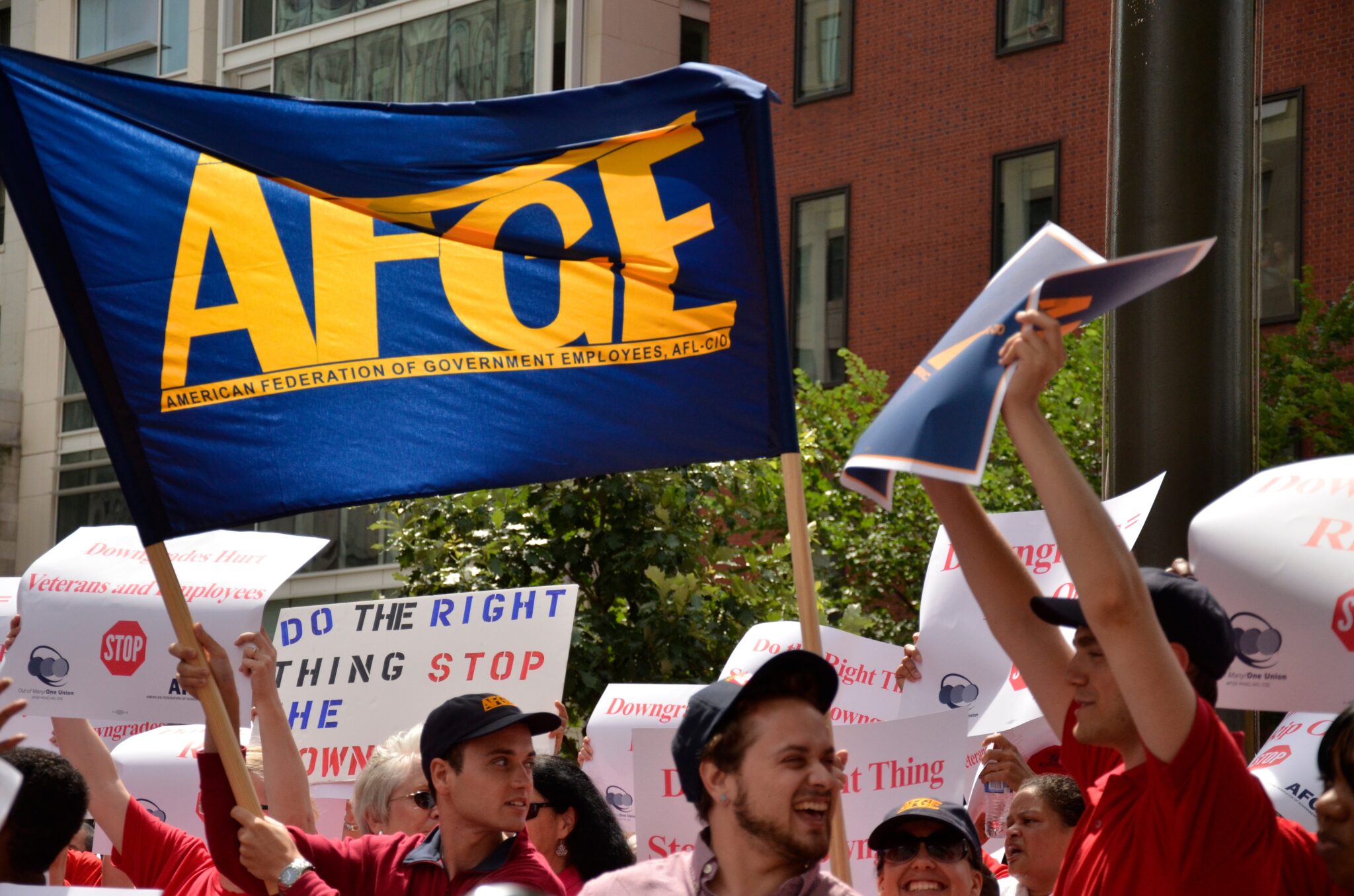
Yesterday, in AFGE v. Trump (9th Cir. 2026) the Ninth Circuit vacated a lower court order that enjoined President Trump’s Executive Order 14251, which excluded certain federal agencies from collective bargaining requirements under the Federal Service Labor-Management Relations Statute (FSLMRS). The FSLMRS protects the rights of federal employees to unionize, but exempts certain agencies from coverage and authorizes the President to exclude other agencies from coverage based on “national security concerns.” The agencies excluded under EO 14251 include: the Departments of State, Justice, and Veterans Affairs, the EPA, and most of the Departments of Energy, Defense, and Treasury, and some subdivisions of the Departments of Agriculture, Homeland Security, and Health and Human Services.
The plaintiffs-appellees were six unions representing ~800,000 federal civilian employees who sued the President, alleging that EO 14251 constituted First Amendment retaliation, among other claims. Regarding the merits of the case, a panel of three Ninth Circuit judges concluded that the plaintiffs “had not demonstrated a likelihood of success or serious questions on the merits of plaintiffs’ retaliation claim” because the President’s EO “discloses no retaliatory animus on its face and instead expresses that the President’s primary concern with union activity was its interference with national security.” As such, the Ninth Circuit upheld the EO on the grounds that the President “would have taken the same actions in the absence of the asserted retaliatory intent.”
In a memo sent to Department of Labor regional attorneys, Solicitor of Labor Jonathan Berry wrote that the Office of the Solicitor “will give greater scrutiny to employers whose market power permits them to dominate their respective labor markets in ways that can facilitate employment-law violations.” According to Josh Eidelson of Bloomberg News who viewed the memo, Berry also noted that enforcing laws against companies with “outsized market power… helps the American worker the most” and that companies where a union was already present to enforce workers’ rights would be less likely to receive agency scrutiny. The memo highlights a growing interest in the connection between antitrust and labor issues. However, questions of how the memo will actually be enforced remain given that 17.3% of the DOL’s workforce left as part of the Trump administration’s deferred resignation program in early 2025.



Daily News & Commentary
Start your day with our roundup of the latest labor developments. See all
March 19
WNBA and WNBPA reach verbal tentative agreement, United Teachers Los Angeles announce April 14 strike date, and the California Gig Workers Union file complaint against Waymo.
March 18
Meatpacking workers go on strike; SCOTUS grants cert on TPS cases; updates on litigation over DOL in-house agency adjudication
March 17
West Virginia passes a bill for gig drivers, the Tenth Circuit rejects an engineer's claims of race and age bias, and a discussion on the spread of judicial curtailment of NLRB authority.
March 16
Starbucks' union negotiations are resurrected; jobs data is released.
March 15
A U.S. District Court issues a preliminary injunction against the Department of Veterans Affairs for terminating its collective bargaining agreement, and SEIU files a lawsuit against DHS for effectively terminating immigrant workers at Boston Logan International Airport.
March 13
Republican Senators urge changes on OSHA heat standard; OpenAI and building trades announce partnership on data center construction; forced labor investigations could lead to new tariffs