
Liana Wang is a student at Harvard Law School.
In today’s news and commentary, a petition for certiorari is filed in Bivens v. Zep, New York nurses end their historic six-week-strike, and Professor Block argues for just cause protections in New York City.
Last fall, in Bivens v. Zep, the Sixth Circuit held that employers cannot be held liable when customers or other third parties harass employees unless the employee can show that the employer intended for the harassment to take place. As Madeline covered, the Sixth Circuit’s decision departed from the dominant approach taken by most other circuits and longstanding guidance from the EEOC. These other circuits only ask employees to demonstrate that their employer was negligent and failed to take corrective action. In November, a federal judge in Philadelphia also embraced the Sixth Circuit’s approach, holding that the University of Pennsylvania could not be held liable for sexual harassment of a female teaching assistant by her male student. The plaintiff in that case, O’Neill v. Trustees of the University of Pennsylvania, has appealed the judgment to the Third Circuit. And this month, plaintiff Dorothy Bivens petitioned the Supreme Court to hear the case and to reject the Sixth Circuit’s approach.
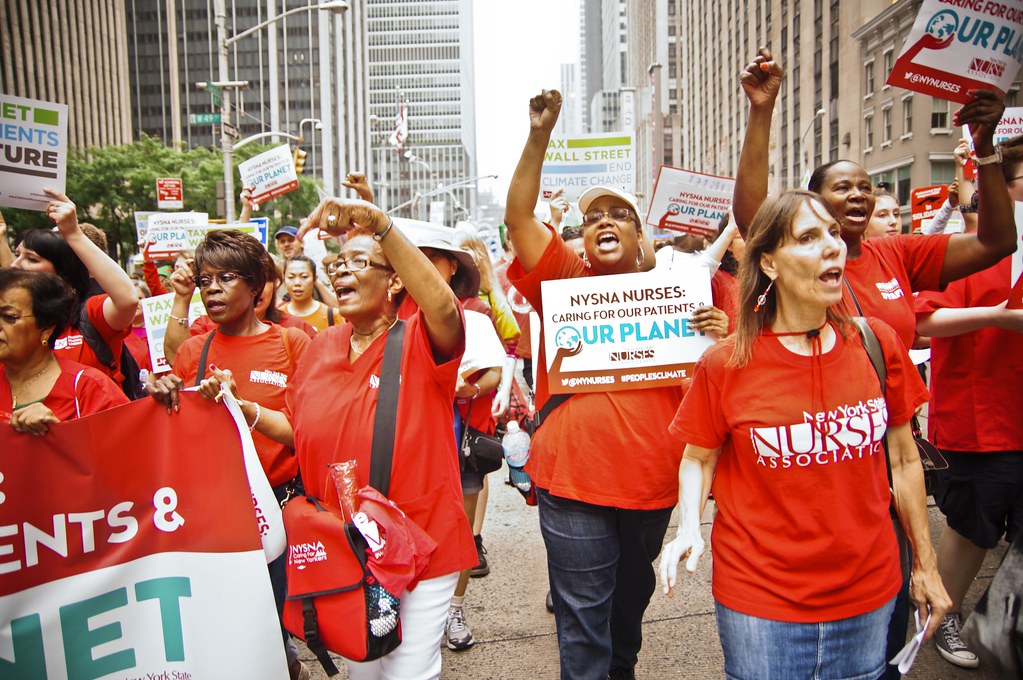
In New York City this weekend, over 4,000 nurses at New York-Presbyterian/Columbia hospital voted to end a six-week strike after winning higher pay, better staffing, and improved layoff protections. By doing so, the nurses concluded one of the longest and largest walkouts in the city’s history, involving over 15,000 nurses across three major hospital systems. Nurses who worked for Mount Sinai and Montefiore reached a deal thirteen days ago, as Miriam previously covered. The Presbyterian/Columbia nurses held out for slightly improved terms, including the ability to more quickly have staffing complaints proceed to arbitration. During the strike, the three hospital systems collectively spent over $100 million on hiring temporary nurses. And the number of nurses on strike more than doubled the number that participated in the last strike, in 2023, which made major gains in combatting chronic understaffing. Moreover, the nurses were able to make major gains while not being able to depend upon protections from the NLRB.
The end of the nurses strike represents concrete gains for a meaningful subset of the city’s workers. To protect the rest—especially those without the backing of a union—Professor Sharon Block has advocated for the new Mamdani Administration to impose “just cause” standards on more employers in New York City Policy Forum. Today, most workers are employed “at-will,” meaning that they can be fired any reason, as long as that reason is not unlawful (such as a reason couched in discrimination on the basis of race or sex, among others). Under a just cause standard, “employers would have to provide the rationale for firing a worker, instead of putting the burden on fired workers to figure out why they’ve been terminated” (and whether that reason was illegal). Since 2021, fast food workers in the city have received these protections. In December 2025, just cause protections were also extended to delivery drivers. Block proposes that the city could continue to expand these protections sector by sector, or require these protections in its contracts for city goods and services. Or, to ensure that most workers would receive just cause protections, Mayor Mamdani could also work with the City Council to pass the Secure Jobs Act.



Daily News & Commentary
Start your day with our roundup of the latest labor developments. See all
March 13
Republican Senators urge changes on OSHA heat standard; OpenAI and building trades announce partnership on data center construction; forced labor investigations could lead to new tariffs
March 12
EPA terminates contract with second-largest union; Florida advances bill restricting public sector unions; Trump administration seeks Supreme Court assistance in TPS termination.
March 11
The partial government shutdown results in TSA agents losing their first full paycheck; the Fifth Circuit upholds the certification of a class of former United Airline workers who were placed on unpaid leave for declining to receive the COVID-19 vaccine for religious reasons during the pandemic; and an academic group files a lawsuit against the State Department over a policy that revokes and denies visas to noncitizens for their work in fact-checking and content moderation.
March 10
Court rules Kari Lake unlawfully led USAGM, voiding mass layoffs; Florida Senate passes bill tightening union recertification rules; Fifth Circuit revives whistleblower suit against Lockheed Martin.
March 9
6th Circuit rejects Cemex, Board may overrule precedents with two members.
March 8
In today’s news and commentary, a weak jobs report, the NIH decides it will no longer recognize a research fellows’ union, and WNBA contract talks continue to stall as season approaches. On Friday, the Labor Department reported that employers cut 92,000 jobs in February while the unemployment rate rose slightly to 4.4 percent. A loss […]