

Finlay Adamson is a student at Harvard Law School.
In today’s news and commentary, Argentine unions march against labor law reform; WNBA players vote to authorize a strike; and the NLRB prepares to clear its backlog.
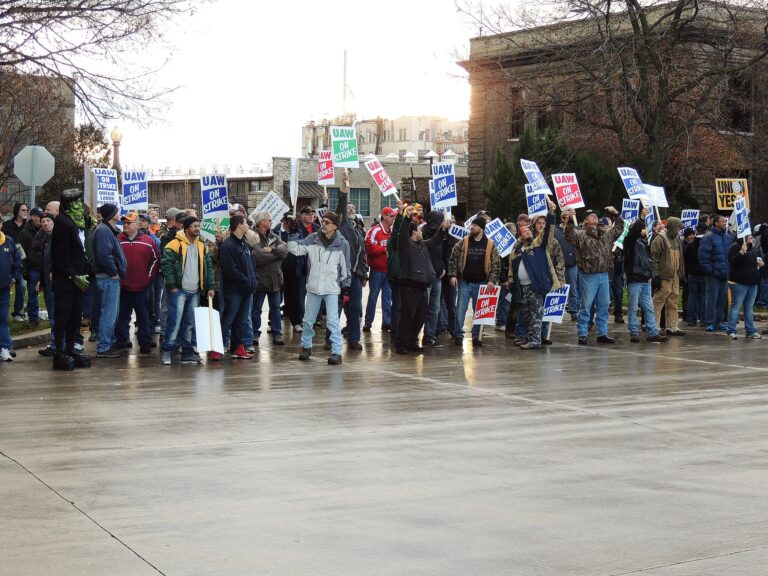
On Thursday, thousands of Argentines joined marches organized by the Confederación General del Trabajo (CGT), the country’s largest trade union, to protest labor law reforms. The protests drew thousands of workers in Buenos Aires and other major cities who are seeking to maintain their labor rights. The reforms, proposed by libertarian President Javier Milei, would reduce severance pay, eliminate the right to strike in certain sectors, and allow for 12-hour workdays. While Milei and his supporters claim that the reforms will increase hiring, CGT members argue the law will weaken worker protections and pit “one worker against another.” The law is likely to face few challenges in the legislature following the success of President Milei’s party, La Libertad Avanza (LLA), in October elections.
Earlier this week, the Women’s National Basketball Player’s Association (WNBPA) voted to authorize a strike amidst ongoing negotiations with the WNBA. While the vote does not immediately initiate a strike, the WNBPA’s executive council is now empowered to call for a strike at its own discretion. While the league’s current contract with the Player’s Association was set to expire in October, both parties agreed to extend the CBA to January 9th. Revenue sharing is a particularly contentious issue in negotiations; while the WNBA offered a maximum salary with a $1 million base, just 15% of the league’s revenue would be shared with players. The WNBPA is seeking a 30% revenue share, alongside child care and retirement benefits. For comparison, NBA players negotiated a 50% revenue share in their last contract. Support for the strike authorization was overwhelming, with 98% of players voting to authorize.
As Sophia recently covered, the National Labor Relations Board (NLRB) officially regained its quorum on Thursday after the Senate voted to confirm James Murphy and Scott Mayer as Board members. Over the past 11 months, the Board’s lack of a quorum prevented members from issuing decisions and overturning Biden-era precedents. With their powers restored, the Republican-majority Board is expected to move quickly to clear its backlog of cases. Former Board member Marvin Kaplan, a first-term Trump appointee whose term expired in August, recently stated that he and Biden appointee David Prouty prepared large numbers of draft decisions that are ready to be issued. Given that these decisions are the result of bipartisan collaboration, it is unclear whether they will challenge existing precedent or address particularly contentious issues. Kaplan declined to provide specifics on the decisions.



Daily News & Commentary
Start your day with our roundup of the latest labor developments. See all
March 20
Appeal to 9th Cir. over law allowing suit for impersonating union reps; Mass. judge denies motion to arbitrate drivers' claims; furloughed workers return to factory building MBTA trains.
March 19
WNBA and WNBPA reach verbal tentative agreement, United Teachers Los Angeles announce April 14 strike date, and the California Gig Workers Union file complaint against Waymo.
March 18
Meatpacking workers go on strike; SCOTUS grants cert on TPS cases; updates on litigation over DOL in-house agency adjudication
March 17
West Virginia passes a bill for gig drivers, the Tenth Circuit rejects an engineer's claims of race and age bias, and a discussion on the spread of judicial curtailment of NLRB authority.
March 16
Starbucks' union negotiations are resurrected; jobs data is released.
March 15
A U.S. District Court issues a preliminary injunction against the Department of Veterans Affairs for terminating its collective bargaining agreement, and SEIU files a lawsuit against DHS for effectively terminating immigrant workers at Boston Logan International Airport.