
Sophia is a student at Harvard Law School and a member of the Labor and Employment Lab.
In today’s news and commentary, labor law professors file an amici curiae arguing that the NLRA should not preempt a California law empowering its state labor board to adjudicate certain labor disputes, and the NLRB officially regains quorum.
As Mila previously covered, in October 2025 the NLRB sued the State of California and its Public Employment Relations Board (PERB), seeking an injunction against enforcement of Section 2 of Assembly Bill No. 288, which amends California’s Labor Code to permit PERB to act when the NLRB has “expressly or impliedly ceded jurisdiction,” such as when the Board lacks a quorum. The Board argues that the California law is preempted under Garmon. However, last week over twenty labor law professors filed an amici curiae brief arguing that Garmon preemption should not apply because the Board is no longer an independent, functional agency, undermining the doctrinal premise that justified exclusive federal jurisdiction in the first place.
The labor law professors challenge the Board’s preemption claim on three main grounds. First, Garmon preemption—a judicially created exception to the presumption that state police powers over labor and employment disputes survive absent clear congressional intent—depends on the premise that the Board is an independent, apolitical agency. Second, state labor boards routinely exercised authority alongside the Board in the 1930s and 1940s, demonstrating that Congress did not intend blanket federal displacement of state labor regulation. Third, the Board is no longer independent, neutral, or reliably functional—the very characteristics that justified exclusive federal jurisdiction under Garmon in the first place. OnLabor contributors Block, Elmore, Estlund, Fisk, Garden, LeClercq, Oswald, Racabi, Sachs, and Zatz are among the brief’s signatories.
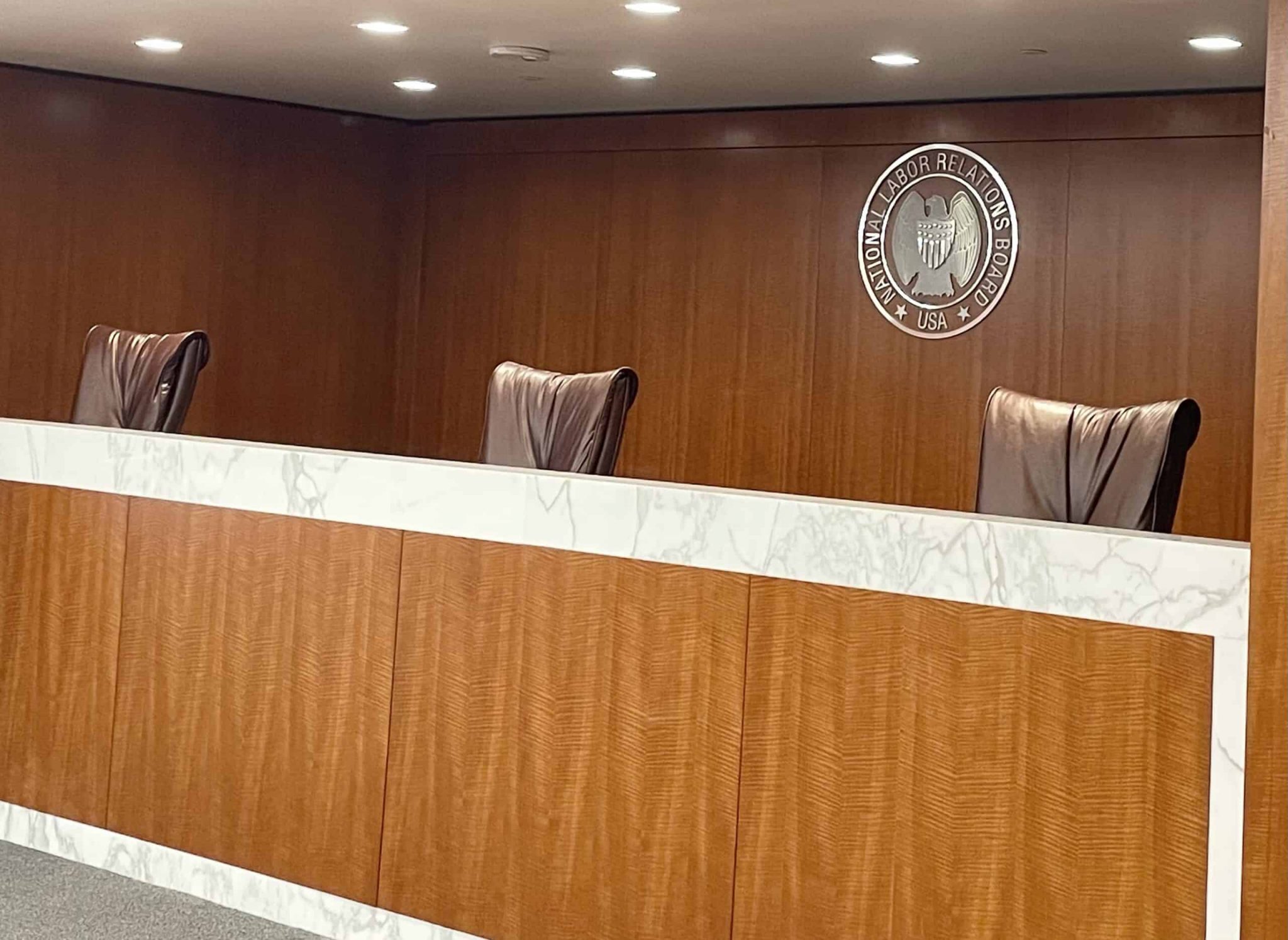
Last night, the NLRB regained quorum by a 53-43 Senate vote, confirming James Murphy and Scott Mayer (whose backgrounds I covered in a previous post) as Board members and Crystal Carey as NLRB general counsel. Carey was most recently a partner at the management-side labor firm Morgan Lewis & Bockius LLP, has defended captive audiences, and vocally opposed the Board’s decision to ban such mandatory meetings. After almost 11 months without a quorum, the Board is now able to resume issuing decisions on requests for review from Regional Director decisions and exceptions to ALJ decisions. The Republican-dominated Board is expected to reconsider past Board decisions through a more management-friendly lens, but as Matt Bruenig noted, the Board historically only overrules its precedent when it has three affirmative votes to do so. This new Board, however, could choose to buck tradition and reverse precedent in 2-1 decisions.





Daily News & Commentary
Start your day with our roundup of the latest labor developments. See all
October 9
DHS proposes a $100k fee for the foreign grad employment program; Trump suspends tech company access to green card program; and private equity perpetuates poor working conditions for home care workers.
October 8
NLRB judge finds UPS unlawfully restricted union insignia; Harvard graduate workers authorize second strike; OSHA orders Union Pacific to pay $300,000 in damages in whistleblower case.
October 7
DOL scraps plan to remove decades-old wage-and-hour guidance from federal regulations; New York enacts personnel records access law; Starbucks loses bid to dismiss Workers United trademark suit.
October 6
Protect College Sports Act dampens athlete unionization outlook; Stanford RA union decides to withdraw petition
October 5
Delaware bans captive audience meetings; EEOC settles remote work national origin discrimination claim; First Circuit stays enforcement order in VA's dispute with AFGE.
October 4
Boston nurses announce open-ended strike; federal judge restores federal prison workers' union protections; St. Louis workers form the first movie theater union in Missouri.