
Sophia is a student at Harvard Law School and a member of the Labor and Employment Lab.
In today’s news and commentary, labor law professors file an amici curiae arguing that the NLRA should not preempt a California law empowering its state labor board to adjudicate certain labor disputes, and the NLRB officially regains quorum.
As Mila previously covered, in October 2025 the NLRB sued the State of California and its Public Employment Relations Board (PERB), seeking an injunction against enforcement of Section 2 of Assembly Bill No. 288, which amends California’s Labor Code to permit PERB to act when the NLRB has “expressly or impliedly ceded jurisdiction,” such as when the Board lacks a quorum. The Board argues that the California law is preempted under Garmon. However, last week over twenty labor law professors filed an amici curiae brief arguing that Garmon preemption should not apply because the Board is no longer an independent, functional agency, undermining the doctrinal premise that justified exclusive federal jurisdiction in the first place.
The labor law professors challenge the Board’s preemption claim on three main grounds. First, Garmon preemption—a judicially created exception to the presumption that state police powers over labor and employment disputes survive absent clear congressional intent—depends on the premise that the Board is an independent, apolitical agency. Second, state labor boards routinely exercised authority alongside the Board in the 1930s and 1940s, demonstrating that Congress did not intend blanket federal displacement of state labor regulation. Third, the Board is no longer independent, neutral, or reliably functional—the very characteristics that justified exclusive federal jurisdiction under Garmon in the first place. OnLabor contributors Block, Elmore, Estlund, Fisk, Garden, LeClercq, Oswald, Racabi, Sachs, and Zatz are among the brief’s signatories.
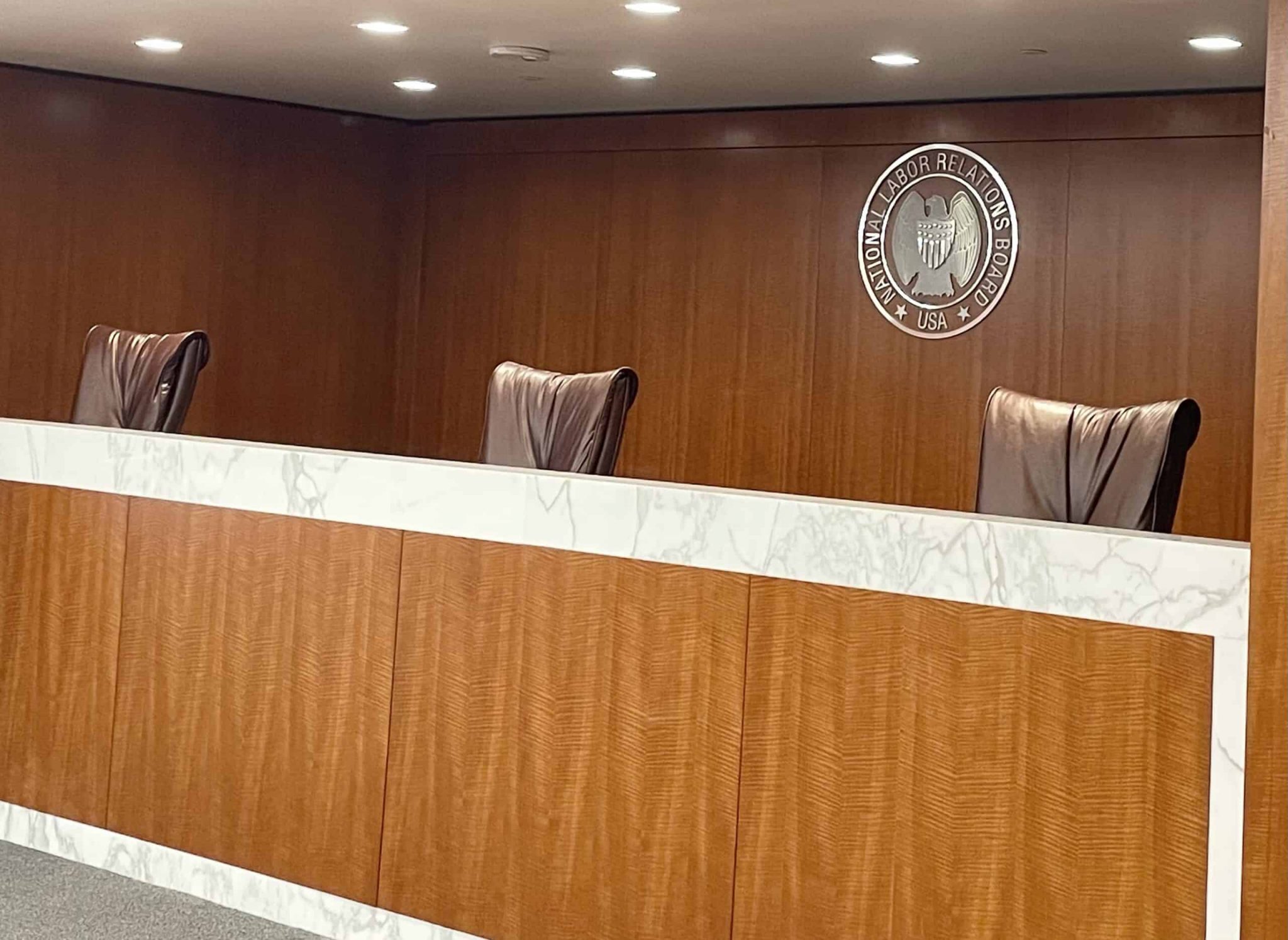
Last night, the NLRB regained quorum by a 53-43 Senate vote, confirming James Murphy and Scott Mayer (whose backgrounds I covered in a previous post) as Board members and Crystal Carey as NLRB general counsel. Carey was most recently a partner at the management-side labor firm Morgan Lewis & Bockius LLP, has defended captive audiences, and vocally opposed the Board’s decision to ban such mandatory meetings. After almost 11 months without a quorum, the Board is now able to resume issuing decisions on requests for review from Regional Director decisions and exceptions to ALJ decisions. The Republican-dominated Board is expected to reconsider past Board decisions through a more management-friendly lens, but as Matt Bruenig noted, the Board historically only overrules its precedent when it has three affirmative votes to do so. This new Board, however, could choose to buck tradition and reverse precedent in 2-1 decisions.





Daily News & Commentary
Start your day with our roundup of the latest labor developments. See all
March 13
Republican Senators urge changes on OSHA heat standard; OpenAI and building trades announce partnership on data center construction; forced labor investigations could lead to new tariffs
March 12
EPA terminates contract with second-largest union; Florida advances bill restricting public sector unions; Trump administration seeks Supreme Court assistance in TPS termination.
March 11
The partial government shutdown results in TSA agents losing their first full paycheck; the Fifth Circuit upholds the certification of a class of former United Airline workers who were placed on unpaid leave for declining to receive the COVID-19 vaccine for religious reasons during the pandemic; and an academic group files a lawsuit against the State Department over a policy that revokes and denies visas to noncitizens for their work in fact-checking and content moderation.
March 10
Court rules Kari Lake unlawfully led USAGM, voiding mass layoffs; Florida Senate passes bill tightening union recertification rules; Fifth Circuit revives whistleblower suit against Lockheed Martin.
March 9
6th Circuit rejects Cemex, Board may overrule precedents with two members.
March 8
In today’s news and commentary, a weak jobs report, the NIH decides it will no longer recognize a research fellows’ union, and WNBA contract talks continue to stall as season approaches. On Friday, the Labor Department reported that employers cut 92,000 jobs in February while the unemployment rate rose slightly to 4.4 percent. A loss […]