
Mila Rostain is a student at Harvard Law School and the Digital Director of OnLabor.
In today’s News and Commentary, the House forces a vote on the “Protect America’s Workforce Act,” Judge Friedman hears arguments on unions’ requests to enjoin Trump’s executive order nullifying collective bargaining rights, and faculty at Penn State file a petition to form a union.
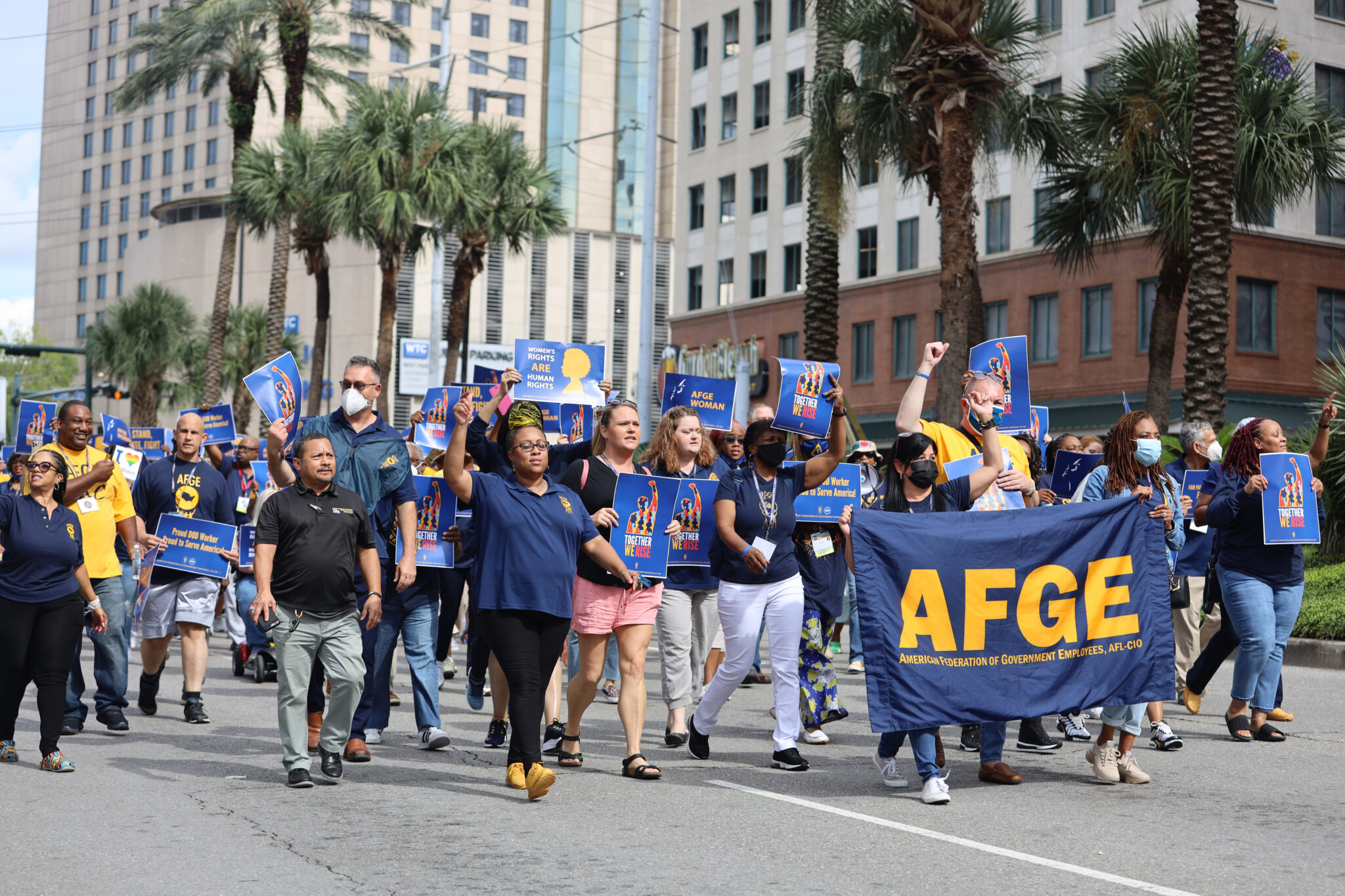
Yesterday, the House of Representatives voted 222 to 200 in an up-down vote to approve Rep. Jared Golden’s motion to discharge, requiring Speaker Mike Johnson to hold a vote on the bipartisan “Protect America’s Workforce Act.” The bill would repeal President Trump’s executive order stripping bargaining rights from federal workers. Rep. Golden had noticed his intent to force a floor vote on Tuesday night after initiating a discharge petition this summer. Golden stated that without collective bargaining rights, “federal workers are more vulnerable to unfair treatment and political interference.” A final vote on the bill is expected to take place today.
Also yesterday, Judge Friedman of the US District Court for the District of Columbia heard arguments on two federal unions’ request to enjoin President Trump’s executive order nullifying their collective bargaining agreements. According to Bloomberg, the Patent Office Professional Association and the National Weather Service Employees Organizations sued after the August executive targeting their agreements because according to the Trump Administration, both the Patent and Trademark Office and the National Weather Service are engaged in national security functions. The Department of Justice claims that the Invention Secrecy Act, a law which allows the government to bar certain patents because of national security concerns, demonstrates the office’s ties to national security. Judge Friedman has previously ruled in favor of unions in similar cases but found this request “more complicated” to decide.
On Tuesday, Penn State faculty filed a petition with the Pennsylvania Labor Relations Board to form a union. According to the faculty’s organizing committee, the effort is the largest public sector campaign in Pennsylvania in decades. Chemistry professor Julio Palma stated that “a faculty union will give us a real voice, a legally recognized voice to defend our jobs with dignity, to protect our profession, to protect academic freedom, to support our students.” The professors expect a vote in 2026.




Daily News & Commentary
Start your day with our roundup of the latest labor developments. See all
October 23
Employers increasingly shift health care costs onto workers and NYC proposes placing restrictions on fully automated customer service.
October 22
SCOTUS declines Wilcox appeal; Penn State research assistants win bargaining rights; SEIU sued over military leave firing.
October 21
DOL withdraws tipped-worker rule; Instacart settles hiring-bias claims; Phillips 66 locks out New Jersey refinery workers.
October 20
Korean unions oppose labor exemption bill; Portland city workers prepare for strike; UPenn grad student union looks to dismiss university filing
October 19
FDA reverses course on policy prohibiting off-duty union activity; FAA and NATCA reach deal to secure pay increase for air traffic controllers.
October 18
Federal judge again halts cancellation of the Bureau of Prisons’ CBA; tabletop gaming workers face roadblocks in union recognition.