
Holt McKeithan is a student at Harvard Law School.
In today’s News and Commentary, the NLRB alleges Amazon is a joint-employer of subcontracted drivers and committed unfair labor practices, Shawn Fain threatens a Stellantis strike at the DNC, and Canada intervenes in a railway labor dispute.
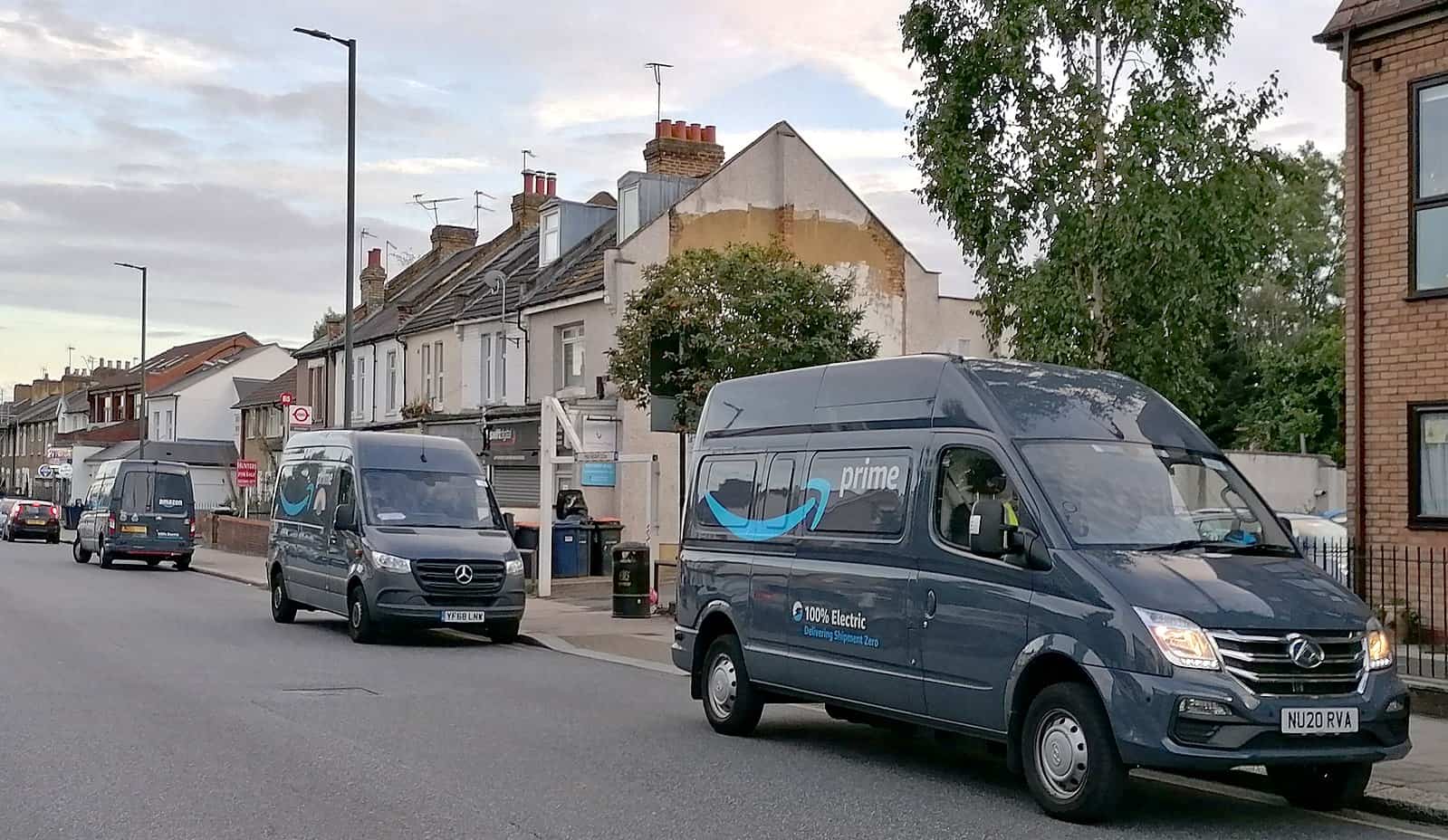
The NLRB general counsel alleged that Amazon is the legal employer of subcontracted drivers. The company has treated its drivers as independent contractors and refused to negotiate after the drivers organized with the Teamsters. Amazon claims that refusal is legal because the drivers are not its employees, rather they are employed by small companies called delivery service partners with whom Amazon contracts. Amazon stringently regulates those drivers by imposing rules about drivers’ appearances, drug testing, and social media posts. The NRLB complaint rejects Amazon’s efforts to avoid labor laws by classifying workers who perform critical functions for it as contractors. It and other large technology companies like Uber and Lyft have taken this route.
UAW president Shawn Fain threatened to strike Stellantis during his speech at the Democratic National Convention. The union’s primary gripe with the automaker is over a promise to reopen an assembly plant in Belvidere, Illinois. Stellantis agreed to reopen the factory in contract negotiations last fall following after a six-week strike. “Stellantis must keep the promises they made to America in our union contract. The UAW will take whatever action necessary at Stellantis or any other corporation to stand up and hold corporate America accountable. . . If they go back on this, what else can they go back on?” said Fain. Stellantis notified the UAW of plans to delay reopening of the Belvidere plant, but says it stands by its commitment.
Per Divya’s post yesterday, two Canadian railways are in the middle of labor negotiations with serious implications for the Canadian and American economies. The government intervened yesterday to stop lock-outs. The country’s Labour Minister petitioned the Canadian Industrial Relations Board to issue a back-to-work order and require the parties to enter binding arbitration. Both sides are preparing to return to work. The union’s primary concern in labor negotiations is securing scheduling improvements for workers, who are motivated by fatigue-induced safety issues.




Daily News & Commentary
Start your day with our roundup of the latest labor developments. See all
October 23
Employers increasingly shift health care costs onto workers and NYC proposes placing restrictions on fully automated customer service.
October 22
SCOTUS declines Wilcox appeal; Penn State research assistants win bargaining rights; SEIU sued over military leave firing.
October 21
DOL withdraws tipped-worker rule; Instacart settles hiring-bias claims; Phillips 66 locks out New Jersey refinery workers.
October 20
Korean unions oppose labor exemption bill; Portland city workers prepare for strike; UPenn grad student union looks to dismiss university filing
October 19
FDA reverses course on policy prohibiting off-duty union activity; FAA and NATCA reach deal to secure pay increase for air traffic controllers.
October 18
Federal judge again halts cancellation of the Bureau of Prisons’ CBA; tabletop gaming workers face roadblocks in union recognition.