
James Blanchfield is a student at Harvard Law School.
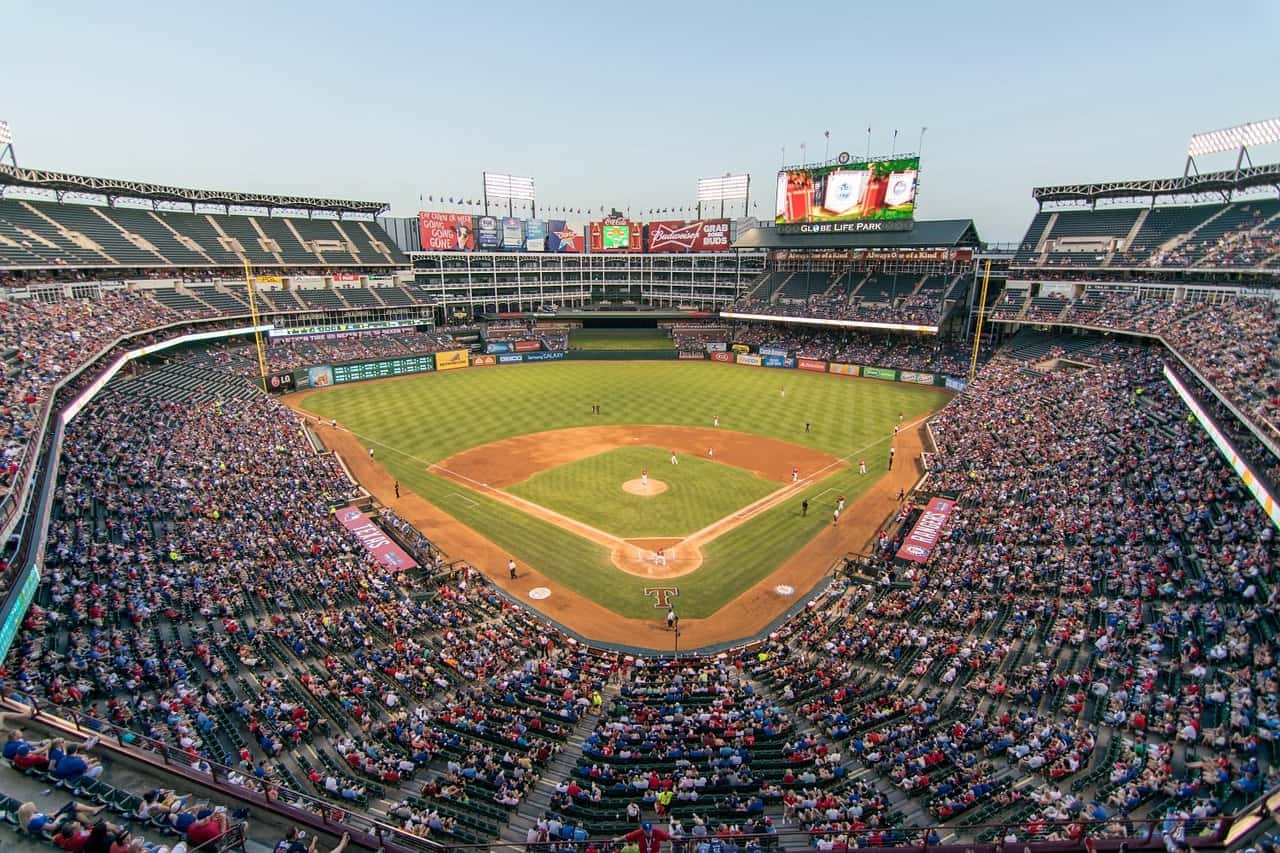
The collective bargaining agreement between Major League Baseball (MLB) and the Players’ Association (MLBPA) expires on Tuesday, December 1st. After months of bargaining, the parties appear no closer to an agreement, and most expect a lock-out. There is one massive sticking point in negotiations: the salary cap, or the limit on how much teams can spend on players’ salaries. The owners strongly favor the cap, while the union is strongly opposed. The divide between the two sides is so great that many expect a lock-out to last months, with the entirety of the 2027 season in potential jeopardy.
A Brief History of MLBPA Labor Disputes
This is far from the first time that baseball has been faced with such a consequential stand-off. The MLBPA is widely considered to be not only the strongest of the professional sports players’ unions, but one of the strongest unions in the American economy. When the union formed in 1954, the average player salary was $13,722, or approximately $170,000 today. In 2026, the average player salary was $5.34 million, representing over a 3,000% increase.
There have been nine work stoppages in the MLBPA’s history, which have resulted in numerous victories for the union. Concepts like salary arbitration and free agency have been transformative for player compensation and freedom and were won as the result of strikes and lockouts over the decades. The success of the union has been largely due to player commitment. Marvin Miller, a former executive director of the union, famously said, “The secret of the success of the MLBPA is not a secret. It’s the solidarity of the membership.”
The MLBPA’s perceived strength among sports unions is in large part due to the lack of a salary cap in baseball. Of the four major North American sports leagues (MLB, NFL, NBA, and NHL), professional baseball is the only one remaining that lacks a “hard” cap, where teams are simply not allowed to field a roster of players above a certain aggregate salary. For years, the MLB has operated with a “soft” cap, where teams have no limit to their spending but get charged a “luxury tax” for exceeding a certain amount. In 1994–95, the owners insisted on a hard salary cap which resulted in the longest strike in MLBPA history. While the players ultimately won, the idea of a salary cap never fully went away, and the owners have finally elected to go all in on a cap during the current negotiations.
The Salary Cap Debate
Why do the owners want a salary cap so badly? Their argument is that baseball needs a competitive reset. A high payroll does not guarantee success in sports, but it certainly helps. Complaints about competitive balance in baseball reached their peak in 2024–25 when the highest-spending team, the Los Angeles Dodgers, won back-to-back World Series. Last year, the Dodgers payroll was $515 million, whereas the league-low payroll for the Miami Marlins was $69 million. The owners contend that this gulf is only widening and a cap is necessary for every team—and every fanbase—to have an equal opportunity to win the championship.
The players respond that the argument about competitive balance is not only unfounded but is just pretext for the owners to pocket the teams’ profits. This year, the Milwaukee Brewers won the World Series, beating the Tampa Bay Rays in five games. The two finalists had payrolls in the bottom half of the league, with Milwaukee at 19th and Tampa Bay at 28th out of 30 teams. And along the way, the Brewers swept the much-maligned Dodgers, demonstrating that competition is alive and well in the sport.
Regarding the owners’ motives, the financial incentives cannot be ignored. Capping costs of labor predictably increases franchise values, which the owners can then realize by either borrowing against the team or selling the team down the road. And while there is certainly a disparity in revenue between the largest and smallest teams, the gap is significantly smaller than the gap in payroll. Some owners choose to spend a much higher proportion of their revenue on player salaries, thus greatly improving the team’s chance of victory, while other owners opt to put the majority of revenues into their own pockets, demonstrating that owner decision-making plays a large role in team competitiveness. Moreover, there are other ways the league could try to improve its cash disparity problem, such as closing loopholes in the existing revenue sharing model or reforming the luxury tax system. Overall, it’s far from clear that putting a hard limit on player salaries is the best solution to this issue.
The Bottom Line
At its core, the MLBPA’s position on the salary cap is not really about the competitive balance or ownership decision-making. It boils down to a fundamental principle that workers should receive their fair share of the wealth they have created. Putting a limit on how much owners can spend on payroll would result in players receiving less of that value. A salary cap would, in the words of MLBPA interim executive director Bruce Meyer, “artificially suppress salaries.”
The effects can be seen in other sports that have a salary cap. Big name players in hockey, basketball, and football frequently make headlines by taking large pay cuts from their market value in order to comply with the salary cap and allow their teams to use the money on other players. In the NBA, the Los Angeles Clippers recently were sanctioned for attempting to circumvent the salary cap, showing that ownership recognized the true value of their star player and attempted to match it by underhanded means.
The question for some baseball fans remains: So what? Sure, salaries will be deflated but why does it matter if Shohei Ohtani only makes $60 million a year as opposed to $70 million? This view has two fundamental flaws. First, the vast majority of players are not seeing anything close to Ohtani’s earnings. Most players have short careers at league-minimum salary, which after agent fees, taxes in several states, and training costs is far from enough to be set for life. Second, when the players’ salary gets deflated, that difference just goes to the owners. Fans aren’t going to the stadiums or turning the game on TV because of which billionaire owns the team; they are invested because of the skill and dedication of the players. That value should accordingly go to who is creating it.
The MLBPA occupies a unique place in the labor world, but its fight shares a central feature with all labor struggles—standing up for workers in the face of powerful ownership. The MLB owners have amassed a “war chest” of $2 billion in preparation for this lockout, showing clearly what the union is up against. The MLBPA’s fight is a symbol to the entire labor movement that unions can stand up to ownership. Bruce Meyer, for one, is confident that the MLBPA can come out victorious, saying, “Our union has never been broken and never will be.”






Daily News & Commentary
Start your day with our roundup of the latest labor developments. See all
November 23
New York City’s teachers’ union announces intent to sue the city’s main pension fund; Teamsters win nearly $100 million arbitration award against Union Pacific Railroad; security workers at two busy California ports reach tentative contract agreement.
November 22
Research from the Rutgers Workplace Justice Lab finds that states are failing to use their wage theft enforcement powers, and global union leaders call for governments to review contracts with Amazon and AWS.
November 19
Harvard academic workers end strike without contract; Reuters journalists authorize a strike; Spirit Airlines’ sale of employee data to Google for AI training approved.
November 18
Judge vacates foreign-student visa limits; DOL proposes QPAM relief; Supreme Court declines Nexstar appeal.
November 17
Amazon workers in Canada win company's first union contract in North America; NY law gives employees access to personnel records; D.C. Circuit looks to overturn Trump joint employer rule
November 16
FMCSA ordered to disburse $73 million in withheld highway funds to New York; Department of Labor final rule regarding large union financial disclosures issued six years after initial withdrawal is upheld; Department of Labor issues enforcement alert for physician ghost networks maintained by health plans.