
Benjamin Sachs is the Kestnbaum Professor of Labor and Industry at Harvard Law School and a leading expert in the field of labor law and labor relations. He is also faculty director of the Center for Labor and a Just Economy. Professor Sachs teaches courses in labor law, employment law, and law and social change, and his writing focuses on union organizing and unions in American politics. Prior to joining the Harvard faculty in 2008, Professor Sachs was the Joseph Goldstein Fellow at Yale Law School. From 2002-2006, he served as Assistant General Counsel of the Service Employees International Union (SEIU) in Washington, D.C. Professor Sachs graduated from Yale Law School in 1998, and served as a judicial law clerk to the Honorable Stephen Reinhardt of the United States Court of Appeals for the Ninth Circuit. His writing has appeared in the Harvard Law Review, the Yale Law Journal, the Columbia Law Review, the New York Times and elsewhere. Professor Sachs received the Yale Law School teaching award in 2007 and in 2013 received the Sacks-Freund Award for Teaching Excellence at Harvard Law School. He can be reached at [email protected].
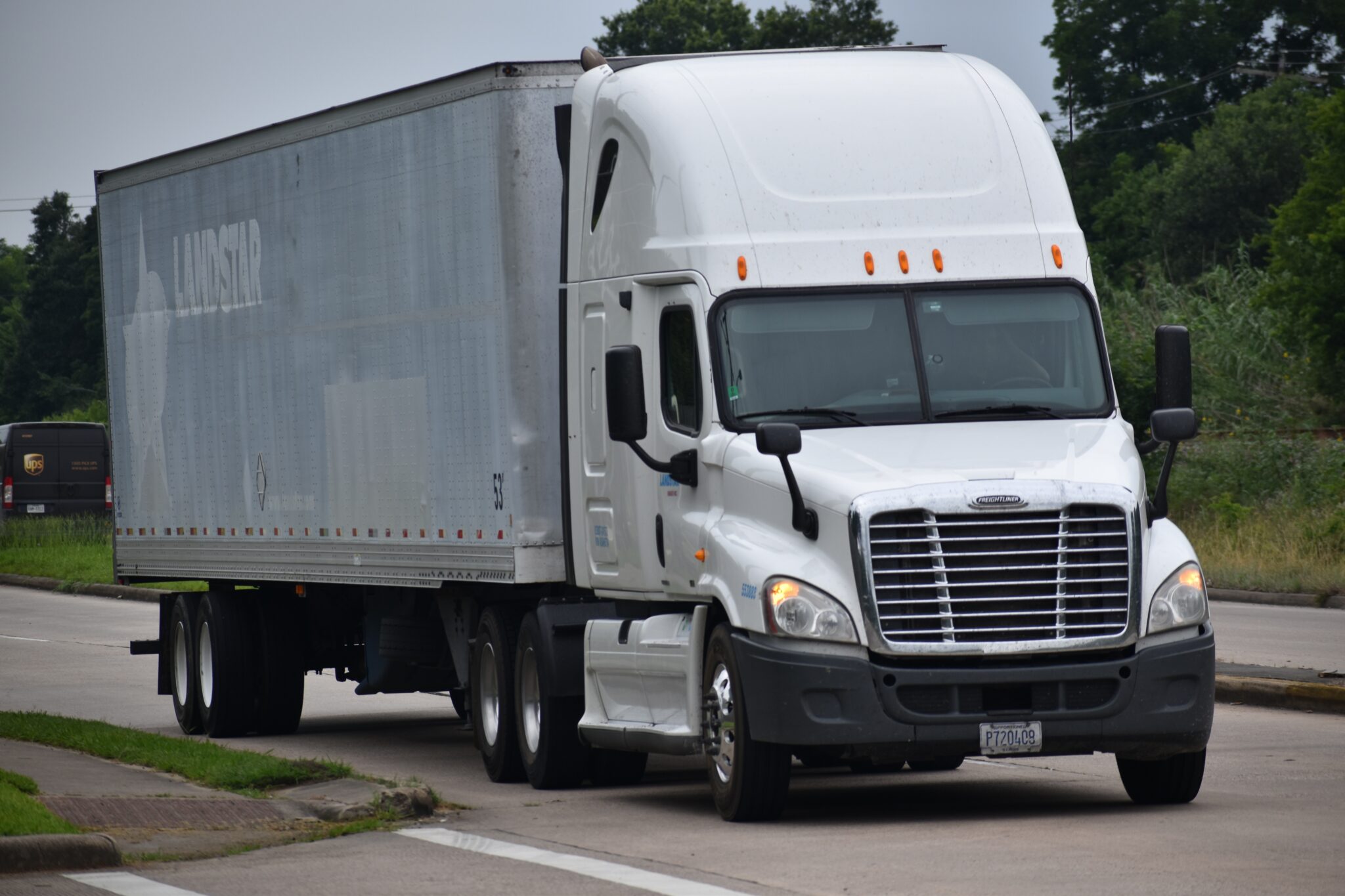
In a brief and straightforward opinion, the Supreme Court today held that a delivery driver who operates solely within state borders, neither crossing state lines nor interacting with vehicles that do, was nonetheless engaged in interstate commerce. Because the driver transported goods for a segment of their interstate journey from the place where they were made to the place where they were to be sold, he could claim exemption from the Federal Arbitration Act (FAA). This is the fourth case in the past seven years to address the reach of the FAA and the fourth time that workers have succeeded in arguing that they are beyond the statute’s reach. The cases preserve for important categories of the labor force – likely including Amazon delivery drivers – the right to sue in court.
The FAA requires courts to enforce arbitration agreements signed by private parties, but, in §1, it exempts from its coverage “contracts of employment of seamen, railroad employees, or any other class of workers engaged in foreign or interstate commerce.” Flowers Foods is a baked goods manufacturer that makes Wonder Bread and Krimpets and has bakeries in 19 states. Angelo Brock is a delivery driver who works in Denver. He picks up Flowers Foods products from a warehouse in Colorado and delivers them to stores in the Denver area. He never leaves the state. Flowers Foods argued that because Brock did not cross state lines and, in fact, had no interaction with anyone who does, Brock could not be “engaged in interstate commerce.”
The Court just flatly disagreed. It read the statutory term “engage” to mean something like “to take part in.” It accordingly held that nothing in the statutory language requires a worker to cross state lines themselves, or to interact with someone who does, to be engaged in a stream of commerce that begins in one state and ends in another. As long as the worker “takes part” in that stream, they are engaged in commerce. The Court cites cases as recent as Southwest Airlines Co. v. Saxon (2022) and as old as The Daniel Ball (1871) in support of the conclusion. And it offered a hypothetical involving Krimpets to butress the point. It’s holding was crystal clear:
Before us, Flowers’s sole theory is that, to be engaged in interstate commerce for purposes of §1, a worker must either cross state lines or interact with a vehicle that does (say, by loading or unloading the goods its carries). That theory is incorrect. We have already held in Saxon that §1 does not require workers to cross state lines. Nor, we now add, does §1 turn on a game of tag with vehicles that do.
A complete victory for Brock, and delivery drivers, on the question presented. The case will have important implications for many workers, including Amazon’s “last mile” drivers who deliver goods that originate out of state.
In one of the opinion’s closing paragraphs, the Court writes that Flowers “hint[ed]” at alternative arguments to support its claim that Brock should not be able to claim FAA exemption. One such argument was that, because Flowers contracts with Brock “through a distribution agreement,” there is no “contract of employment” and so no trigger for the application of §1’s exemption. A second argument was that Brock is not engaged in interstate commerce because he “orders, purchases, and takes title to Flower’s goods, before selling them to local stores.” Although many of the Supreme Court decisions relied on by the Court here reject these alternative theories, the opinion notes that some lower courts have more recently found these types of arguments convincing. Perhaps this is a signal of where employers will focus their FAA energies in the years ahead. The Court, though, gave no indication of whether it was amenable or hostile to these arguments, finding that Flowers did not adequately raise them and concluding that “whatever other limits §1 may or may not contain,” it is not limited by a requirement of crossing state lines or interacting with vehicles that do.
(One final note: the Court unfortunately did not take up the AFL-CIO’s suggestion that a “marginal note” in the FAA session law means the FAA doesn’t apply to any contracts of employment. Perhaps the discovery will get attention in future litigation.)


Daily News & Commentary
Start your day with our roundup of the latest labor developments. See all
October 1
Senate confirms Keith Sonderling as Labor Secretary; Amazon warehouse workers launch an unfair labor practice strike.
September 30
Harvard grad union wins in First Circuit; AI data trainers initiate misclassification suits; Trader Joe’s found liable under ERISA.
September 29
Unions, AI companies, and private equity firms form a new coalition to shape data center policies; unions express support for the Paramount-Warner Bros. merger.
September 28
The Protect College Sports Act nears passage in the Senate; San Francisco municipal workers agree to contract extensions.
September 27
The Trump Administration reaches a settlement with federal unions on reduction in force actions; the United Auto Workers file an en banc petition seeking review of a Second Circuit decision regarding labor arbitrations.
September 25
Healthcare workers rally to restore legal status for TPS holders; nurses at a Maine hospital overwhelmingly vote to form their union despite alleged aggressive union busting tactics.