
James Blanchfield is a student at Harvard Law School.
In today’s News and Commentary, Amazon asks the Eleventh Circuit to overturn the NLRB’s captive-audience meeting ban, the Department of Labor scraps the 2024 overtime rule, and the Supreme Court takes on the question of Title IX workplace discrimination claims for federally funded school employees.
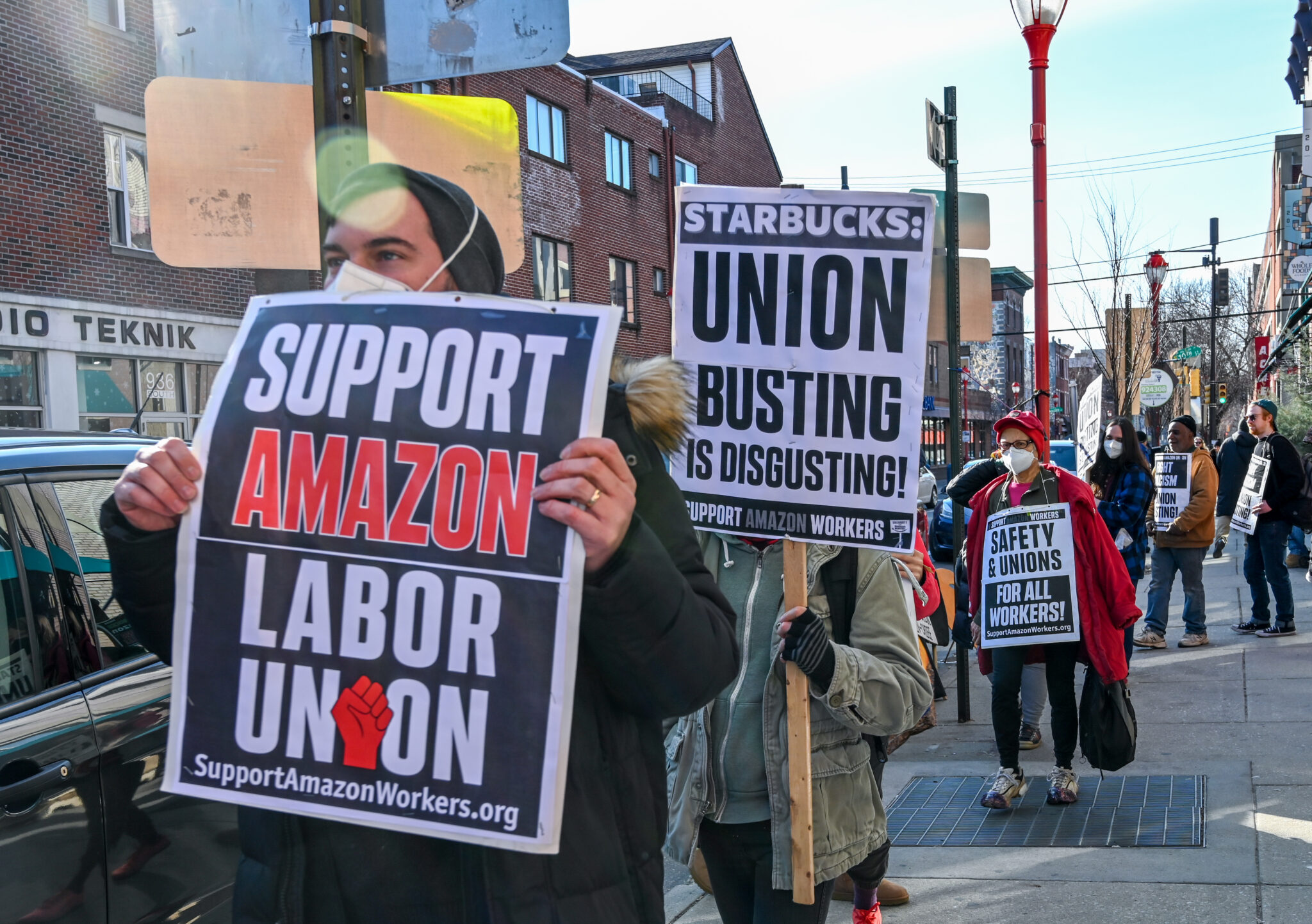
On Monday, Amazon urged an Eleventh Circuit panel to set aside a 2024 NLRB decision prohibiting mandatory “captive audience” meetings, where employers compel workers to listen to anti-union messaging. In the landmark decision, the Board found such meetings had the tendency to coerce employees and violate Section 7 rights under the National Labor Relations Act. The case stems from six consolidated complaints out of Amazon’s Staten Island warehouses, where the company held captive-audience meetings every 45 minutes, six days a week, after the Amazon Labor Union organized in 2021. Amazon’s attorney Elbert Lin argued the rule violates the First Amendment and overturns decades of precedent. NLRB attorney Micah Jost countered that main issue is coercion, as employees are attending “on pain of discharge”. Additionally, Jost argued that since the Board did not enforce the new rule retroactively against Amazon in 2024, the company lacks legal standing to challenge the rule. The three-judge panel did not indicate when it would issue a ruling.
The Department of Labor formally rescinded the 2024 FLSA overtime rule, restoring the 2019 salary thresholds for white-collar exemptions effective immediately. As I reported a few weeks ago, the 2024 rule would have raised the minimum exempt salary to $58,656, expanding overtime eligibility for millions of workers. Two Texas federal district courts struck the rule down in late 2024, and the Fifth Circuit dismissed the appeals in early May 2026. The Wage and Hour Division updated the Code of Federal Regulations without notice-and-comment, calling it a non-discretionary conformance to the court rulings. As a result, standard exempt salary returns to $35,568/year. The Department signaled future rulemaking remains possible.
The U.S. Supreme Court granted cert on Monday to decide whether Title IX allows employees at federally funded schools to bring sex discrimination claims, aiming to resolve a circuit split. The justices will review an Eleventh Circuit ruling holding that Title IX’s private right of action covers only students, leaving Title VII as the exclusive remedy for school employees. Eight circuits permit such employee suits, while three do not. The petitioners are former Augusta University art professor Thomas Crowther and former Georgia Tech women’s basketball coach MaChelle Joseph. Crowther alleges that anti-male bias resulted in his contract not being renewed, while Joseph alleges that bias and retaliation led to her firing after she complained about her team’s funding. A reversal would let plaintiffs bypass Title VII’s EEOC charge-filing requirement and avoid its $300,000 damages cap, since Title IX has none. Anne Marie Lofaso, a professor at University of Cincinnati College of Law, noted the Court’s strict textualist approach may favor the universities, as what was once a “slam dunk” for the petitioners could now result in an unfavorable ruling.


Daily News & Commentary
Start your day with our roundup of the latest labor developments. See all
September 24
NLRB abandons rule for offensive conduct during protected activity; New York home care workers seek a union election; maritime deck officers endure long fight for first contracts.
September 23
DoorDash settles delivery-worker pay claims; Philadelphia school workers win new contract; stock gains spur retirements.
September 22
Judge blocks ICE raids in Alabama; Chicago hotel workers vote to strike; AutoZone workers look to create first union
September 21
In today’s News and Commentary, the Seventh Circuit raises the bar for the NLRB to obtain preliminary injunctions, the California Primary Care Association sues SEIU-UHW for racketeering, and the Seventh Circuit finds that an employer group and think tank do not have standing to challenge an Illinois law banning captive audience meetings. On Friday, the […]
September 20
Culinary Workers Union members protests union leadership; lawsuit against OpenAI and Microsoft reveal internal concerns about the threat of AI training to human labor.
September 17
Unions push to block Google from buying Spirit Airlines employment records; U.S. Department of Labor sues Oklahoma coffee chain over alleged wage violations.