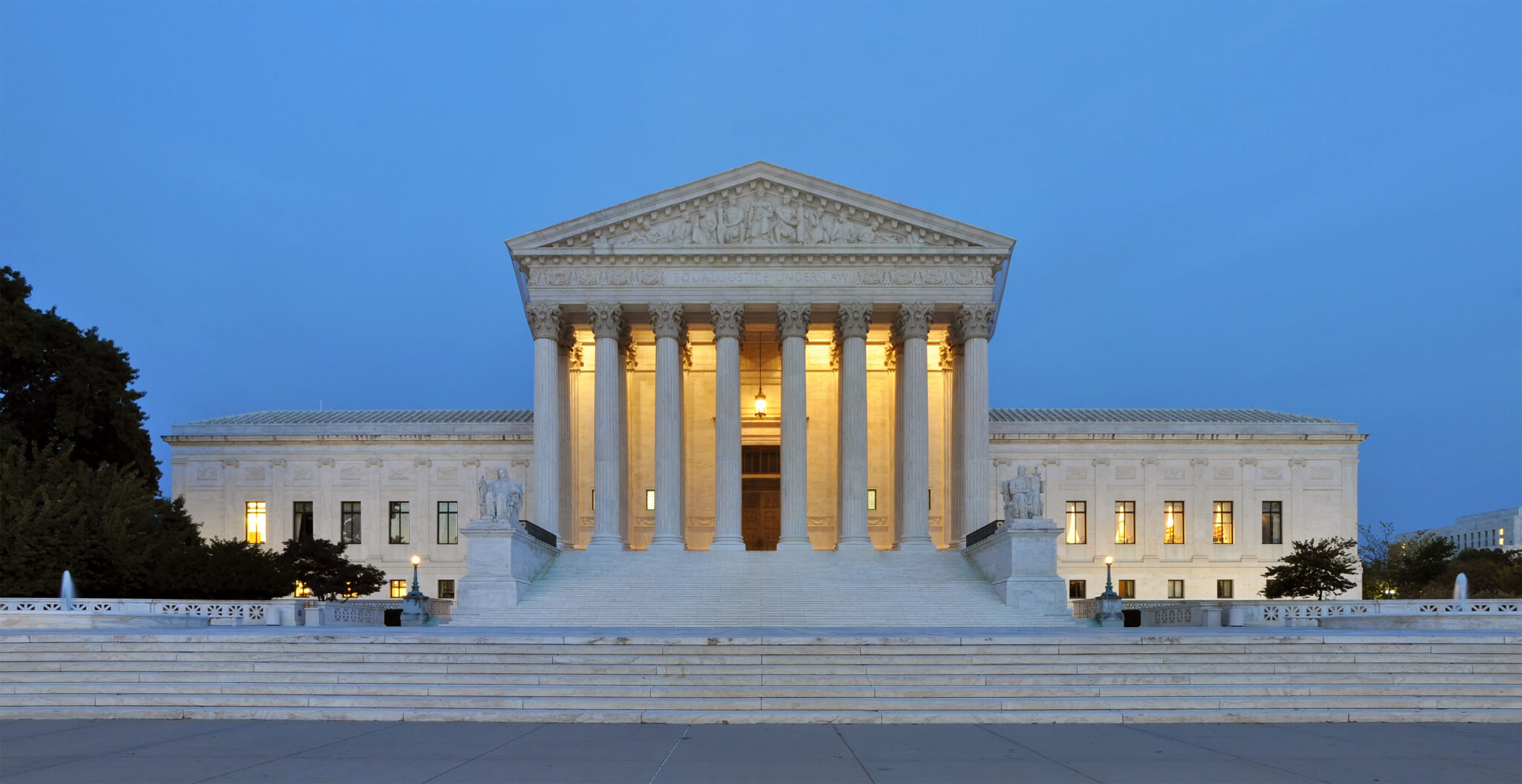

Gurtaran Johal is a student at Harvard Law School.
In today’s news and commentary, the Supreme Court will not review its opt-in test in ADEA cases in an age discrimination and federal wage law violation case; the Fifth Circuit rules that a jury will determine whether Enterprise Products unfairly terminated a Black truck driver; and an employee at Berry Global Inc. will receive a trial after being fired for requesting medical leave for a disability-related injury.
Bloomberg Law reports that the Supreme Court will not hear Eli Lilly & Co.’s challenge to a process that permits workers who allege age discrimination and federal wage law violations to come together and sue. In Hoffmann-La Roche Inc. v. Sperling et al., decided 36 years ago, the Court ruled that judges could provide notice of an Age Discrimination in Employment Act (ADEA) lawsuit to absent class members so long as the court did not encourage them to join the suit or cited approval of the suit. Under this current process, workers can sue collectively where workers not named as parties expressly opt in, as opposed to the opt-out process that applies to most class actions.
Meanwhile, the Fifth Circuit ruled that a jury must determine whether Enterprise Products Co., an oil and gas company, recently terminated a Black truck driver, Justin Phillips, due to poor performance or due to his complaints regarding race discrimination. There is conflicting evidence regarding Phillips’ termination, with some evidence showing that he improperly used a cell phone while working and failed to wear personal protective equipment. Phillips denied both of these points, claiming that his filing of a bias complaint against his supervisor prompted the termination. The evidence included an email from the supervisor to the plant manager stating, “Perfect! Exactly what I needed. Appreciate it.” The Fifth Circuit found that a genuine dispute of material fact existed, and a jury will weigh the evidence and assess its credibility.
Lastly, Chief Judge Terry A. Doughty of the Western District of Louisiana held in Williams v. Berry Glob. Inc. that a trial is required to determine whether Berry Global Inc.’s firing of an employee was indeed retaliatory. The firing came a day after the employee requested medical leave for a shoulder disability. A genuine dispute of material fact existed, as a jury could find that requesting medical leave was a “but-for” cause for the termination. The court also held that Berry Global did not present a nonretaliatory justification for the employee’s firing. However, the employee also failed to rebut that his numerous absences from the job justified his termination.



Daily News & Commentary
Start your day with our roundup of the latest labor developments. See all
September 29
Unions, AI companies, and private equity firms form a new coalition to shape data center policies; unions express support for the Paramount-Warner Bros. merger.
September 28
The Protect College Sports Act nears passage in the Senate; San Francisco municipal workers agree to contract extensions.
September 27
The Trump Administration reaches a settlement with federal unions on reduction in force actions; the United Auto Workers file an en banc petition seeking review of a Second Circuit decision regarding labor arbitrations.
September 25
Healthcare workers rally to restore legal status for TPS holders; nurses at a Maine hospital overwhelmingly vote to form their union despite alleged aggressive union busting tactics.
September 24
NLRB abandons rule for offensive conduct during protected activity; New York home care workers seek a union election; maritime deck officers endure long fight for first contracts.
September 23
DoorDash settles delivery-worker pay claims; Philadelphia school workers win new contract; stock gains spur retirements.