
Gurtaran Johal is a student at Harvard Law School.
In today’s news and commentary, several companies dispute NLRB regional directors’ authority to make rulings while the Board lacks a quorum; the Department of Justice loses approximately 4,500 employees to the Trump Administration’s buyout offers; and a judge dismisses Columbia faculty’s lawsuit over the institution’s funding cuts.
Bloomberg Law reports that several employers are contesting the NLRB’s regional directors’ authority to render decisions on union representation while the Board lacks a quorum. Numerous companies are currently waiting for the Board to review regional directors’ decisions in union election cases. However, the Board cannot issue decisions regarding the regional directors’ decisions until it regains a quorum. Once it regains a quorum, the Board is unlikely to rule in favor of the companies, demonstrating that the companies are proposing this argument in order to bring their requests before the courts. If this argument is successful, the Board’s power in the absence of a quorum will be limited, impeding its ability to delegate power to regional directors. This argument is especially significant in the current context, after President Trump fired Board member Gwynne Wilcox in January.
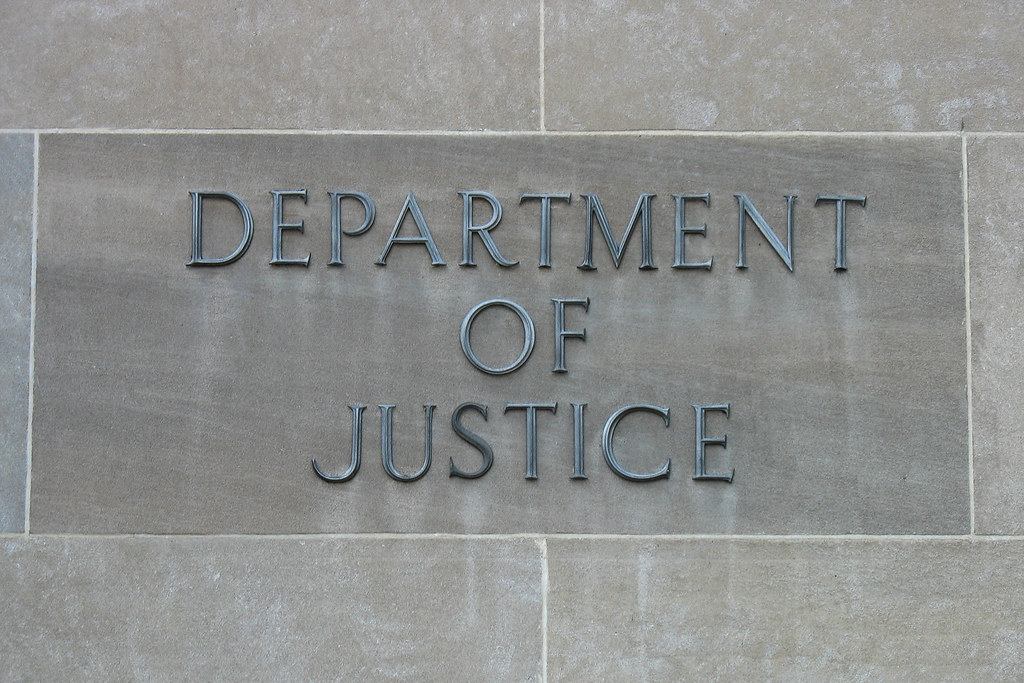
Meanwhile, the Department of Justice lost approximately 4,500 staffers to the Trump Administration’s “Fork in the Road” deferred resignation program. The Trump Administration contends that these staffing cuts will result in an estimated $470 million in budgetary savings. The resignation program incentivizes employees to leave federal government service by offering payment through September; on the other hand, if they decide to stay in their positions, they could be fired. In February, Judge George O’Toole of the U.S. District Court for the District of Massachusetts ruled that the program could continue, after finding that the plaintiffs, who were several unions, lacked standing to bring suit and did not have the jurisdiction to stop the program. This is only the beginning of further planned reductions, as 1,500 positions in the FBI are set to be eliminated as well.
Lastly, on Monday, June 16th, Judge Mary Kay Vyskocil of the U.S. District Court for the Southern District of New York dismissed a lawsuit that two unions, the American Association of University Professors (AAUP) and the American Federation of Teachers (AFT), representing Columbia University faculty members brought forth suing the Trump administration for its funding cuts against the university. AAUP and AFT argued that the funding cuts represented an unlawful method to overpower Columbia’s “academic autonomy.” Despite this, Judge Vyskocil held that the unions lacked standing to sue, stating that Columbia, rather than the unions, should bring forth a case against the funding cuts. However, AAUP and AFT appealed the decision on the same day, emphasizing their commitment to protecting academic freedom.




Daily News & Commentary
Start your day with our roundup of the latest labor developments. See all
August 30
Seattle teachers vote to authorize a strike days before the school year begins; BNSF Railway’s AI dispatching system puts workers in danger; and a California court finds that the DOL’s pay cuts for non-citizen farmworkers are unlawful.
August 28
Calls for a “token tax” on AI consumption grow and the number of Amazon workers on federal aid explodes.
August 27
NLRB GC targets Biden-era precedent; Starbucks Workers United calls for boycott; Encore Boston Harbor workers authorize strike
August 26
Trump administration proposes $103,000 H-1B visa fee after court blocks earlier attempt; Illinois governor signs law enabling state investment in AFL-CIO housing trust; Deloitte pays $21.5 million to settle DOJ probe alleging DEI-related discrimination in federal contracts.
August 25
Hyundai workers reach a tentative agreement; Federal-sector unions sue the Trump Administration over OPM rule changes; Federal judge dismisses a teachers’ union free speech suit.
August 24
Boeing engineers and technicians reject contract proposals and authorize a strike; Ninth Circuit holds that unions charged under 8(b)(4)(D) cannot invoke the work-preservation defense to disregard 10(k) determination.