

Andrew Strom is the Legal and Policy Director for the American Guild of Musical Artists (AGMA), and has been contributing to OnLabor since 2014. The views he expresses on this blog are his personal opinions and should not be attributed to AGMA.
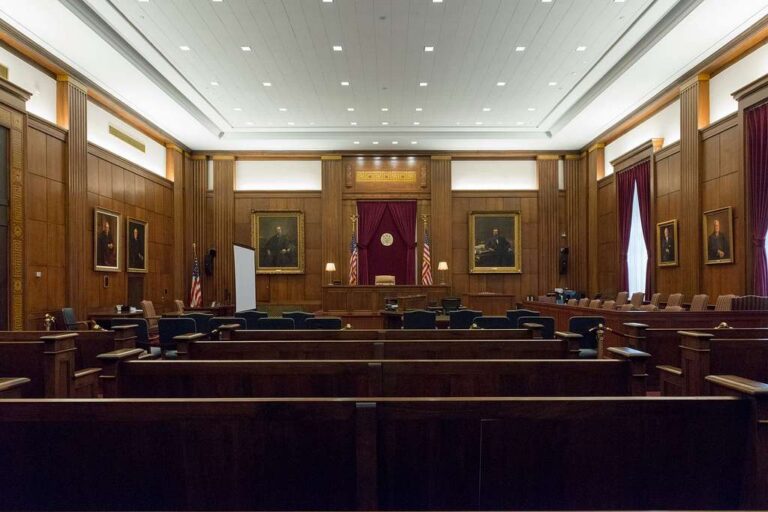
It seems increasing likely that Gwynne Wilcox’s lawsuit challenging Donald Trump’s attempt to fire her in the middle of her five-year term as a Member of the National Labor Relations Board will, one way or the other, result in the end of the NLRB as we have known it.
Congress created the NLRB as an independent agency governed by a five-member Board. To ensure the Board Members’ independence, Congress provided that they could only be removed for “neglect of duty or malfeasance in office.” In 1935, the Supreme Court decided Humphrey’s Executor, holding that similar job protections for commissioners of the Federal Trade Commission (FTC) did not unconstitutionally infringe upon the President’s authority. The Court recognized that because the FTC commissioners exercised quasi-judicial authority, Congress wanted to ensure that the commissioners were able to act with impartiality, and protecting them from at-will removal furthered that goal. Needless to say, the same is true for the NLRB.
The National Labor Relations Act states that it is the policy of the United States to “encourag[e] the practice and procedure of collective bargaining,” and to protect “the exercise of workers of full freedom of association, self-organization, and designation of representatives of their own choosing, for the purposes of negotiating the terms and conditions of their employment or other mutual aid or protection.” The Act makes it illegal for employers to interfere with these rights, but the Supreme Court has explained that the “Act left to the [NLRB] the work of applying the Act’s general prohibitory language in the light of the infinite combinations of events which might be charged as violative of its terms.” The Court later noted that Congress gave the NLRB the “difficult and delicate” responsibility of striking a balance between conflicting legitimate interests to effectuate national labor policy.
For almost 150 years, starting with the Interstate Commerce Commission in 1887, Congress has been creating agencies headed by Boards or Commissions whose members can only be removed for reasons such as neglect of duty or malfeasance. One of those entities is the Federal Reserve Board, created in 1913. Over the years, Congress has created 24 federal agencies whose heads may be removed by the President only “for cause.” Congress created these agencies because the complexities of the modern economy require that regulators have expertise in their fields. For instance, no one would think that the NLRB Board Members are interchangeable with the members of the Nuclear Regulatory Commission.
The Trump Administration is pushing a theory that the President must have unfettered control over any entity that falls under the Executive branch. This so-called unitary executive theory is largely based on two clauses in the Constitution. The “vesting clause” provides that the “executive power shall be vested in a President,” and the “take care” clause states that the President “shall take care that the Laws be faithfully executed.” If the vesting clause was really intended to give so much power to the President, it’s hard to explain why the founders thought it was necessary to spell out elsewhere that the President “may require the Opinion, in writing, of the principal Officer in each of the executive Departments upon any Subject relating to the Duties of their respective Offices.” And, the “take care” clause refers to faithfully executing laws, not carrying out the President’s policy preferences.
But, it doesn’t really matter whether you or I think the unitary executive theory is compelling. All that matters is whether five Supreme Court Justices will endorse it. The Court has already chipped away at Humphrey’s Executor. In 2020, in Seila Law LLC v. Consumer Financial Protection Board, a 5-4 Court held that the Humphrey’s Executor rule does not apply where an agency exercising “significant executive power” is headed by a single director. My guess is that at least five Justices don’t want to give Trump the power to fire Federal Reserve Board governors, but the Chamber of Commerce has already offered a road map for the Court to rule that the Federal Reserve doesn’t have to play by the same rules that apply to other agencies. And, I’m not sure how much the Republican appointees on the Court care if the NLRB can’t do its job.
The D.C. Circuit recently heard oral argument in the Wilcox case. Two of the three judges on the panel are Trump appointees. One of those judges, Justin Walker, previously staked out his pro-Trump position in an opinion staying the district court’s judgment in favor of Wilcox. The other Trump appointee, Gregory Katsas, was more guarded. One issue in the case is whether the NLRB exercises substantial executive power. In an attempt to persuade Katsas, Deepak Gupta, Wilcox’s highly-skilled lawyer, suggested that after Loper Bright, the NLRB doesn’t make policy because the courts will no longer give deference to any of its rulings. Gupta then tried to walk that back when Walker pointed out that the NLRB (correctly) continues to argue for deference post-Loper. But Gupta’s instinct to make the concession in the first place illustrates how even if this right-wing Supreme Court lets the NLRB survive, the Board may be severely compromised.
If the Court holds that the President must have the authority to remove Board Members without cause, the rationale would be that those NLRB members must be accountable to the President. If that’s true, the President shouldn’t have to wait for Board Members to disappoint him before he can act, but he could also tell them what to do in advance. And, even if Trump didn’t weigh in beforehand, what would happen when the NLRB decides a case involving SpaceX, Tesla, or the social media platform formerly known as Twitter? How much confidence would any worker have in a decision reached by the NLRB, knowing that the CEO of the company could whisper into the President’s ear and get the Board Members fired if they rule against the company? The Justices ought to understand the importance of tenure protections for officials charged with adjudicating cases.
Alternatively, the Court might preserve the independence of the NLRB by limiting the scope of its authority. For instance, the Court might limit the Board’s authority to issue substantive regulations, and to set policy through adjudication. The NLRB could be reduced to an entity that simply issues non-binding advisory opinions. But that’s not what Congress wanted. As the Court once noted, “[i]t is the province of the Board, not the courts, to determine whether or not the ‘need’ [for a certain policy] exists in light of changing industrial practices and the Board’s cumulative experience in dealing with labor-management relations.” The Court made this observation in a case addressing whether workers have a right to union representation at investigatory interviews that might lead to discipline. Over the years, the NLRB has issued dozens of decisions refining and revising the scope of this right. Neither Congress nor the courts have the capacity or expertise to make similar granular adjustments to labor law.
The Supreme Court doesn’t need to go down either of these two paths. The Justices could acknowledge that the founders wanted a government that works, and not one where the President acts like a king. But, I wouldn’t bet on it.






Daily News & Commentary
Start your day with our roundup of the latest labor developments. See all
September 20
Culinary Workers Union members protests union leadership; lawsuit against OpenAI and Microsoft reveal internal concerns about the threat of AI training to human labor.
September 17
Unions push to block Google from buying Spirit Airlines employment records; U.S. Department of Labor sues Oklahoma coffee chain over alleged wage violations.
September 16
Trump nominates Catherine Eschbach as EEOC general counsel; NLRB declines to resolve union work-assignment dispute; Allina Health physicians begin four-day strike.
September 15
Documents reveal the inner workings of Amazon's union avoidance program; Washington state public sector unions reach tentative deals amid a difficult bargaining cycle; hundreds of Nevada Culinary Union members protest their union's health care changes.
September 14
NCAA and Big Ten file motion to dismiss in former star player's NIL suit; Seventh Circuit rules against former postal worker in discrimination suit.
September 13
Documents released on the 25th anniversary of the 9/11 attacks show that city officials encouraged workers to return to Ground Zero despite knowing the risks of asbestos exposure, and new polls demonstrate continued widespread support for labor unions.