
Otto Barenberg is a student at Harvard Law School and the former Digital Director of OnLabor.
In today’s news and commentary, Shawn Fain equivocates on tariffs, the Trump Administration quietly ends automatic dues collection at key federal agencies, and pro-Palestinian Google employees sue over firings.
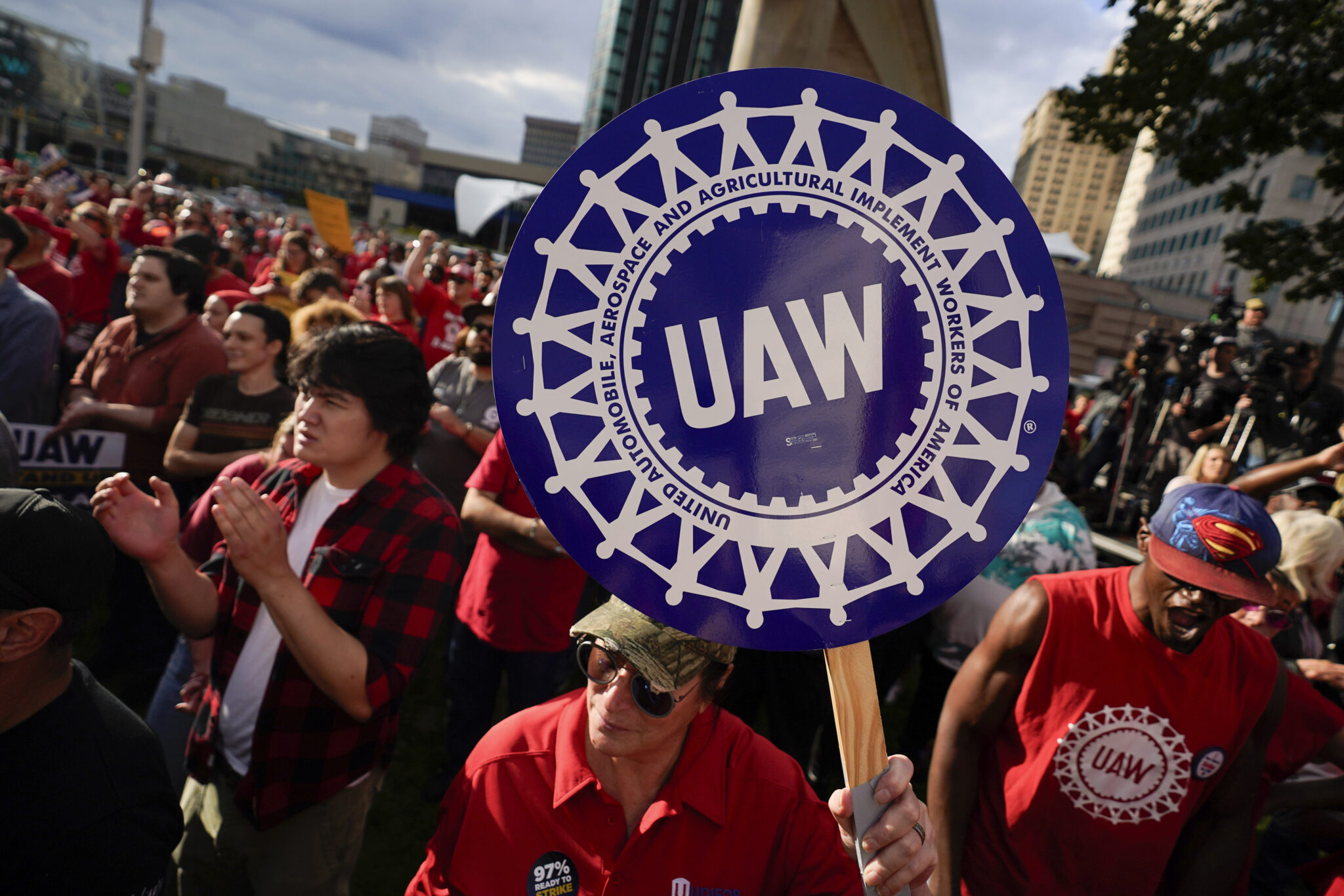
In a speech on Thursday, United Auto Workers President Shawn Fain qualified his defense of Trump’s trade policy, lodging support for “some tariffs on automotive manufacturing and similar industries,” but calling blanket tariffs “reckless.” Fain, who campaigned for Vice President Kamala Harris, has faced criticism in recent weeks for vociferously embracing the White House’s tariff scheme, with some worried the UAW leader is cozying up to a President he has long derided as a “scab.” Fain acknowledged the Administration’s anti-worker agenda, saying he disagrees with “90%” of Trump’s actions: “We’ve seen the destruction of bargaining rights for one million federal workers. We’ve seen an attack on the National Labor Relations Board and the illegal firing of a board member. We’ve seen the attacks on Social Security and Medicare and Medicaid, programs that millions in the working class depending on.” But Fain voiced continued support for the Administration’s protectionist trade policy: “Nothing has impacted working-class Americans in this country more in the last thirty-plus years than our broken trade system, and nothing has been done to address that in the last thirty-some years. So it’s not that we applaud everything that this administration is doing, but it’s the first administration in my working life that’s tried to do something to address this broken trade system.”
Following last month’s executive order stripping collective bargaining rights from two-thirds of the federal workforce, the Administration has quietly ended automatic dues collection at dozens of federal agencies. Union locals reported a sudden cutoff in payments last week, despite the Administration’s pledge that it will await judges’ go-ahead before terminating federal union contracts. “It happened unilaterally, without notice, and it happened quickly,” Matt Biggs, President of the International Federation of Professional and Technical Engineers, told Government Executive. Some unions are more affected than others. AFGE, the largest federal worker union, implemented an alternative, union-administered “eDues” system during the first Trump administration, and so is partially insulated from the cutoffs. Smaller unions must shoulder the high upfront costs of switching systems, but see a silver lining: “If you look at some public sector unions that had to do this in the past with places like Wisconsin, it actually leads to increased membership at the end of the day,” Biggs said. “More people sign up through the eDues process than a payroll deduction, and I think hopefully in the long term it results in increased membership.”
A group of ex-Google employees is suing the search giant over firings of pro-Palestinian workers, alleging violations of Title VII of the 1964 Civil Rights Act and state anti-bias laws. In an April 16, 2024 “Day of Action” at Google campuses across the country, employees protested the company’s contracts with the Israeli government and its “discriminatory harassment” of Palestinian, Arab, and Muslim workers. By the end of the month, all nine plaintiffs were fired; Google took no disciplinary action against counterprotestors. The class action lawsuit is being brought by Levy Ratner, P.C. in the Northern District of California.



Daily News & Commentary
Start your day with our roundup of the latest labor developments. See all
October 12
Workers at the Obama Foundation begin organizing; MLB submits its latest collective bargaining agreement proposal; Brigham & Women's nurses postpone strike.
October 11
UAW President Shawn Fain succeeds in his reelection bid, and Spanish unions call for a general strike.
October 9
DHS proposes a $100k fee for the foreign grad employment program; Trump suspends tech company access to green card program; and private equity perpetuates poor working conditions for home care workers.
October 8
NLRB judge finds UPS unlawfully restricted union insignia; Harvard graduate workers authorize second strike; OSHA orders Union Pacific to pay $300,000 in damages in whistleblower case.
October 7
DOL scraps plan to remove decades-old wage-and-hour guidance from federal regulations; New York enacts personnel records access law; Starbucks loses bid to dismiss Workers United trademark suit.
October 6
Protect College Sports Act dampens athlete unionization outlook; Stanford RA union decides to withdraw petition