
Luke Hinrichs is a student at Harvard Law School.
In today’s news and commentaries, Florida legislature proposes deregulation of child labor laws, Trump administration cuts international programs that target child labor and human trafficking, and California Federal judge reverses course and rules that unions representing federal employees can sue the Trump administration over mass firings.
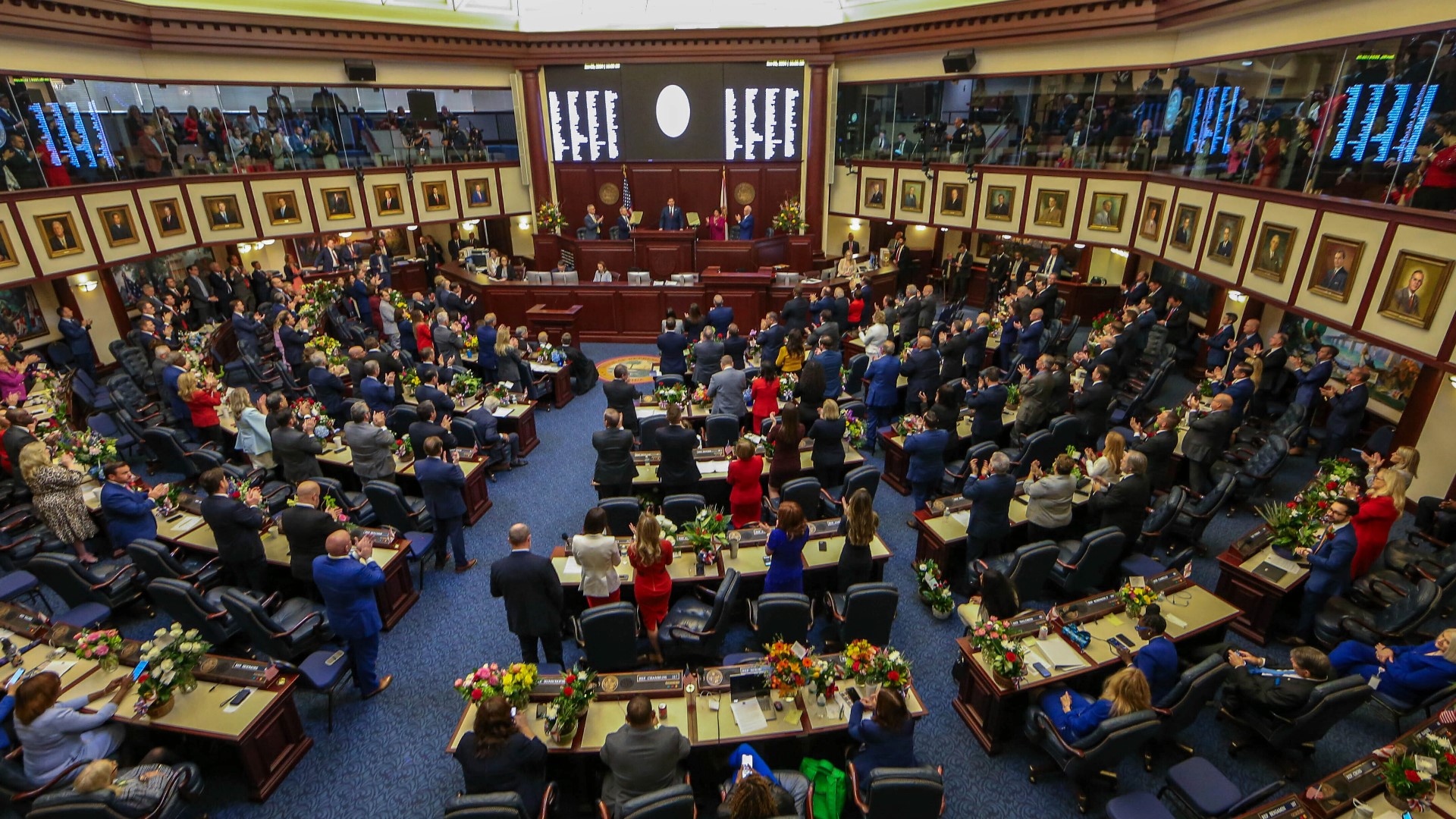
Florida state legislators are advancing legislation to remove all work limits on 16- and 17-year-olds and permit employers to staff 14- and 15-year-olds without restrictions if the minors have graduated high school or are home- or virtual-schooled. Under the current Florida child labor laws, minors aged 16 and 17 cannot work before 6:30 a.m. or after 11 p.m. on a school day, cannot work during school hours unless they are in a career education program, and cannot work more than 30 hours a week when school is in session unless a guardian or school superintendent waives that restriction. The deregulatory efforts come as Governor Desantis provided remarks asserting that a younger workforce can be a source of labor to replace “dirt cheap” labor from undocumented workers targeted by the Trump Administration.
The Trump Administration has terminated 69 federal programs aimed at confronting international child labor, forced labor, and human trafficking. The cut programs covered a broad range of labor interventions, including preventing child labor in agricultural sectors and human rights abuses in supply chains. For example, the US Department of Labor’s Bureau of International Labor Affairs (ILAB) will immediately cut grants amounting to over $500 million that were dedicated to supporting labor enforcement across 40 countries, including critical initiatives in Mexico and Central America, Asia, and Africa.
U.S. District Judge William Alsup of the Northern District of California ruled that unions representing federal workers can sue the Trump administration’s mass firings of recently hired government employees in court without first exhausting the administrative channels of the Merit Systems Protection Board and/or the Federal Labor Relations Authority. Judge Alsup’s decision breaks with three other federal judges who held that unions could not seek judicial review over the mass firings and reverses course from Alsup’s own prior February ruling that he likely lacked jurisdiction over the unions’ claims.




Daily News & Commentary
Start your day with our roundup of the latest labor developments. See all
August 26
Trump administration proposes $103,000 H-1B visa fee after court blocks earlier attempt; Illinois governor signs law enabling state investment in AFL-CIO housing trust; Deloitte pays $21.5 million to settle DOJ probe alleging DEI-related discrimination in federal contracts.
August 25
Hyundai workers reach a tentative agreement; Federal-sector unions sue the Trump Administration over OPM rule changes; Federal judge dismisses a teachers’ union free speech suit.
August 24
Boeing engineers and technicians reject contract proposals and authorize a strike; Ninth Circuit holds that unions charged under 8(b)(4)(D) cannot invoke the work-preservation defense to disregard 10(k) determination.
August 23
Hyundai Motors workers launch full-day strike; federal judge rules in favor of Vermont dairy plant in closure dispute
August 21
Tyson workers respond to abrupt plant shutdown; DOL ends its power to police federal contractor bias.
August 20
Unions sue the government over new visa rule; Judge declines to dismiss former Amazon worker's suit.