
Fred Wang is a student at Harvard Law School.
In today’s News & Commentary, a lookback at a historic year of unionizing at Starbucks and across the tech industry.
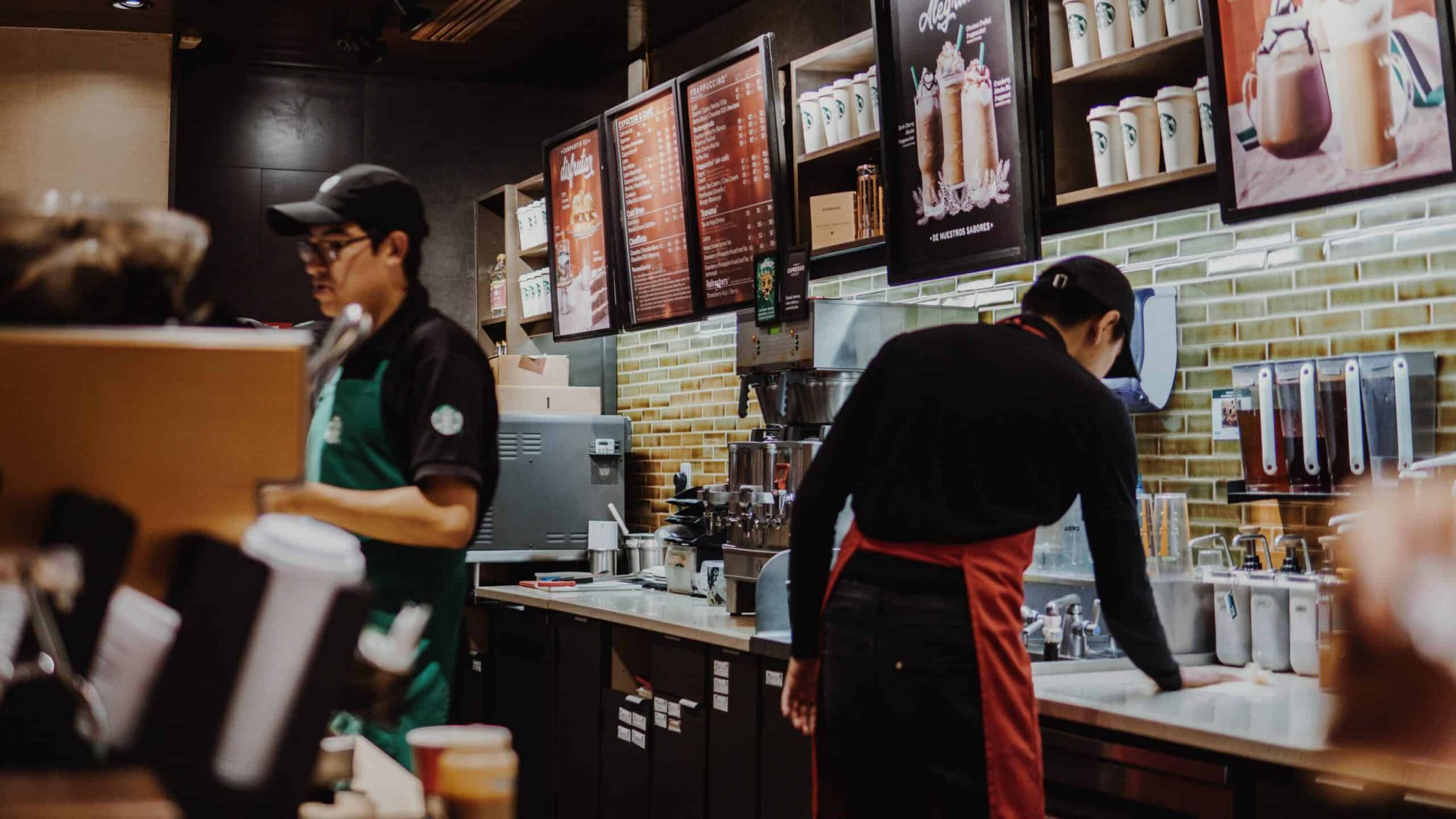
It’s been a little over a year since the first Starbucks store in the U.S. organized, as Kevin summarized this weekend. A lot has changed in that time, to put it mildly.
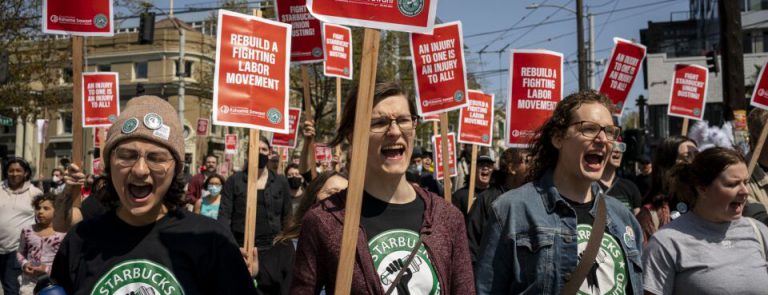
As the Seattle Times recounts, while over 260 of its U.S. stores have unionized, Starbucks — “seen historically as employee-friendly” — has clashed with union workers the entire way. Claims of Starbucks retaliating against unionizing efforts are surely familiar at this point. Since January, the Starbucks Union has filed 548 unfair labor charges against Starbucks, per data collected by Matt Bruenig. Perhaps not coincidentally, election filings have started to level off in recent months. And as many stores shift from the union-organizing phase to the “slow contract negotiation process,” Starbucks’s efforts to obstruct to impede the labor movement are sure to continue. In short, “Starbucks has changed, and so has its relationship with workers.”
Still, many workers are committed to seeing this entire fight through. As one Seattle barista, Rachel Ybarra, put it: “Starbucks can’t get rid of me. I’m going to stay with this company until I can make it the company that it should be.”
“2022 saw an unprecedented rise in labor organizing in U.S. tech firms,” Axios notes, in a piece briefly summarizing the year’s major news in tech workers’ labor activism — such as organizing efforts at Amazon, Apple, and across the video game industry. Although labor organizing in the tech space is “still in its infancy,” Axios notes, the momentum that’s been built in the past year may well carry over into the next, especially as national approval of labor unions continues to rise.



Daily News & Commentary
Start your day with our roundup of the latest labor developments. See all
October 2
Gov. Newsom signs bill regulating AI in workplace; federal judge blocks Trump's $100,000 H-1B visa fee.
October 1
Senate confirms Keith Sonderling as Labor Secretary; Amazon warehouse workers launch an unfair labor practice strike.
September 30
Harvard grad union wins in First Circuit; AI data trainers initiate misclassification suits; Trader Joe’s found liable under ERISA.
September 29
Unions, AI companies, and private equity firms form a new coalition to shape data center policies; unions express support for the Paramount-Warner Bros. merger.
September 28
The Protect College Sports Act nears passage in the Senate; San Francisco municipal workers agree to contract extensions.
September 27
The Trump Administration reaches a settlement with federal unions on reduction in force actions; the United Auto Workers file an en banc petition seeking review of a Second Circuit decision regarding labor arbitrations.