
Miriam Shestack is a student at Harvard Law School.
In today’s News and Commentary: the House votes to impose a labor agreement between rail companies and workers, the NLRB says Starbucks must negotiate with union in Seattle stores, an appeals loss for federal workers on government shutdown pay, and Yale graduate student workers hold a union vote.
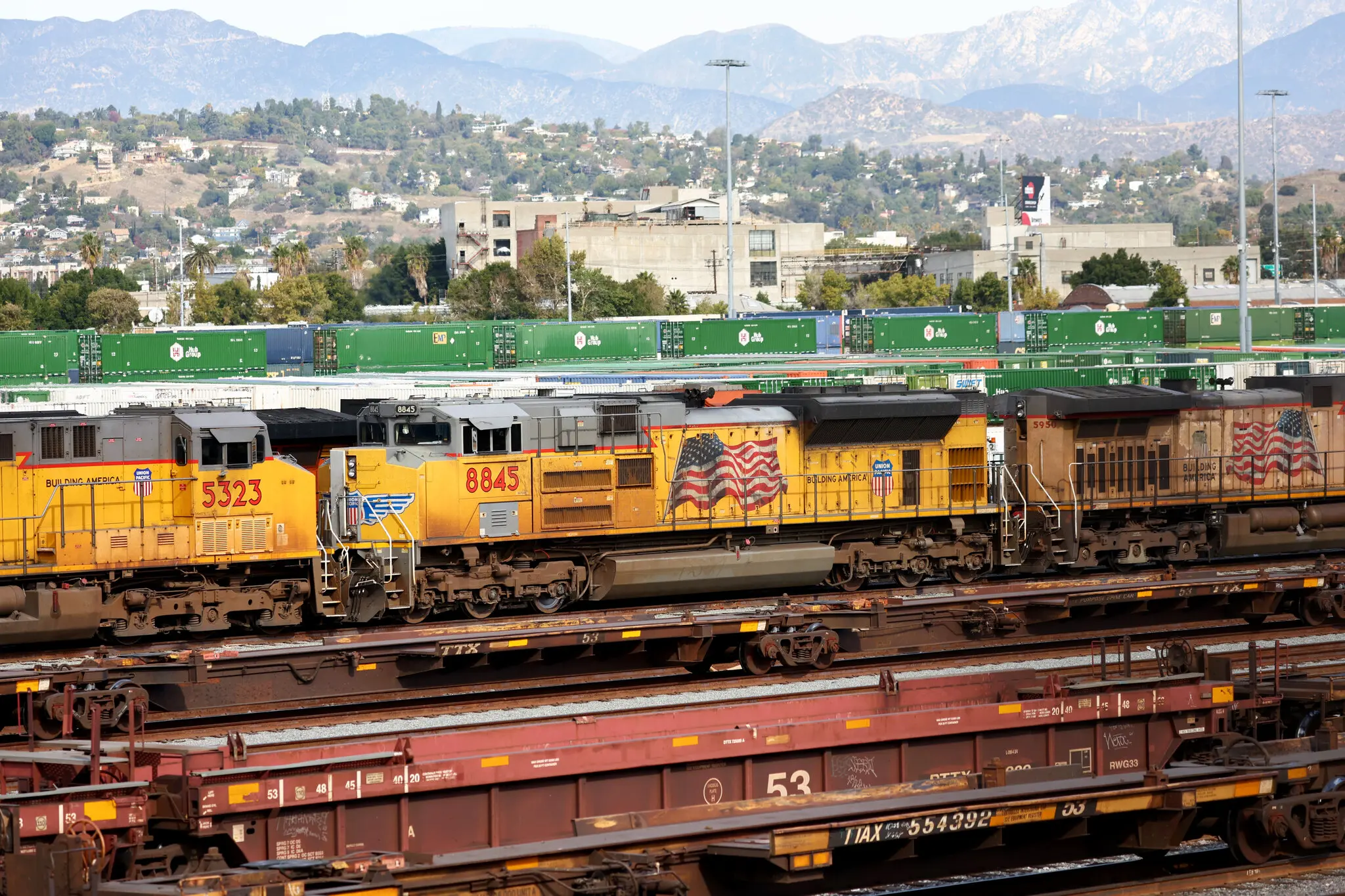
The House voted to pass legislation imposing a labor agreement between rail companies and workers represented by 12 unions on Wednesday. The agreement is intended to avert a strike before the end of the “cooling off” period in negotiations on December 9. The bill passed the House with a bipartisan vote of 290-137. President Biden and House Speaker Nancy Pelosi both warned that a rail strike could have devastating economic consequences, especially right before the holiday season. The bill now moves to the Senate, where the proposal is expected to pass.
Separately, the House voted 221-207 to pass a related bill that would revise the original deal to add seven days of paid sick leave to the contract. Securing additional time off has been the most pressing issue for workers in the current negotiations and the one of the main points of contention between unions and companies. The vote on the sick leave measure was agreed to following talks between Speaker Nancy Pelosi and progressive House Democrats who threatened to tie up the legislation. In the Senate, Bernie Sanders (I-VT) threatened to object to the fast-tracking of President Biden’s proposed settlement unless he could get a vote on the amendment providing for seven days of paid leave in the contract. It is not clear whether the paid leave proposal will have enough bipartisan support to pass the Senate. By bringing it up for approval separately, the House has left open the possibility that Biden’s proposed labor agreement will be imposed with or without the addition of paid leave.
As Jason discussed yesterday, this legislation has led to criticism from progressive democrats and even some Republicans who believe that President Biden’s proposed deal was unfair to workers. The New York Times reports that many rail workers who campaigned for Biden in 2020 on the basis of his support for unions now feel betrayed. They feel that Biden’s involvement in the negotiations and his ultimate decision to seek congressional support for an imposed agreement amounts to putting a thumb on the scale in favor of rail companies. Rhonda Ewing, a signal maintainer in Chicago, told the Times: “We know it’s holiday time, which is why it’s the perfect time to raise our voices. If Biden gets involved, he takes away our leverage.” Tony Cardwell, the president of the Brotherhood of Maintenance of Way Employees Division — International Brotherhood of Teamsters, which voted against the agreement that Biden has asked Congress to impose, told the Times that asking Congress to include paid sick days in the agreement would have gone a long way toward satisfying his members.
The death of locomotive engineer Aaron Hiles, 51, in June, galvanized rail workers around the issue of sick leave. Mr. Hiles died from a heart attack in June weeks after postponing a doctor’s appointment to avoid being penalized at his railroad job. Read an interview with his family here.
In other news, the National Labor Relations Board ruled on Wednesday that Starbucks violated labor law when it refused to bargain with unionizing workers in Seattle. Bloomberg reports that the decision, issued unanimously by a bipartisan group of three board members, orders the company to negotiate with the union Starbucks Workers United.
A Federal Appeals Court ruled against federal workers on Wednesday, overturning lower courts by holding that withholding wages from US government employees required to work during a shutdown until after the shutdown ends does not violate timely pay laws. The cases spring from two government shutdowns: one in October 2013 and another that took place from late December 2018 through late January 2019. The workers who filed the suits were “excepted employees,” meaning they worked on emergencies involving human safety or property protection. The “central question” on appeal asks how the Anti-Deficiency Act’s spending bar “coexists with the Fair Labor Standards Act’s seemingly contradictory timely payment obligation,” Judge Todd M. Hughes explained in Avalos v. United States, the main opinion, which dealt with the 2018-2019 shutdown. US Court of Appeals for the Federal Circuit said in a trio of opinions that the Fair Labor Standards Act, Border Patrol Agent Pay Reform Act, and Back Pay Act’s timely pay provisions do not override the Anti-Deficiency Act’s bar on paying wages when appropriations lapses force the government to halt much of its usual operation.
Lastly, as many as 4,000 Yale University graduate students are set to vote Wednesday and Thursday on whether to unionize. This development comes as labor organizing at private colleges increases in the wake of Democrats regaining control of the National Labor Relations Board. As Bloomberg’s Robert Iofalla notes in his report on the upcoming vote, “Perhaps no issue illustrates partisan vacillation at the NLRB better than student assistant organizing rights.”




Daily News & Commentary
Start your day with our roundup of the latest labor developments. See all
September 4
NLRB advice memo narrows political protest protections; NLRB asks federal appeals court for deference.
September 3
Seond Circuit rejects a NLRB standard for union insignia in employer dress codes; House Republicans ramp up labor union investigations.
September 2
Trump’s US Steel agreement impacts labor talks; Mamdani clashes with teachers’ union; Boeing plans to resume bargaining talks.
September 1
California legislature passes a bill banning AI workplace surveillance of workers' emotional states; Labor Department repeals decades-old farmworker protection rules; Sixth Circuit upholds a $1.4 million verdict for farmworkers.
August 31
Boston Symphony Orchestra musicians stave off first-ever strike; Cleveland Public Library workers ratify new contracts; New York State AFL-CIO makes endorsements
August 30
Seattle teachers vote to authorize a strike days before the school year begins; BNSF Railway’s AI dispatching system puts workers in danger; and a California court finds that the DOL’s pay cuts for non-citizen farmworkers are unlawful.