
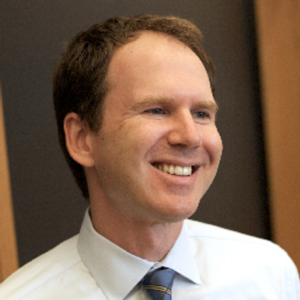
Benjamin Sachs is the Kestnbaum Professor of Labor and Industry at Harvard Law School and a leading expert in the field of labor law and labor relations. He is also faculty director of the Center for Labor and a Just Economy. Professor Sachs teaches courses in labor law, employment law, and law and social change, and his writing focuses on union organizing and unions in American politics. Prior to joining the Harvard faculty in 2008, Professor Sachs was the Joseph Goldstein Fellow at Yale Law School. From 2002-2006, he served as Assistant General Counsel of the Service Employees International Union (SEIU) in Washington, D.C. Professor Sachs graduated from Yale Law School in 1998, and served as a judicial law clerk to the Honorable Stephen Reinhardt of the United States Court of Appeals for the Ninth Circuit. His writing has appeared in the Harvard Law Review, the Yale Law Journal, the Columbia Law Review, the New York Times and elsewhere. Professor Sachs received the Yale Law School teaching award in 2007 and in 2013 received the Sacks-Freund Award for Teaching Excellence at Harvard Law School. He can be reached at [email protected].
The Harvard Law Review dedicated its latest issue to Judge Reinhardt and published a series of In Memoriam pieces about the Judge. The series is available here. My own contribution focused on Rizo v. Yovino, the Equal Pay Act case that Judge Reinhardt authored and that was issued by the ninth circuit shortly after his death. The piece uses Rizo to highlight some characteristic features of the Judge’s jurisprudence, including his major contributions to labor and employment law. He will be sorely missed.







Daily News & Commentary
Start your day with our roundup of the latest labor developments. See all
August 27
NLRB GC targets Biden-era precedent; Starbucks Workers United calls for boycott; Encore Boston Harbor workers authorize strike
August 26
Trump administration proposes $103,000 H-1B visa fee after court blocks earlier attempt; Illinois governor signs law enabling state investment in AFL-CIO housing trust; Deloitte pays $21.5 million to settle DOJ probe alleging DEI-related discrimination in federal contracts.
August 25
Hyundai workers reach a tentative agreement; Federal-sector unions sue the Trump Administration over OPM rule changes; Federal judge dismisses a teachers’ union free speech suit.
August 24
Boeing engineers and technicians reject contract proposals and authorize a strike; Ninth Circuit holds that unions charged under 8(b)(4)(D) cannot invoke the work-preservation defense to disregard 10(k) determination.
August 23
Hyundai Motors workers launch full-day strike; federal judge rules in favor of Vermont dairy plant in closure dispute
August 21
Tyson workers respond to abrupt plant shutdown; DOL ends its power to police federal contractor bias.