
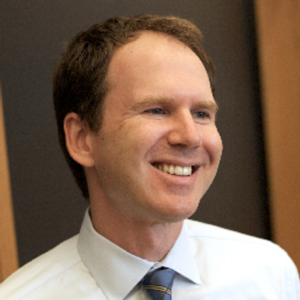
Benjamin Sachs is the Kestnbaum Professor of Labor and Industry at Harvard Law School and a leading expert in the field of labor law and labor relations. He is also faculty director of the Center for Labor and a Just Economy. Professor Sachs teaches courses in labor law, employment law, and law and social change, and his writing focuses on union organizing and unions in American politics. Prior to joining the Harvard faculty in 2008, Professor Sachs was the Joseph Goldstein Fellow at Yale Law School. From 2002-2006, he served as Assistant General Counsel of the Service Employees International Union (SEIU) in Washington, D.C. Professor Sachs graduated from Yale Law School in 1998, and served as a judicial law clerk to the Honorable Stephen Reinhardt of the United States Court of Appeals for the Ninth Circuit. His writing has appeared in the Harvard Law Review, the Yale Law Journal, the Columbia Law Review, the New York Times and elsewhere. Professor Sachs received the Yale Law School teaching award in 2007 and in 2013 received the Sacks-Freund Award for Teaching Excellence at Harvard Law School. He can be reached at [email protected].
The Center for American Progress has released an excellent new report on The Future of Worker Voice and Power. Authored by David Madland, the report recommends modernizing U.S. labor law in four primary ways: (1) moving from firm-level collective bargaining to industry, regional or sectoral bargaining; (2) expanding the menu of vehicles for firm-level employee voice, including by promoting works councils at the firm level; (3) encouraging membership in worker organizations by giving those organizations a formal role in the delivery of social goods (like unemployment insurance and worker training); and (4) increasing legal protections for labor rights. All four proposals make good sense. The call for sectoral bargaining is particularly notable, in part because the idea – recently a political nonstarter – is gaining significant prominence among leading labor scholars and policymakers (as reflected, for example, in important new work by Mark Barenberg and Kate Andrias). The recommendation for a Ghent-like system for providing unemployment insurance (or related programs) through unions is also gaining steam, thanks in large part to Matthew Dimmick’s writing on the subject.
The CAP report is absolutely worth reading, and constitutes a productive roadmap for thinking about labor law reform in the next administration.





Daily News & Commentary
Start your day with our roundup of the latest labor developments. See all
October 16
Department of Labor reduces wage-and-hour enforcement at unionized workplaces; Fain's victory poses question of federal monitor's extension.
October 15
New reporting examines the rollback of child labor protections; California tries to block a strike; NLRB charges Wisconsin mental health provider with firing workers during union drive.
October 14
Eleventh Circuit overturns ERISA exhaustion rule; DHS finalizes removal of automatic renewal for work permits; AFGE challenges SSA over flexible scheduling policy.
October 13
Chicago hotel workers remain on strike; a coalition of Democratic states sues the Labor Department over canceled unemployment insurance grants; the Federal Labor Relations Authority establishes a new mediation framework for federal worker disputes.
October 12
Workers at the Obama Foundation begin organizing; MLB submits its latest collective bargaining agreement proposal; Brigham & Women's nurses postpone strike.
October 11
UAW President Shawn Fain succeeds in his reelection bid, and Spanish unions call for a general strike.