
William Greenlaw is a student at Harvard Law School.
Labor conflicts at Amazon continued this week, this time with new lawsuits against the e-commerce giant alleging racial and gender discrimination. Five women, current and former employees, sued Amazon alleging that Amazon managers used racial epithets against Latinas, fired employees in retaliation for complaining, and demoted another employee for rebuffing advances by a male manager. In one case, a Black employee alleges to have been punished by being placed in a performance improvement process, which is a disciplinary action, after the employee complained her manager used the n-word. Amazon, predictably, denies wrongdoing. These suits come only three months after investigative reporting revealed that Black employees were promoted less often and rated more harshly by non-Black peers. All five suits are being litigated by the New York firm Wigdor LLP.
Other lawsuits continue against Amazon as workers have launched a novel coronavirus suit against the company. Workers alleged in the Second Circuit yesterday that Amazon was engaging in a “public nuisance,” a claim sounding in tort, for failing to adequately protect them from coronavirus. The suit alleges that Amazon engaged in the public nuisance by failing to give paid time off to enable workers to avoid contracting the virus, for example. At the district court level, Judge Brian Cogan in Brooklyn ruled that OSHA was better situated to handle such claims, which is an argument adopted by Amazon on appeal. In response, the workers argue that OSHA does not preempt state law when employers fail to follow measures put in place to prevent the spread of COVID-19. At least some prior public-nuisance coronavirus suits by workers have been successful, including against McDonalds. The workers are represented by Towards Justice, Public Justice, Make the Road New York and the Terrell Marshall Law Group. Amazon is represented by Gibson, Dunn & Crutcher. The case is Palmer v. Amazon.com , 2d Cir., No. 20-03989, oral argument 5/19/21.
A federal district judge ruled yesterday that the Association of Administrative Law Judges, the union that represents ALJs at the Social Security Administration, is unable to sue to challenge the legitimacy of a federal labor panel before bringing their claim before the Federal Labor Relations Authority first. The lawsuit comes amid an impasse between the union and the SSA over contract negotiations. The union argued that the labor panel’s members were unconstitutionally appointed without the Senate’s consent. District Court Judge Amy Berman Jackson of the District of Columbia ruled that the union “must start at the administrative level” instead. The ALJs can circuitously obtain judicial review by “violating the panel’s order, then challenging the authority’s finding that it engaged in an unfair labor practice to a federal appeals court.” Judge Jackson ruled that such an action would be “time-consuming and ill-suited” but would not result in punitive damages.
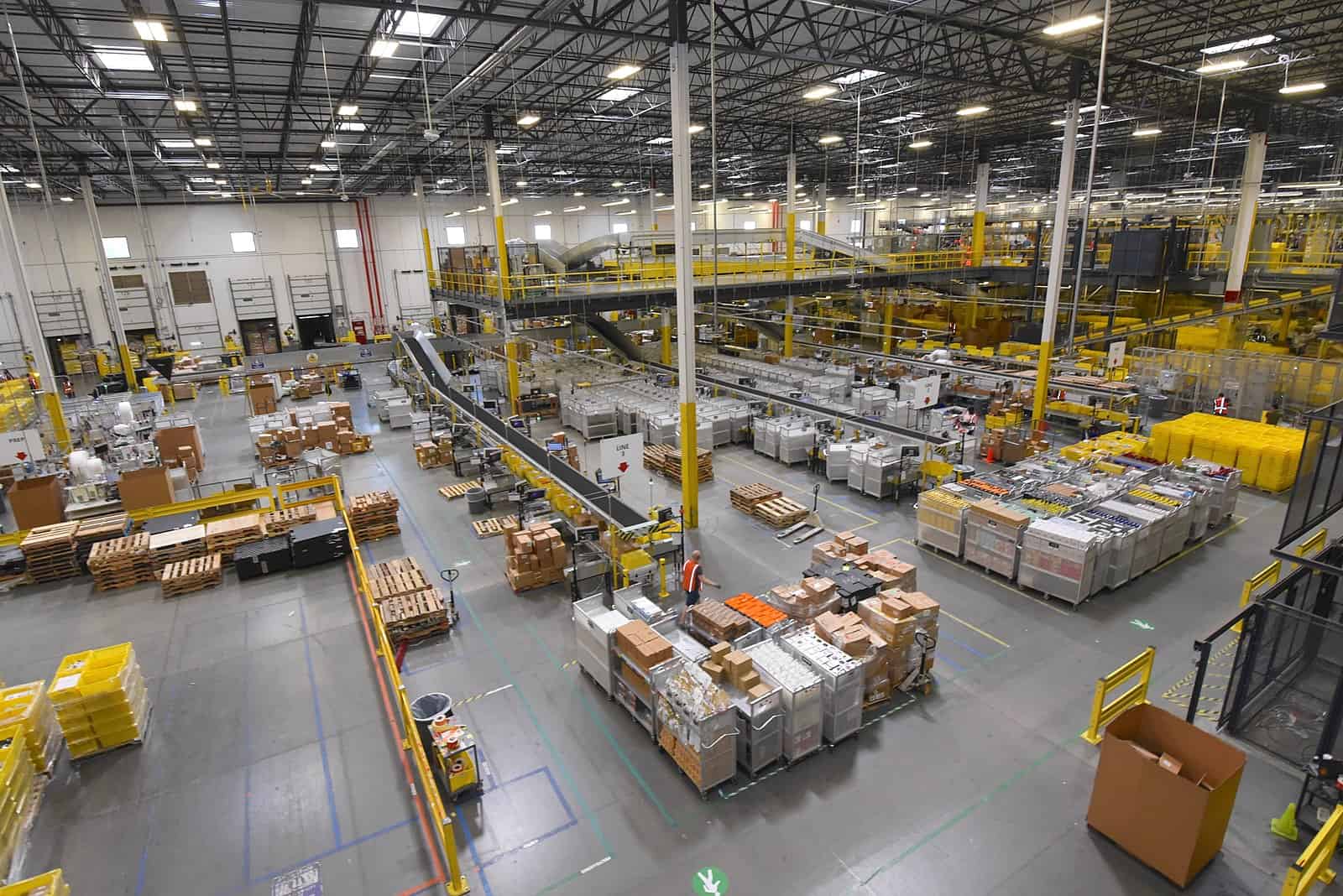
Amid the post-COVID recovery process are worries about automation. The United States has continued producing at pre-pandemic levels despite having fewer workers to do so. Employers appear to have been closing the gap by implementing greater machine usage. The e-commerce boom driven by remote shoppers has particularly raised demand for autonomous forklifts and other warehouse technology to meet consumer demand. One commentator defends the growth of automation as simply meeting a gap between jobs that would otherwise remain vacant for lack of applicants. Some estimates describe automated technology by 2025 that would create a net increase of 12 million jobs globally, creating 97 million jobs while eliminating 85 million. Such forecasts elide potentially significant frictional unemployment concerns—jobs may be created in one sector and destroyed in another—that policymakers must have at the top of their minds as economic policy seeks to empower people to return to work safely.





Daily News & Commentary
Start your day with our roundup of the latest labor developments. See all
October 21
DOL withdraws tipped-worker rule; Instacart settles hiring-bias claims; Phillips 66 locks out New Jersey refinery workers.
October 20
Korean unions oppose labor exemption bill; Portland city workers prepare for strike; UPenn grad student union looks to dismiss university filing
October 19
FDA reverses course on policy prohibiting off-duty union activity; FAA and NATCA reach deal to secure pay increase for air traffic controllers.
October 18
Federal judge again halts cancellation of the Bureau of Prisons’ CBA; tabletop gaming workers face roadblocks in union recognition.
October 16
Department of Labor reduces wage-and-hour enforcement at unionized workplaces; Fain's victory poses question of federal monitor's extension.
October 15
New reporting examines the rollback of child labor protections; California tries to block a strike; NLRB charges Wisconsin mental health provider with firing workers during union drive.