

Alisha Jarwala is a student at Harvard Law School and a member of the Labor and Employment Lab.
President Trump erroneously blamed the United Auto Workers union for the closure of the Lordstown GM factory in Ohio, stating in a speech that “[t]hey could’ve kept that gorgeous plant . . . Lower your dues. Lower your dues.” The plant’s closure—which was a decision made by GM, not the union—eliminated about 1,700 jobs in the region. The President’s criticism of UAW workers in Lordstown extended beyond his Lima speech and included a tweet telling UAW Local 112 President David Green to “get his act together.”
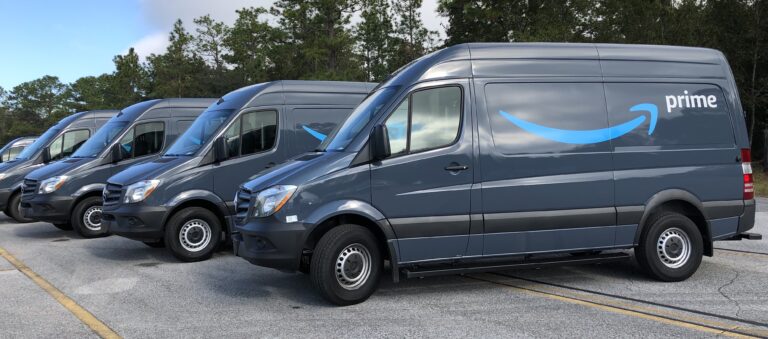
A union trying to organize Amazon employees has filed a complaint with the NLRB, alleging that Rashad Long, an employee in Amazon’s Staten Island warehouse, was fired in retaliation for speaking at a rally about the long hours and poor safety standards. Amazon claims the firing was based on a safety violation. The Retail, Wholesale and Department Store Union, which is pursuing the case, also played a leading role in resisting the deal that would have brought an Amazon headquarters to Queens.
Earlier this week, the Supreme Court denied certiorari in California Trucking Association v. Su, which could have the effect of classifying thousands of California truck drivers as employees of freight-hauling companies, rather than independent contractors. Last fall in this case, the Ninth Circuit affirmed California labor officials’ use of the Borello standard for determining if the truckers where employees or independent contractors. Borello is a state common law standard that examines an individual’s “right to control the manner and means of accomplishing the result desired” in order to determine if the individual is an employee or an independent contractor.
NFL stars Colin Kaepernick and Eric Reid will receive less than $10 million to settle their grievances with the league. Kaepernick and Reid had alleged that the league’s teams colluded to keep them out of the sport since 2016, when they began to kneel during the national anthem to protest police brutality against African Americans. The settlement amount is far less than the players would have been owned if their grievance had prevailed. If Kaepernick had won, the league’s collective bargaining agreement with players would entitle him to treble damages; The Wall Street Journal estimates Kapernick’s market value as a player at about $30 million, meaning a damages award could have been up to $90 million. It has not been determined how much the players will actually receive from the settlement after legal fees.
Read prior OnLabor coverage of the NFL anthem protests here, here, and here.
Daily News & Commentary
Start your day with our roundup of the latest labor developments. See all
May 1
Workers and unions organize May Day; and Volkswagen challenges NLRB regional directors.
April 30
US Circuit Court of Appeals renders decision on Jefferson Standard test; construction subcontractors settle over wage theft in Minnesota; union and immigrant groups urge walkout.
April 29
DOJ sues for discrimination against US citizens; Musk and DOJ pause litigation on AI discrimination bill; USTR hosts forced labor tariff hearings.
April 28
Supreme Court grants cert on Labor Department judges' authority; Apple store union files NLRB charge; cannabis workers win unionization rights
April 27
Nike announces layoffs; Tillis withdraws objection on Fed nominee; and consumer sentiment hits record low.
April 26
Screenwriters in the Writers Guild of America vote to ratify a four-year agreement with the Alliance of Motion Picture and Television Producers, and teachers in Los Angeles vote to ratify a two-year agreement with the Los Angeles Unified School District.