

Melissa Greenberg is a student at Harvard Law School.
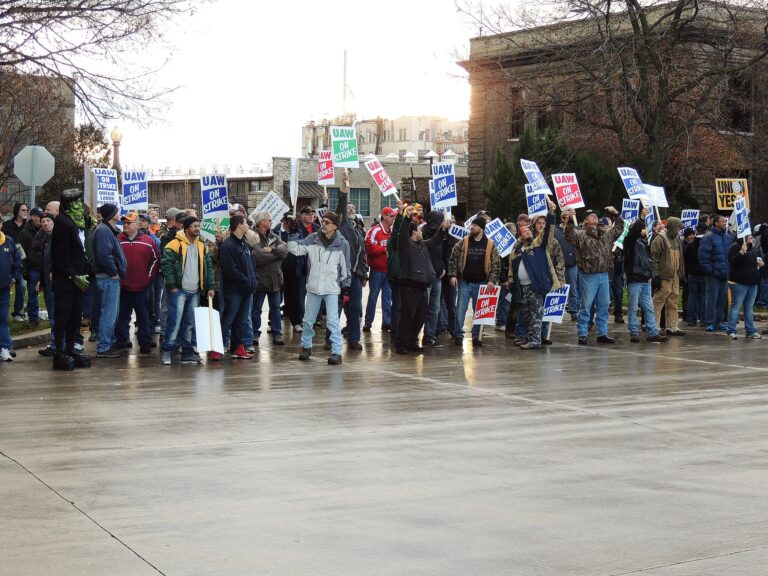
The Supreme Court has been asked to reconsider whether arrangements requiring non-union employees in the public sector to pay fair share or agency fees violate the First Amendment of the Constitution. Yesterday, Mark Janus, an Illinois state employee, petitioned the Supreme Court to review the Seventh Circuit’s decision in Janus v. AFSME and consider overturning the Court’s precedent in Abood v. Detroit Board of Education. This petition comes just one year after the Court was asked to consider its precedent in Abood in Friedrichs v. California Teachers Association but split 4-4 following Justice Scalia’s death. A decision overturning Abood could weaken unions financially and politically. Read more here.
Bloomberg reports that Uber terminated more than 20 employees following an investigation by the law firm Perkins Coie into reports of harassment and discrimination at the ride-sharing company. Perkins Coie was hired along with the D.C. firm Covington & Burling to examine Uber’s workplace culture. Perkins Coie examined 215 workplace claims but did not act in response to 100 of these human resource complaints. Read more here.
Lyft also made the news this week. The ride-sharing company announced a deal with NuTonomy Inc. The two companies will work together to test self-driving cars in Boston. Lyft has also partnered with Waymo and General Motors Co. in the race to put self-driving cars on the road. Read more here.
The New York Times reports that the Trump Administration has moved to undercut several workplace safety initiatives. These actions signal a shift in the direction of the Occupational Safety and Health Administration (OSHA) even though President Trump has yet to put forth a nominee to lead OSHA. The Trump Administration has suggested changes to the beryllium rule, which was updated under the Obama Administration. These changes might exclude some important industries from coverage. The Trump Administration has also delayed enforcement of the silica rule and a rule mandating that employers report their violations so that they may be made publicly available online. Furthermore, Trump’s budget indicates the Administration’s suspicion of workplace safety programs by proposing getting rid of the Chemical Safety Board and cutting a grant program which educates workers with limited English proficiency on safety hazards in especially dangerous industries.

Daily News & Commentary
Start your day with our roundup of the latest labor developments. See all
March 27
“Cesar Chavez Day” renamed “Farmworkers Day” in California after investigation finds Chavez engaged in rampant sexual abuse.
March 26
Supreme Court hears oral argument in an FAA case; NLRB rules that Cemex does not impose an enforceable deadline for requesting an election; DOL proposes raising wage standards for H-1B workers.
March 25
UPS rescinded its driver buyout program; California court dismissed a whistleblower retaliation suit against Meta; EEOC announced $15 million settlement to resolve vaccine-related religious discrimination case.
March 24
The WNBPA unanimously votes to ratify the league’s new CBA; NYU professors begin striking; and a district court judge denies the government’s motion to dismiss a case challenging the Trump administration’s mass revocation of international student visas.
March 23
MSPB finds immigration judges removal protections unconstitutional, ICE deployed to airports.
March 22
Resurgence in salting among young activists; Michigan nurses strike; states experiment with policies supporting workers experiencing menopause.