
Liana Wang is a student at Harvard Law School.
In today’s news and commentary, Trump issues an EO on college sports, a second district court judge blocks the Department of Labor from winding down Job Corps, and Safeway workers in California reach a tentative agreement.
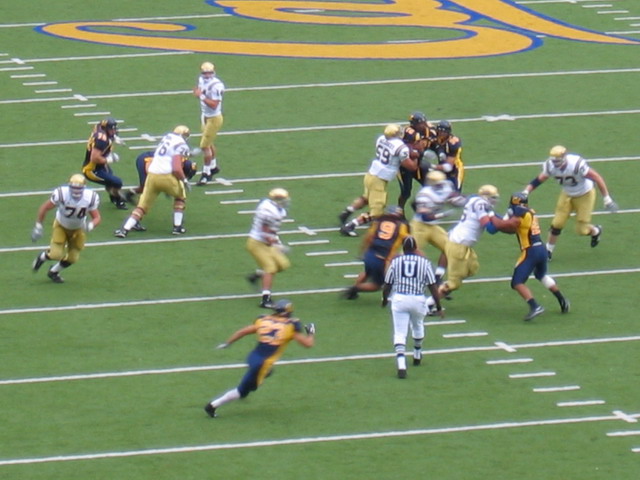
On Thursday, President Trump announced an executive order titled “Saving College Sports,” which declared it common sense that “college sports are not, and should not be, professional sports.” As athletes have sought to redefine their relationship with their universities over the past few years, the NCAA and athletic conferences have lobbied Congress for a bill, the SCORE Act, that would provide them with antitrust protections and prevent student-athletes from being deemed employees. Although the bill currently lacks the bipartisan support it would need to pass both the House and Senate, President Trump’s EO pressures Congress to act. Moreover, it explicitly directs the NLRB to “clarify” the status of student athletes through “guidance, rules or other appropriate actions.” This directive will likely make it more difficult for student athletes to organize in any capacity.
On Friday, U.S. District Judge Dabney L. Friedrich granted the second preliminary injunction to block the Trump Administration from shutting down the Job Corps program, which provides not just workforce training, but also housing and medical care. The plaintiffs in Cabrera v. Department of Labor are a group of Job Corps students who challenged DOL’s actions under the APA. On the basis of those APA claims, Judge Friedrich granted a broader injunction on the basis of vacatur compared to a previous preliminary injunction granted in New York. In that case, brought by a group of Job Corps contractors who did not make APA claims, the district judge narrowed the injunction to cover only 31 of the 99 Job Corps centers after Trump v. CASA.
Lastly, in California, members of United Food and Commercial Workers reached a tentative agreement with Safeway after five months of negotiations and multiple threats to strike. Earlier this month, 95% of union members voted to approve a strike if a deal was not reached this weekend. If the strikes had taken place, they would have been one of the largest grocery strikes in Northern California in 30 years. The potential new contract includes higher wages, improved pension plans and work scheduling, and better health care benefits. Union members are slated to vote for ratification in the coming days. The new agreement follows previous UFCW negotiations in Southern California and Colorado, covered by Finlay earlier this month.





Daily News & Commentary
Start your day with our roundup of the latest labor developments. See all
October 13
Chicago hotel workers remain on strike; a coalition of Democratic states sues the Labor Department over canceled unemployment insurance grants; the Federal Labor Relations Authority establishes a new mediation framework for federal worker disputes.
October 12
Workers at the Obama Foundation begin organizing; MLB submits its latest collective bargaining agreement proposal; Brigham & Women's nurses postpone strike.
October 11
UAW President Shawn Fain succeeds in his reelection bid, and Spanish unions call for a general strike.
October 9
DHS proposes a $100k fee for the foreign grad employment program; Trump suspends tech company access to green card program; and private equity perpetuates poor working conditions for home care workers.
October 8
NLRB judge finds UPS unlawfully restricted union insignia; Harvard graduate workers authorize second strike; OSHA orders Union Pacific to pay $300,000 in damages in whistleblower case.
October 7
DOL scraps plan to remove decades-old wage-and-hour guidance from federal regulations; New York enacts personnel records access law; Starbucks loses bid to dismiss Workers United trademark suit.