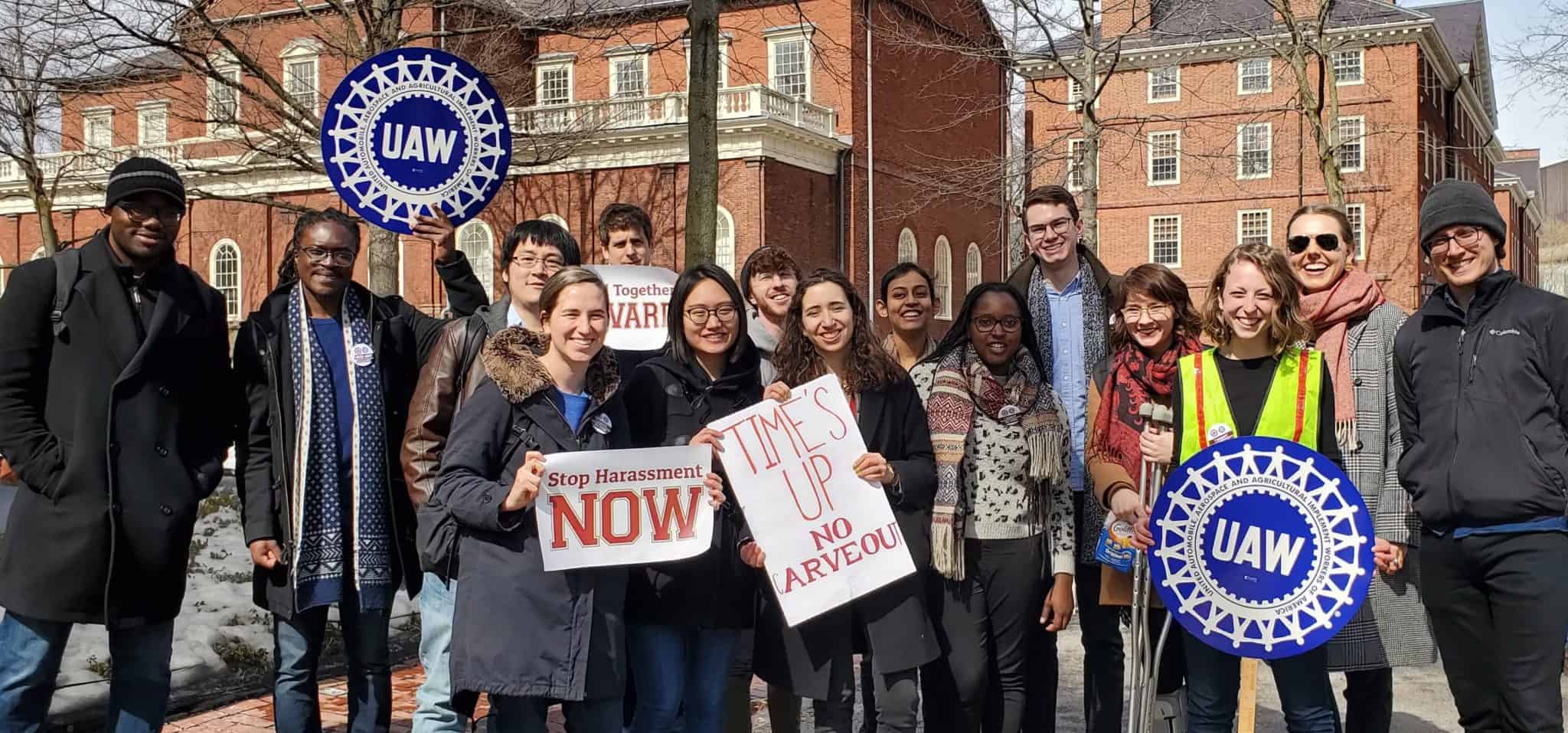

The Harvard Graduate Students Union has ended its strike—the longest in higher education since 2012—after 29 days. On Dec. 30, the HGSA-UAW bargaining committee announced in an email to union members that the strike would end with the year, on midnight, January 1. Although the union and the University have yet to agree on a contract, both sides have agreed to engage federal mediators to facilitate their next negotiating session, on Jan. 7.
The New York Times reports on efforts by the Hotel Trades Council, a New York hotel workers union, to prevent nonunion hotels from opening in New York City. The union is relatively small—it represents 33,600 hotel workers—yet powerful. Its members earn some of the most generous pay and benefits of any hotel workers in the country, and it has successfully maneuvered to limit Airbnb’s operation in New York and New Jersey. The Times reports that Mayor de Blasio’s administration has begun drafting rules that would require City Council approval for all new hotel construction in the city, thereby providing the union, which has allies on the Council, with leverage to block the construction of nonunion hotels.
A Washington Post analysis of Labor Department data suggests that minimum wage increases are responsible for recent wage growth for low-wage workers. Although the tight labor market has contributed to wage increases as well, the Post’s analysis shows that minimum wage laws have an added effect: wage growth in states that increased their minimum wages in the last three years was greater than wage growth in states that did not increase their minimum wages. “There are some very strong signals that minimum wages are in fact actually raising wages more for people at the bottom than you would expect on just tightening labor markets,” says Ben Zipperer, an economist at the Economic Policy Institute.
Politico reports that New Hampshire’s labor unions are withholding their endorsements of Democratic presidential candidates until after the primary election. In 2016, by contrast, several New Hampshire unions broke with their national leadership to endorse Senator Bernie Sanders before the primary. For local union leaders, the quality of the other candidates makes this primary election different. “There’s a lot of candidates talking about what he talked about last time,” says Rich Gulla, president of the SEA-SEIU Local 1984. “Look at the field and look at the polling. I could talk to a dozen different members and get a dozen different responses on who they like. There’s just too many in the field right not to narrow that down.”




Daily News & Commentary
Start your day with our roundup of the latest labor developments. See all
October 11
UAW President Shawn Fain succeeds in his reelection bid, and Spanish unions call for a general strike.
October 9
DHS proposes a $100k fee for the foreign grad employment program; Trump suspends tech company access to green card program; and private equity perpetuates poor working conditions for home care workers.
October 8
NLRB judge finds UPS unlawfully restricted union insignia; Harvard graduate workers authorize second strike; OSHA orders Union Pacific to pay $300,000 in damages in whistleblower case.
October 7
DOL scraps plan to remove decades-old wage-and-hour guidance from federal regulations; New York enacts personnel records access law; Starbucks loses bid to dismiss Workers United trademark suit.
October 6
Protect College Sports Act dampens athlete unionization outlook; Stanford RA union decides to withdraw petition
October 5
Delaware bans captive audience meetings; EEOC settles remote work national origin discrimination claim; First Circuit stays enforcement order in VA's dispute with AFGE.