

Emily Miller is a student at Harvard Law School.
President Trump met with leaders from the country’s largest labor unions yesterday to discuss plans to renegotiate the North American Free Trade Agreement. The Wall Street Journal reports that the administration is trying to gain support from labor unions which have been critical of the President over the last year by seeking their input on trade deals. Labor unions have found common ground with the President over his position on NAFTA, which many unions see as destructive to American jobs. In a joint statement, the leaders from the AFL-CIO, Teamsters, UAW, the Steelworkers, and the CWA said “Labor is united in its view that NAFTA is a disaster for working people and must be fixed . . . real solutions for any new trade deal must dramatically improve workers’ rights and raise wages and living standards in all three countries.”
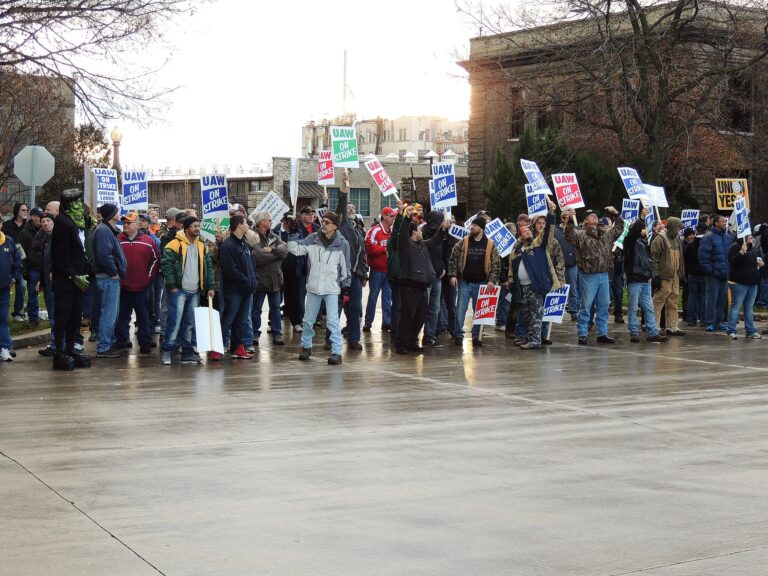
Public school teachers in West Virginia are set to begin their state-wide strike today to protest stagnant pay in a state ranked 48th out of 50 states in teacher salaries. The Huffington Postreports that teachers’ average teacher pay in West Virginia dropped from last year, and teachers have not received an across-the-board pay raise since 2014. Teacher salaries in West Virginia are set directly by the state legislature rather than through collective bargaining. In 1990, the last time West Virginia teachers engaged in a statewide strike, the state Supreme Court upheld an injunction issued against the work stoppage, and the state Board of Education has contended that today’s planned worked stoppage is likely unlawful.
Employees of Disney World theme parks filed an unfair labor practice charge with the National Labor Relations Board against the company for refusing to pay promised bonuses until workers agreed to a new contract. Following the announcement of the Trump Administration’s massive cuts to corporate tax rates, Disney initially promised 125,000 of its theme park workers, 36,000 of whom are unionized, that they would each receive a $1,000 bonus at the end of this year. During recent negotiations with the unionized group, however, Disney threatened to revoke the bonus offer unless the Unions agree to its terms, a move the employees’ representatives claims amounts to discrimination against the unionized workers. The case highlights some of the downsides, previously discussed here, of the unilateral decision to offer bonuses that several large employers have taken in light of the Trump tax cut.
The White House released the annual “Economic Report of the President” yesterday, promoting the strong economic growth under the President and predicting 3 percent GDP growth for years to come. The report also cites the importance of increasing labor supply to support the economic growth. Notably absent from the President’s report, notes CNBC, is a discussion of the immigration proposal, currently supported by the President, which would have the effect of restricting labor supply by decreasing legal immigration by approximately 500,000 people per year. Immigration is currently the most significant source of increased labor supply, accounting for $2 trillion of America’s $18 trillion economy, and the combination of new and current immigrants are set to account for all the growth in the working-age population through 2035.



Daily News & Commentary
Start your day with our roundup of the latest labor developments. See all
March 20
Appeal to 9th Cir. over law allowing suit for impersonating union reps; Mass. judge denies motion to arbitrate drivers' claims; furloughed workers return to factory building MBTA trains.
March 19
WNBA and WNBPA reach verbal tentative agreement, United Teachers Los Angeles announce April 14 strike date, and the California Gig Workers Union file complaint against Waymo.
March 18
Meatpacking workers go on strike; SCOTUS grants cert on TPS cases; updates on litigation over DOL in-house agency adjudication
March 17
West Virginia passes a bill for gig drivers, the Tenth Circuit rejects an engineer's claims of race and age bias, and a discussion on the spread of judicial curtailment of NLRB authority.
March 16
Starbucks' union negotiations are resurrected; jobs data is released.
March 15
A U.S. District Court issues a preliminary injunction against the Department of Veterans Affairs for terminating its collective bargaining agreement, and SEIU files a lawsuit against DHS for effectively terminating immigrant workers at Boston Logan International Airport.