
Maxwell Ulin is a student at Harvard Law School.
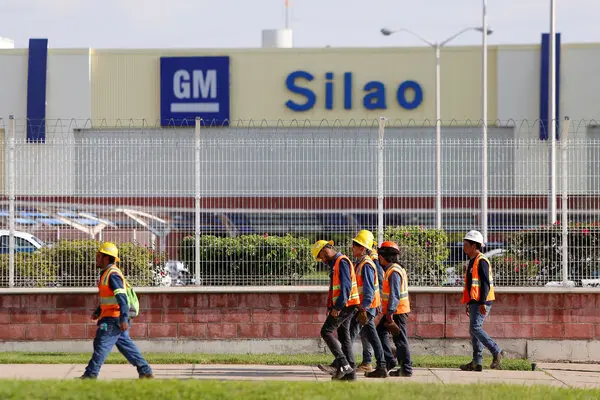
This morning, Mexico’s Labor Ministry announced that workers at one of General Motors’s largest pickup plants voted 3,214-2,623 to reject their union’s collective bargaining agreement (CBA) with the company. The vote, carried out under the rules of the new United States-Mexico-Canada Agreement (USMCA), was widely seen as a critical test case for the agreement’s unprecedented labor rights protections, which compelled Mexico to rewrite its existing labor code in order to root out the country’s dominant company unionism model in favor of genuine workplace democracy. Back in May, U.S. Trade Representative Katherine Tai formally requested that Mexican authorities investigate union election practices at the Silao-based plant in what amounted to the first labor rights complaint filed under the USCMA’s “Rapid-Response Labor Mechanism” (RRLM) after receiving reports of fraud in the plant’s CBA ratification vote. Leaders of the incumbent Miguel Lopez Trujillo Union, an affiliate of the company-friendly Confederation of Mexican Workers (CTM), were accused of destroying unused ballots and refusing to hand over results to federal officials, as required under the recent labor reforms. Under an agreement reached by the two nations in July, Mexico would proctor a new ratification vote by August 20 with both federal and international observers. Failure to comply with the terms of the new election would result in U.S. tariffs as high as 25% for the plant, which produces over a third of the world’s Chevrolet Silverados and GMC Sierras. Despite early reports of continued worker intimidation, the election itself took place largely without incident and is likely to be regarded as a success, opening the door to more genuine collective bargaining at the plant.
Yesterday, President Joe Biden announced that all nursing homes must require employees to be vaccinated in order to continue to receive federal funding. The new requirements will apply to around 15,000 nursing home facilities across the United States that participate in either Medicare or Medicaid programs and will affect an estimated 1.3 million workers. Responding to the announcement, nursing homes predicted widespread staffing shortages, as many employees remain steadfast in refusing vaccination; despite over 1.4 million COVID-19 infections and some 187,000 COVID-related deaths in U.S. nursing homes, just 60% of nursing home employees were vaccinated as of August 12.
Hundreds of Nabisco workers have gone on strike across the U.S. this past week as part of an ongoing contract battle with the Oreo cookie producer’s parent company Mondelez. Walkouts began at the company’s Portland-based production facility and have since spread to its distribution center Aurora, Colorado and a second production facility in Richmond, Virginia. Workers at all three locations are represented by the Bakery, Confectionary, Tobacco Workers and Grain Millers International Union (BCTGM), which has failed to reach a new contract with the company since the union’s earlier three agreements expired earlier this summer. According to BCTGM, Mondelez is demanding reductions in healthcare coverage and an end to Nabisco’s premium pay system, which guarantees time-and-a-half pay on Saturdays and for any day with over 8 hours of work, along with double-time pay on Sundays. Strikes at all three locations have attracted support from community members and politicians, who have provided sandwiches, donuts, and water to workers on the picket line.
On Tuesday, a collection of Massachusetts-based worker advocacy groups urged State Attorney General Maura Healey to block rideshare companies’ efforts to place a measure on the Massachusetts ballot exempting their drivers from state employment protections. The measure, filed two weeks ago for the November 2022 election, is closely modeled after California’s Proposition 22 and seeks similarly to exclude rideshare drivers from the state’s otherwise broad “ABC” test for employee status. In a memorandum to Healey, the Coalition to Protect Workers’ Rights—a group formed to oppose the ballot measure—argued that the broad of array of issue areas addressed in the measure renders it defective under the state constitution’s “relatedness” prong for all initial ballot petitions. Additionally, opponents contend that the measure is constructed in a manner that will “confuse and mislead voters” in further violation of the Bay State constitution. Also on Tuesday, supporters of the ballot measure filed a complaint with the state elections commission requesting that regulators investigate the Coalition for campaign finance violations.





Daily News & Commentary
Start your day with our roundup of the latest labor developments. See all
October 14
Eleventh Circuit overturns ERISA exhaustion rule; DHS finalizes removal of automatic renewal for work permits; AFGE challenges SSA over flexible scheduling policy.
October 13
Chicago hotel workers remain on strike; a coalition of Democratic states sues the Labor Department over canceled unemployment insurance grants; the Federal Labor Relations Authority establishes a new mediation framework for federal worker disputes.
October 12
Workers at the Obama Foundation begin organizing; MLB submits its latest collective bargaining agreement proposal; Brigham & Women's nurses postpone strike.
October 11
UAW President Shawn Fain succeeds in his reelection bid, and Spanish unions call for a general strike.
October 9
DHS proposes a $100k fee for the foreign grad employment program; Trump suspends tech company access to green card program; and private equity perpetuates poor working conditions for home care workers.
October 8
NLRB judge finds UPS unlawfully restricted union insignia; Harvard graduate workers authorize second strike; OSHA orders Union Pacific to pay $300,000 in damages in whistleblower case.