
Jacqueline Rayfield is a student at Harvard Law School.
In today’s News and Commentary, the Writers’ Guild of America concluded the second longest strike in the union’s history today, the Big Three Automakers’ reputations plummet, and President Biden joins the UAW picket line.
The Writers’ Guild of America ended a 148-day strike at 12:01 am today. Union leadership emphasizes that while this means writers may go back to work, it does not mean that the tentative agreement with studios is set in stone. Union membership still plans to vote on ratification of the agreement between October 2, and October 9. SAG-AFTRA, the other half of Hollywood’s historic labor stoppage, still remains on strike with no scheduled dates to resume bargaining. Even with writers back at work, production on many projects will remain stalled.
In a recent survey by Caliber, Ford, Stellantis, and General Motors have all taken a reputational hit since the UAW began their strike. 58% of Americans surveyed supported auto-workers, including 72% of Democrats. A further 87% of Americans had heard about the UAW strike. According to the survey Americans are also less likely to consider purchasing from the Big Three, recommending their products to others, or working for them.
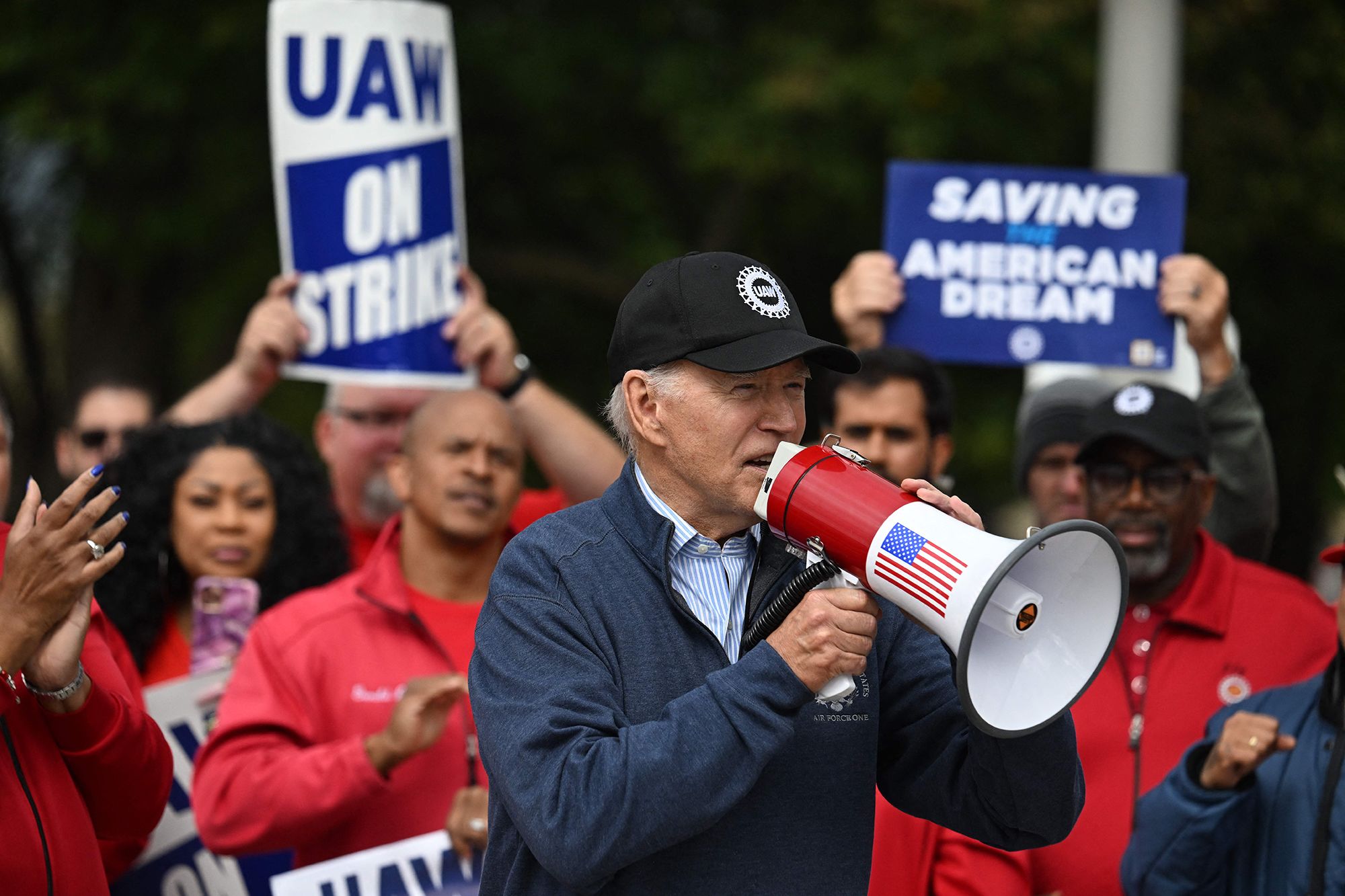
President Biden also joined this historic auto-strike on Tuesday, joining striking workers on the picket line. This marked the first time any sitting U.S. president joined a picket line. Biden’s team explains that this is part of making good on his promise to be the most “pro-union president in history.”



Daily News & Commentary
Start your day with our roundup of the latest labor developments. See all
October 11
UAW President Shawn Fain succeeds in his reelection bid, and Spanish unions call for a general strike.
October 9
DHS proposes a $100k fee for the foreign grad employment program; Trump suspends tech company access to green card program; and private equity perpetuates poor working conditions for home care workers.
October 8
NLRB judge finds UPS unlawfully restricted union insignia; Harvard graduate workers authorize second strike; OSHA orders Union Pacific to pay $300,000 in damages in whistleblower case.
October 7
DOL scraps plan to remove decades-old wage-and-hour guidance from federal regulations; New York enacts personnel records access law; Starbucks loses bid to dismiss Workers United trademark suit.
October 6
Protect College Sports Act dampens athlete unionization outlook; Stanford RA union decides to withdraw petition
October 5
Delaware bans captive audience meetings; EEOC settles remote work national origin discrimination claim; First Circuit stays enforcement order in VA's dispute with AFGE.