
Mila Rostain is a student at Harvard Law School.
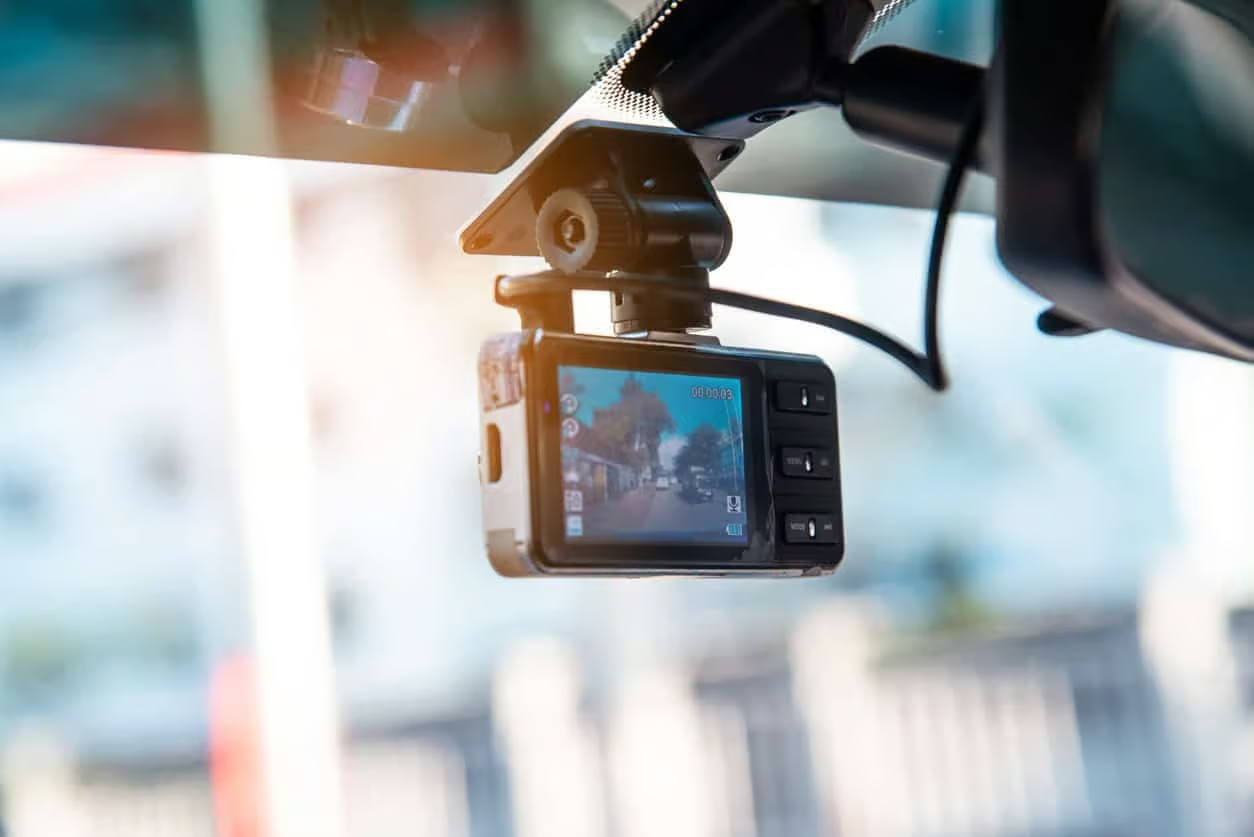
From school bus drivers to long-haul truckers, workers in the logistics and transportation industries face constant surveillance. Apps track hard breaking, backup distance, time spent at stop signs. Cameras capture every yawn or glance in the side-mirror. AI calls out reminders to maintain safe distances.
Companies in these industries rely on cutting-edge fleet management systems — a combination of hardware and software tracking devices, or telematics — to monitor their driver’s behavior. They claim that the use ensures the safety of drivers and others on the road. To bolster the sincerity of the claim that surveillance is all about safety, the companies point to the liability they face when their drivers are involved in accidents.
Vicarious liability — where employers are accountable for the tortious conduct of their employees — stems from the idea that employers are often better suited to compensate victims financially. The theory is, since employers benefit from the work of their employees, they should incur the risks associated with the work.
Imputing liability incentivizes employers to take preventative safety measures to decrease the likelihood their employees engage in tortious conduct. But with this incentive comes a justification for invasive surveillance technology. Some of this technology does increase safety, albeit at the cost of employee privacy. But often safety is a pretext for surveillance aimed at increasing productivity.
Vicarious liability incentivizes the pursuit of safety including through surveillance technology
The logistics and transportation industries have long been known for the use of surveillance to promote safety. In some ways, vicarious liability works as intended in these industries because employers can decrease liability by lowering the risk their drivers cause accidents. A long-haul trucking company, for instance, faces liability for millions of dollars anytime a driver causes an accident. If the company installs technology that alerts a driver that she is swerving in and out of lanes, the driver might take corrective measures, preventing an accident and the ensuing monetary damages.
The same argument is true for more invasive technology, like inward facing AI cameras. If the camera detects that a driver seems distracted, it can alert them to focus on the road. If the camera detects that a driver shows signs of drowsiness, it can trigger a system that sounds a loud alarm and causes the seat to vibrate. Lytx, one leading fleet management system, advertises technology that can track signs of fatigue including head nodding, “shifting in the seat, leaning back on the head rest, and rubbing eyes.” According to Lytx, by identifying risks early, “drivers can self-correct and managers can intervene before incidents occur.”
Surveillance technology can benefit drivers, too. Some find it encourages safer driving. And drivers can upload footage that proves they were not at fault for various incidents.
Employers use liability as the justification to surveil workers to increase productivity
But efficiency, not public safety, better explains the widespread use of surveillance technology. The same technology that advertises itself as promoting safety identifies inefficient driving habits like idling and long stops. With extensive technology, employers can ensure that every second of an employee’s work is tracked. And for delivery drivers who face unrealistic quotas, surveillance technology allows employers to encourage efficiency, sometimes at the expense of safety. As the Teamsters point out, since 2008, UPS has used technology to harass drivers for spending too long on a delivery.
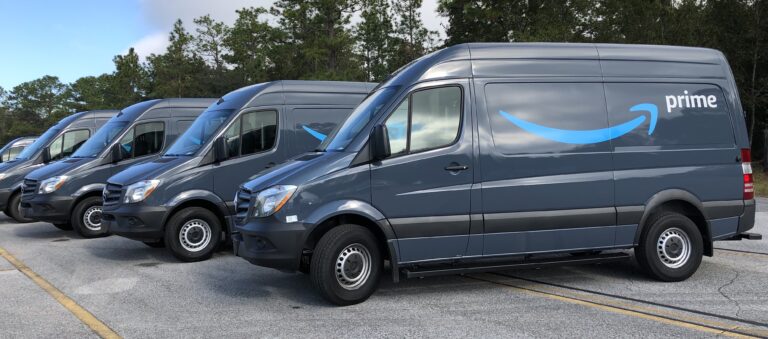
One piece of evidence for the claim that efficiency, not safety, is the motive for surveillance comes from the fact that even companies that rely on independent contractors, and thus do not face vicarious liability, use similar technology to monitor workers. Take Amazon, which has orchestrated a system to avoid liability by refusing to employ drivers directly, instead contracting with delivery service partners (“DSPs”) who employ drivers. Amazon tracks DSP drivers’ every move. Sudden breaking, sipping water, reversing over a certain distance, or the jostling of a cell phone all contribute to weekly scores that drivers receive. Without vicarious liability as a justification for all this surveillance, it seems doubtful that Amazon is motivated by a concern for safety. Far more likely is the conclusion that the company is pursuing efficiency at the expense of driver privacy.
Indeed, surveillance technology itself may lead to accidents, further suggesting that safety is not the primary goal of the technology. Many drivers find the technology, with its mixture of audible, physical, and visual alerts, distracting. Some drivers avoid checking their blind spots because technology tracks eye movement for distracted driving. Others stop multiple times at a stop sign to avoid getting disciplined for an infraction, particularly dangerous at a four-way stop.
Nonstop surveillance also directly takes a toll on drivers. Workers feel less agency over their work, leading to psychological distress and dehumanization. Drivers have commented on how unnerving technology which allows for live streaming induces paranoia and rage. Despite companies’ promises of data security, camera footage can leak online. And while employers are prohibited from surveilling employees in the bathroom, fleet management systems might do just that by capturing when drivers use the bathroom in their vehicles, a common experience due to lack of rest stops enroute and quotas.
Vicarious liability should incentivize logistics and transportation companies to address the underlying conditions that create unsafe driving conditions
To pursue the critical goal of safety, companies should lower quotas and promote driver well-being instead of surveilling their drivers. For example, victims attempting to hold Amazon vicariously liable allege that the company “knowingly place[s] unreasonable daily quotas for drivers and that the unreasonable burden . . . incentivizes unsafe and fatigued driving.” One Amazon driver involved in a vehicle accident drove unsafely to “complete her delivery schedule for the day.” And because many drivers view the surveillance as pushing them to meet quotas, it incentivizes speeding instead of safe driving.
Vicarious liability works because it incentivizes companies to take measures to decrease the risks associated with the work. But vicarious liability may be too blunt a tool to encourage a productive and worker-friendly approach to safety (e.g., reducing quotas) rather than an approach that sacrifices employee privacy (e.g., surveillance). When employers decide how to decrease risks without input from workers, they choose the approach that sacrifices privacy and boosts efficiency. But when workers take collective action, they can bargain for measures that increase safety — like lower quotas — and protections against surveillance. That’s how the Teamsters ended up with a contract that prohibits UPS from using inward facing Lytx cameras. In the end, to secure safety and combat invasive surveillance technology, drivers may need to rely on tools of worker empowerment rather than tort law.
Daily News & Commentary
Start your day with our roundup of the latest labor developments. See all
April 16
DOD terminates union contracts; building workers in New York authorize a strike; and the American Postal Workers Union launches ads promoting mail-in voting.
April 15
LAUSD school staff reach agreement; EBSA releases deregulatory priorities; Trump nominates third NLRB Republican.
April 14
Meatpacking workers ratify new contract; NLRB proposes Amazon settlement; NLRB's new docketing system leading to case dismissals.
April 13
Starbucks' union files new complaint with NLRB; FAA targets video gamers in new recruiting pitch; and Apple announces closure of unionized store.
April 12
The Office of Personnel Management seeks the medical records of millions of federal workers, and ProPublica journalists engage in a one-day strike.
April 10
Maryland passes a state ban on captive audience meetings and Elon Musk’s AI company sues to block Colorado's algorithmic bias law.