
Meredith Gudesblatt is a student at Harvard Law School and a member of the Labor and Employment Lab.
In Today’s News and Commentary, the Third Circuit denies DOL’s request for a rehearing en banc about its ability to impose civil penalties for violations of the H-2A program, the Attorney General of Washington is proposing legislation to protect immigrant workers, and labor unions file a lawsuit to block social media surveillance of non-citizens.
On Wednesday, the Third Circuit denied DOL’s request for an en banc rehearing in Sun Valley Orchards, LLC v. United States Dep’t of Labor. Earlier this week, Paneez wrote about how Sun Valley imperils DOL’s ability to vindicate the rights of H-2A workers. There, a New Jersey farm that participated in the H-2A visa program—but has since ended operations—was found liable for over $500,000 in civil penalties for violating obligations under the Immigration and Nationality Act regarding no-cost housing, kitchen access, transportation, and employment. Sun Valley challenged DOL’s ability to impose civil penalties via an administrative process, arguing that DOL denied it a fair trial under Article III of the Constitution. Sun Valley argued that it was entitled to a jury trial in an Article III court because the case involved breach of an employment. The Third Circuit agreed, ruling that DOL could not impose fines in administrative proceedings because the breach of contract case affected Sun Valley’s private rights. The Third Circuit did not provide a reason for its denial of the request.
In advance of Washington’s next sixty-day legislative session beginning in January, Attorney General Nick Brown has proposed the Immigrant Worker Protection Act. This legislation would require employers to inform employees within 72 hours of being notified by U.S. Immigration and Customs Enforcement (ICE) of any plan to inspect employment eligibility paperwork. Unannounced workplace raids are often proceeded by an announced I-9 inspection. Although ICE could still conduct workplace raids, this legislation would increase transparency for workers and afford them an opportunity to get their documents in order, speak to an attorney, or implement a safety plan with their family as needed. Similar legislation already exists in states such as California, Oregon, and Illinois.
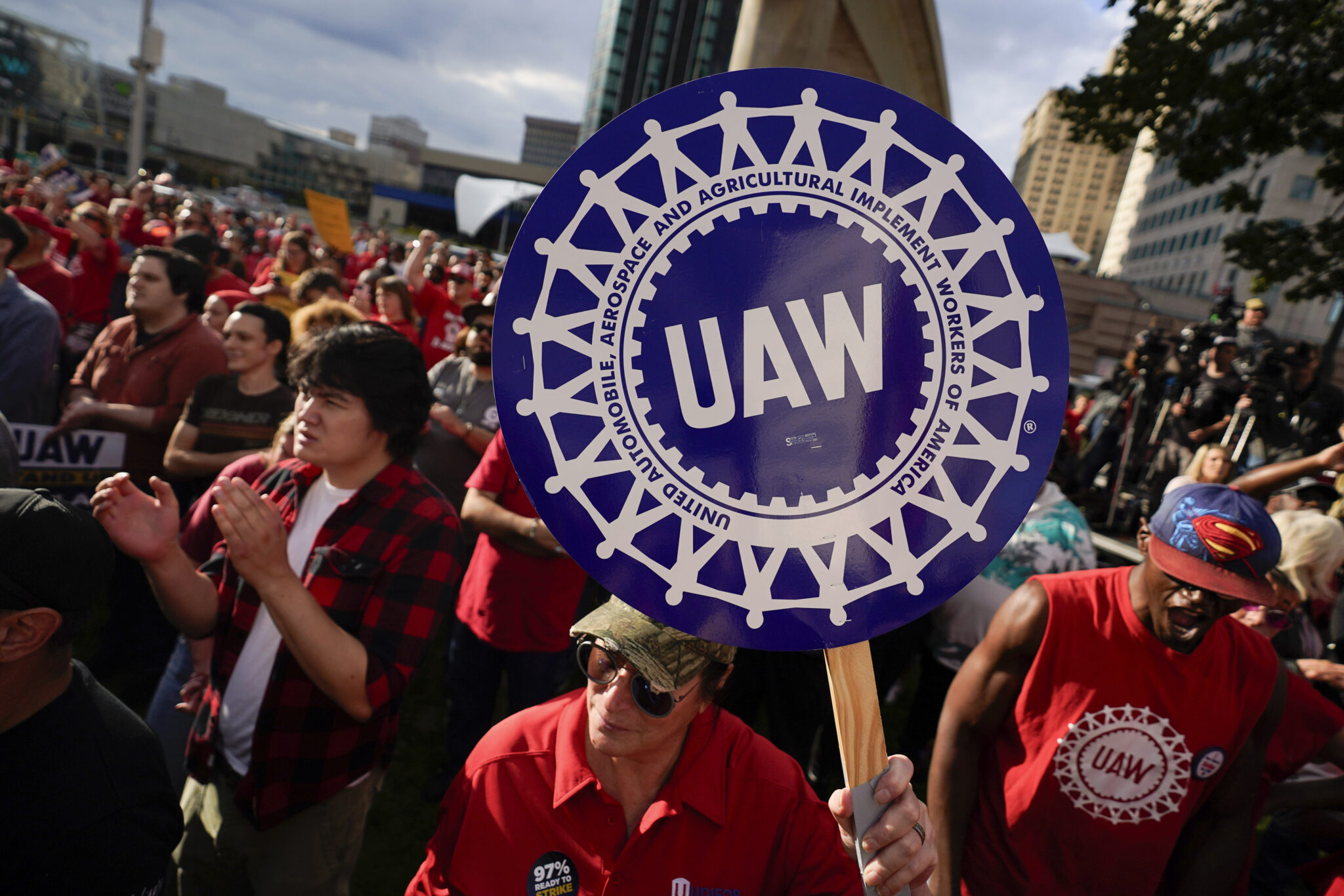
And lastly, UAW, the American Federation of Teachers, and the Communication Workers of America filed suit yesterday in the Southern District of New York to enjoin a government surveillance program targeting noncitizens who express views the government disfavors. The case is captioned UAW v. Dep’t of State, No. 1:25-cv-08566. The suit alleges the government has developed a vast surveillance apparatus “to undertake viewpoint-based surveillance of expressive activity documented online of every visa holder in the United States and other noncitizens, with a particular focus on visa holders and Legal Permanent Residents with campus affiliations.” As a consequence, members of UAW, CWA, and AFT have restricted their online and in-person speech and expressive activity, including in their interactions with the unions. Many members have opted not to join the unions in order to avoid negative immigration consequences. One UAW member reported leaving a leadership role, and another declined even to contact their union representatives about wage theft claims due to fears of further surveillance. UAW also reported that some of its supporters recently declined to vote in an NLRB-conducted election for fear of being surveilled.


Daily News & Commentary
Start your day with our roundup of the latest labor developments. See all
March 31
In today’s news and commentary, the Supreme Court hears a case about Federal Court jurisdiction over arbitration, a UPS heat inspection lawsuit against OSHA is dismissed, and federal worker unions and NGOs call on the EPA to cease laying off its environmental justice staffers. A majority of Supreme Court justices signaled support for allowing federal […]
March 30
Trump orders payment to TSA agents; NYC doormen look to authorize a strike; and KPMG positions for mass layoffs.
March 29
The Department of Veterans Affairs re-terminates its collective bargaining agreement despite a preliminary injunction, and the Federal Labor Relations Authority announces new rules increasing the influence of political appointees over federal labor relations.
March 27
“Cesar Chavez Day” renamed “Farmworkers Day” in California after investigation finds Chavez engaged in rampant sexual abuse.
March 26
Supreme Court hears oral argument in an FAA case; NLRB rules that Cemex does not impose an enforceable deadline for requesting an election; DOL proposes raising wage standards for H-1B workers.
March 25
UPS rescinded its driver buyout program; California court dismissed a whistleblower retaliation suit against Meta; EEOC announced $15 million settlement to resolve vaccine-related religious discrimination case.