
Henry Green is a student at Harvard Law School.
In today’s news and commentary, an interview with former NLRB chair Marvin Kaplan, and the Supreme Court denies certiorari in Evans Hotels v. UNITE HERE Local 30.
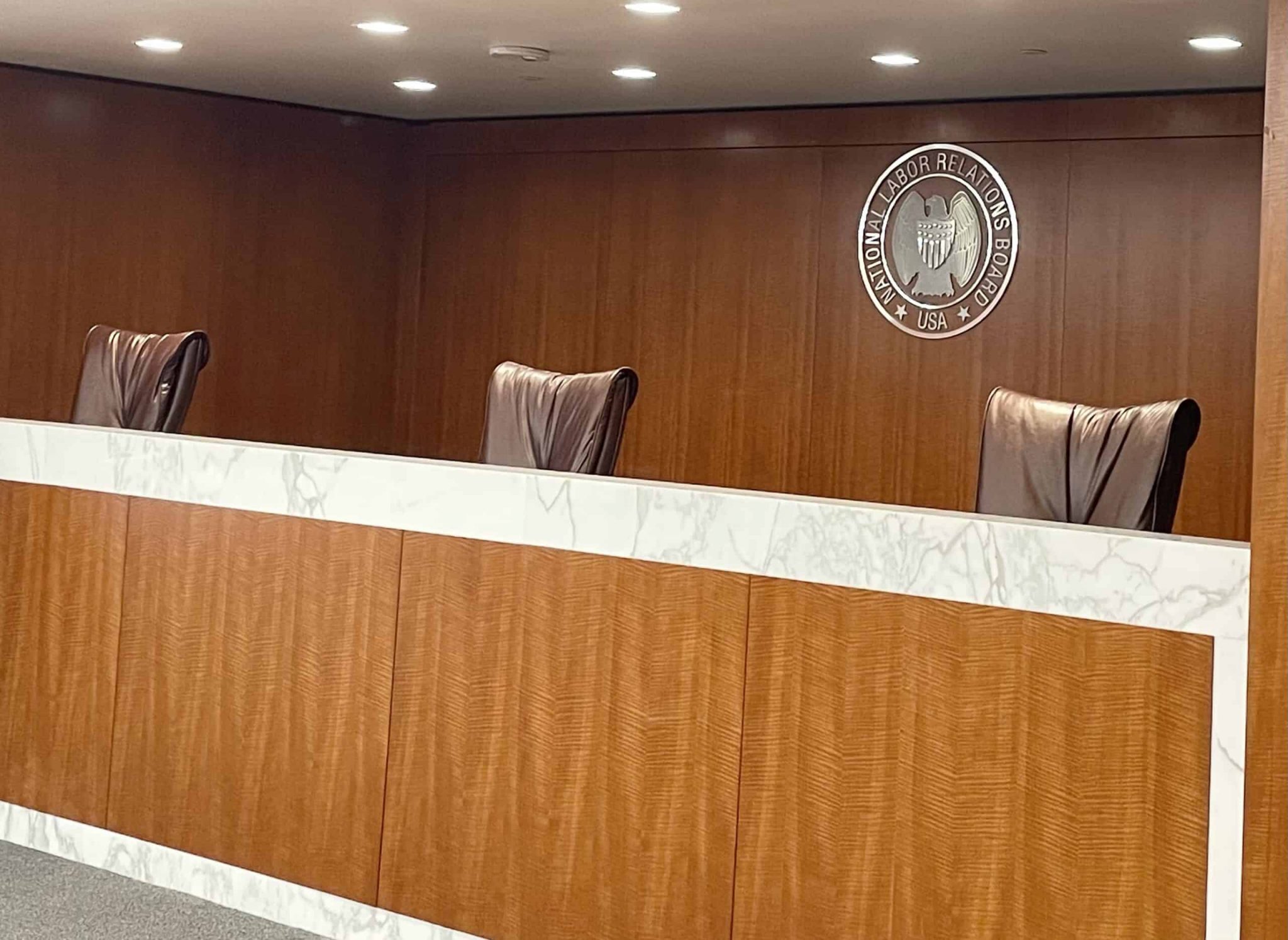
Last week at NLRB Edge, Matt Bruenig interviewed former NLRB chairman Marvin Kaplan. Kaplan was twice appointed to the NLRB by President Trump and was chairman of the Board under the current Trump administration until his term ended this August. Bruenig asked Kaplan about the Faster Labor Contracts Act (FLCA), a bill supported by Josh Hawley and other senators that would create a mechanism for first contract bargaining to go to arbitration if the parties cannot agree within a set time period. Kaplan testified regarding the bill and other issues at a senate hearing on labor law reform last week.
Kaplan expressed reservations about FLCA, arguing that “the system works as it exists now.” As evidence, Kaplan noted that a first contract is reached within three years of bargaining in “70% of cases,” and asked “Is 30% really the dire number that we’re suggesting or is it a recognition that the process is working and it’s complicated?” He also suggested that FLCA could pose issues under the takings clause of the constitution if the Board imposes contract terms through an arbitration. Bruenig disputed some of Kaplan’s arguments, saying that three years may be too long of a bargaining process, and that parties could opt out of arbitration if their bargaining was going well. As an alternative, Bruenig suggested allowing unions to engage in secondary boycotts if bargaining had gone on too long – Kaplan expressed reservations, saying this would harm parties not involved in the bargaining process. Bruenig also asked Kaplan what his day-to-day work was like at an NLRB without a quorum. Kaplan said that he and fellow Board member David Prouty continued working on cases to expedite case processing once the Board’s quorum is restored.
The Supreme Court has denied certiorari in Evans Hotels v. UNITE HERE Local 30, Law360 reports. In the case, a hotel operator sued two San Diego unions, alleging they persistently lobbied against the company’s development plans to extract concessions that would ease union organizing. A 9th Circuit panel said in January that much of the alleged activity was protected under the Noerr-Pennington doctrine, which protects parties from liability for petitioning the government unless they are engaged in “sham petitioning.” However, the 9th Circuit held that some of the alleged conduct could fall into the doctrine’s sham exception, allowing one of the company’s claims to go forward. In their petition for a writ of certiorari, the company argued that other circuits construe the Noerr-Pennington doctrine more narrowly, among other arguments.



Daily News & Commentary
Start your day with our roundup of the latest labor developments. See all
September 21
In today’s News and Commentary, the Seventh Circuit raises the bar for the NLRB to obtain preliminary injunctions, the California Primary Care Association sues SEIU-UHW for racketeering, and the Seventh Circuit finds that an employer group and think tank do not have standing to challenge an Illinois law banning captive audience meetings. On Friday, the […]
September 20
Culinary Workers Union members protests union leadership; lawsuit against OpenAI and Microsoft reveal internal concerns about the threat of AI training to human labor.
September 17
Unions push to block Google from buying Spirit Airlines employment records; U.S. Department of Labor sues Oklahoma coffee chain over alleged wage violations.
September 16
Trump nominates Catherine Eschbach as EEOC general counsel; NLRB declines to resolve union work-assignment dispute; Allina Health physicians begin four-day strike.
September 15
Documents reveal the inner workings of Amazon's union avoidance program; Washington state public sector unions reach tentative deals amid a difficult bargaining cycle; hundreds of Nevada Culinary Union members protest their union's health care changes.
September 14
NCAA and Big Ten file motion to dismiss in former star player's NIL suit; Seventh Circuit rules against former postal worker in discrimination suit.