
Benjamin Sachs is the Kestnbaum Professor of Labor and Industry at Harvard Law School and a leading expert in the field of labor law and labor relations. He is also faculty director of the Center for Labor and a Just Economy. Professor Sachs teaches courses in labor law, employment law, and law and social change, and his writing focuses on union organizing and unions in American politics. Prior to joining the Harvard faculty in 2008, Professor Sachs was the Joseph Goldstein Fellow at Yale Law School. From 2002-2006, he served as Assistant General Counsel of the Service Employees International Union (SEIU) in Washington, D.C. Professor Sachs graduated from Yale Law School in 1998, and served as a judicial law clerk to the Honorable Stephen Reinhardt of the United States Court of Appeals for the Ninth Circuit. His writing has appeared in the Harvard Law Review, the Yale Law Journal, the Columbia Law Review, the New York Times and elsewhere. Professor Sachs received the Yale Law School teaching award in 2007 and in 2013 received the Sacks-Freund Award for Teaching Excellence at Harvard Law School. He can be reached at [email protected].
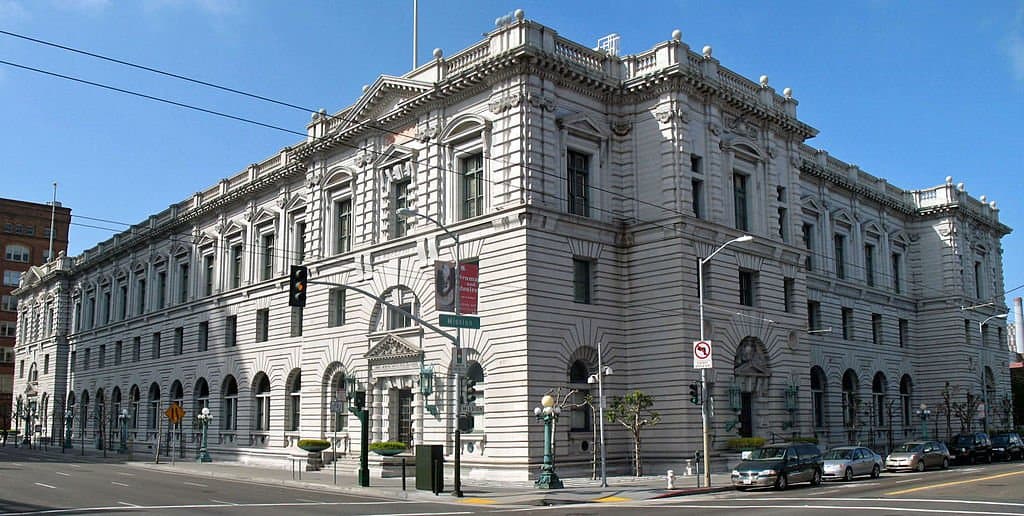
In an opinion released Tuesday, the ninth circuit has rejected a First Amendment challenge to exclusive representation. As Jared reports, the ninth circuit joins the eighth circuit in affirming the constitutional validity of exclusive representation, even in the aftermath of the Supreme Court’s Janus decision. No circuit court has held to the contrary, and thus no circuit split exists on the question.
Writing for a unanimous ninth circuit panel in Miller v. Inslee, Judge Christen holds that Minnesota State Board for Community Colleges v. Knight governs the constitutional analysis of exclusive representation systems. In Knight, the Supreme Court rejected constitutional challenges to two provisions of Minnesota law: one which required the State to “meet and negotiate” with the faculty’s exclusive bargaining representative over terms and conditions of employment, and a second which required the State to meet and confer with the exclusive representative regarding “policy questions . . . outside the scope of mandatory bargaining.” As the Miller panel noted, “[f]ollowing Knight, every circuit court to address the constitutionality of exclusive bargaining arrangements . . . has concluded that these provisions do not violate the First Amendment.” And, the ninth circuit panel went on to hold, nothing in Janus upsets the Knight Court’s conclusion regarding the First Amendment validity of exclusive representation. To the contrary, the ninth circuit notes that “Janus specifically acknowledged that exclusive representation is constitutionally permissible.” As Janus put it, “[s]tates can keep their labor-relations systems exactly as they are – only they cannot force nonmembers to subsidize public-sector unions.”
Although the ninth circuit holds that Knight controls the case and dictates the conclusion that exclusive representation is constitutional (precisely as the eighth circuit held in Bierman v. Dayton), the court – in a final section of the opinion – also holds that, even if Knight did not govern, exclusive representation would withstand constitutional scrutiny. Why? Because exclusive representation serves a compelling state interest in securing labor peace. As the court of appeals aptly put it: “Washington has an interest in negotiating with only one entity, at least for the sake of efficiency and managerial logistics” and a concomitant interest in “avoiding the competing demands of rival representatives, the potential confusion that would result from multiple agreements, and possible dissension among the providers.” Thus, although Janus holds that a state’s interest in labor peace may not justify agency fee agreements, the ninth circuit reiterates that a state’s interest in labor peace does still – even after Janus – support and justify a system of exclusive representation. Finally, the ninth court decides that there is no less restrictive way of accomplishing the goal of labor peace in this context than through a system of exclusive representation.
Miller should disincline the Supreme Court to grant review in either of the exclusive representation cases pending on cert. petitions. Far from a circuit split on this question, there is uniformity among the courts of appeals.




Daily News & Commentary
Start your day with our roundup of the latest labor developments. See all
July 17
Canadian wildfires endanger rail workers; 26 Meta employees allege targeted layoffs for those on paid leave; FIFPRO pushes for more rigorous heat protections for players.
July 16
Trump's NLRB nominee set for Senate vote, federal district court grants partial win on WARN Act claims, Brigham and Women's nurses return to work.
July 15
U.S. labor productivity climbs at its fastest pace in decades; a federal judge grants a preliminary injunction to anti-abortion groups challenging Michigan’s civil rights law; and Jackson, Mississippi’s bus workers walk off the job.
July 14
DOJ opens investigation of UAW president; LIUNA protests Pfizer building collapse; national park workers unionize
July 13
New York Times files retaliation suit against the EEOC; US government pushes back TPS designation termination for Haiti; federal judge grants preliminary injunction to federal workers seeking reasonable telework accommodations.
July 12
Postal workers demand investigation into Atlanta distribution center conditions following deaths; University of Chicago Press Workers vote to unionize.