
Ted Parker is a student at Harvard Law School and a member of the Labor and Employment Lab.
In today’s news and commentary, the Trump administration proposes a rule limiting employment authorization for asylum seekers and Matt Bruenig introduces a new LLM tool analyzing employer rules under Stericycle.
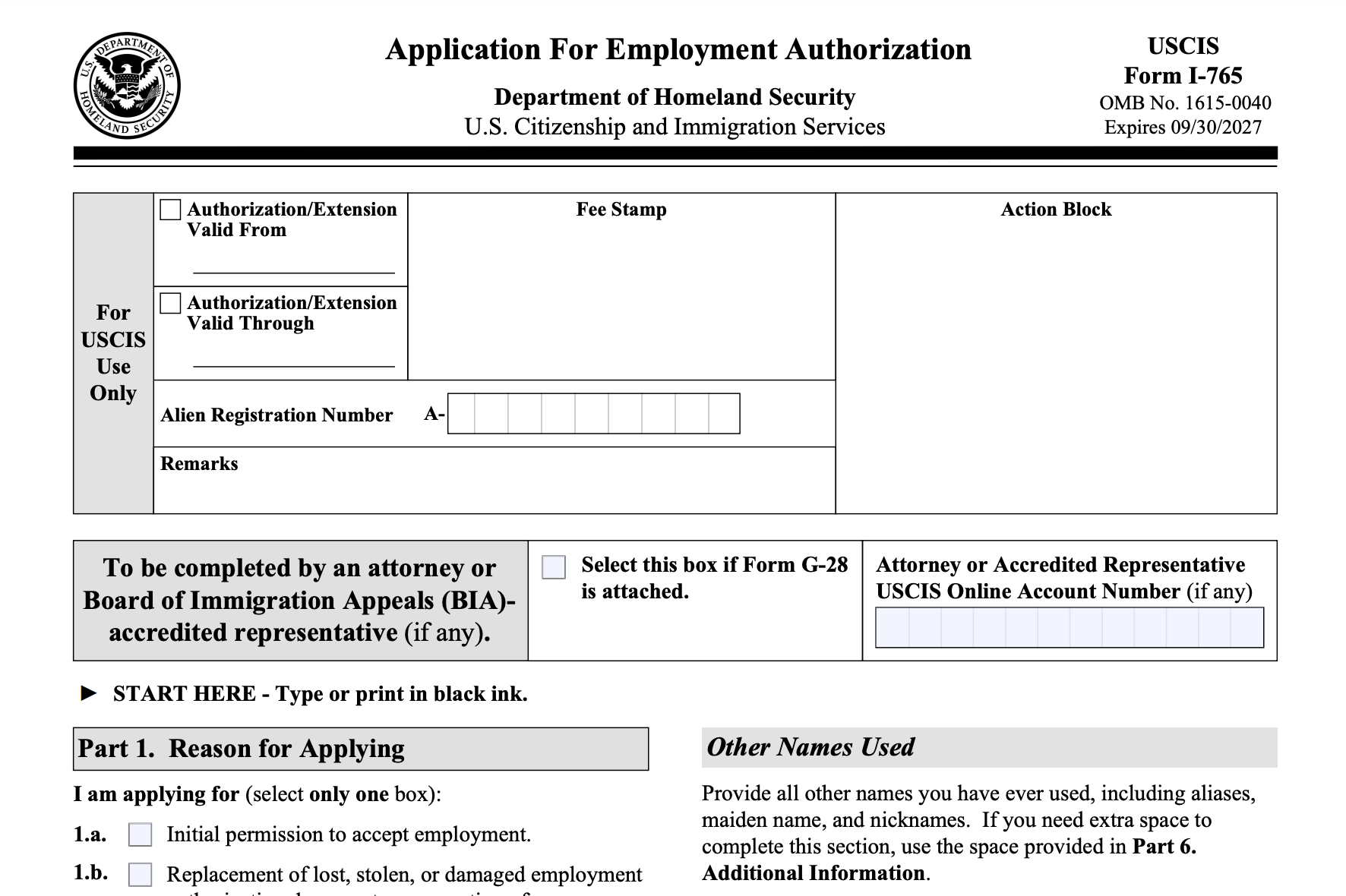
Law360 reports that the Trump administration proposed a rule on Friday that would change the employment authorization process for asylum seekers. Under the proposed rule, USCIS would only accept new employment authorization applications for asylum seekers if the average processing time for existing applications does not exceed 180 days over a 90-day period. 180 days (about 6 months) is radically less than the backlog has been in recent years. In 2024, it was 23 months, nearly 4 times the new limit. The previous two years, it was even higher: 25 months and 35.5 months, respectively. The proposed rule also makes applicants wait longer before they can apply (from 180 days to 365 days), gives USCIS longer to process the applications (from 30 days to 180 days), and requires all applicants (including renewals) to provide biometric information. DHS argues that the proposed rule is justified by the existence of meritless asylum applications, but the new rule would equally punish meritorious applications because its threshold mechanism does not distinguish between the two. If it becomes final, the rule would drastically limit new employment authorizations for asylum seekers.
In other news, Matt Bruenig has introduced an LLM tool analyzing employer rules under Stericycle, which provides the test for determining whether employer rules violate the NLRA by chilling an employee’s exercise of their Section 7 rights. Earlier this month, Bruenig contributed an OnLabor post explaining his efforts to make labor law more accessible through LLMs. His latest product is a 154-page PDF that collects, organizes, and synthesizes all extant applications of Stericycle to employer rules. Stericycle was decided two and a half years ago. In that time, 59 ALJ decisions have applied its test to 204 employer rules (no Board decisions have applied the test). Bruenig’s analysis sorts these 204 rules into 16 categories (such as “Civility,” “Dress Code,” and “No-Recording”), distinguishing within each category between violating and non-violating rules. After the text of each rule follows a one-sentence explanation of why the ALJ found it lawful or unlawful. Practitioners could use this tool to quickly determine if any employer rules in their cases might present a Stericycle issue based on existing case law.




Daily News & Commentary
Start your day with our roundup of the latest labor developments. See all
March 15
A U.S. District Court issues a preliminary injunction against the Department of Veterans Affairs for terminating its collective bargaining agreement, and SEIU files a lawsuit against DHS for effectively terminating immigrant workers at Boston Logan International Airport.
March 13
Republican Senators urge changes on OSHA heat standard; OpenAI and building trades announce partnership on data center construction; forced labor investigations could lead to new tariffs
March 12
EPA terminates contract with second-largest union; Florida advances bill restricting public sector unions; Trump administration seeks Supreme Court assistance in TPS termination.
March 11
The partial government shutdown results in TSA agents losing their first full paycheck; the Fifth Circuit upholds the certification of a class of former United Airline workers who were placed on unpaid leave for declining to receive the COVID-19 vaccine for religious reasons during the pandemic; and an academic group files a lawsuit against the State Department over a policy that revokes and denies visas to noncitizens for their work in fact-checking and content moderation.
March 10
Court rules Kari Lake unlawfully led USAGM, voiding mass layoffs; Florida Senate passes bill tightening union recertification rules; Fifth Circuit revives whistleblower suit against Lockheed Martin.
March 9
6th Circuit rejects Cemex, Board may overrule precedents with two members.