

Ted Parker is a student at Harvard Law School and a member of the Labor and Employment Lab.
In today’s news and commentary, the best way to salvage the NLRB in the short term may be advocating for a private right of action, the Eleventh Circuit strikes another blow against the McDonnell Douglas burden shifting framework, and Congress mulls amendments to the WARN Act.
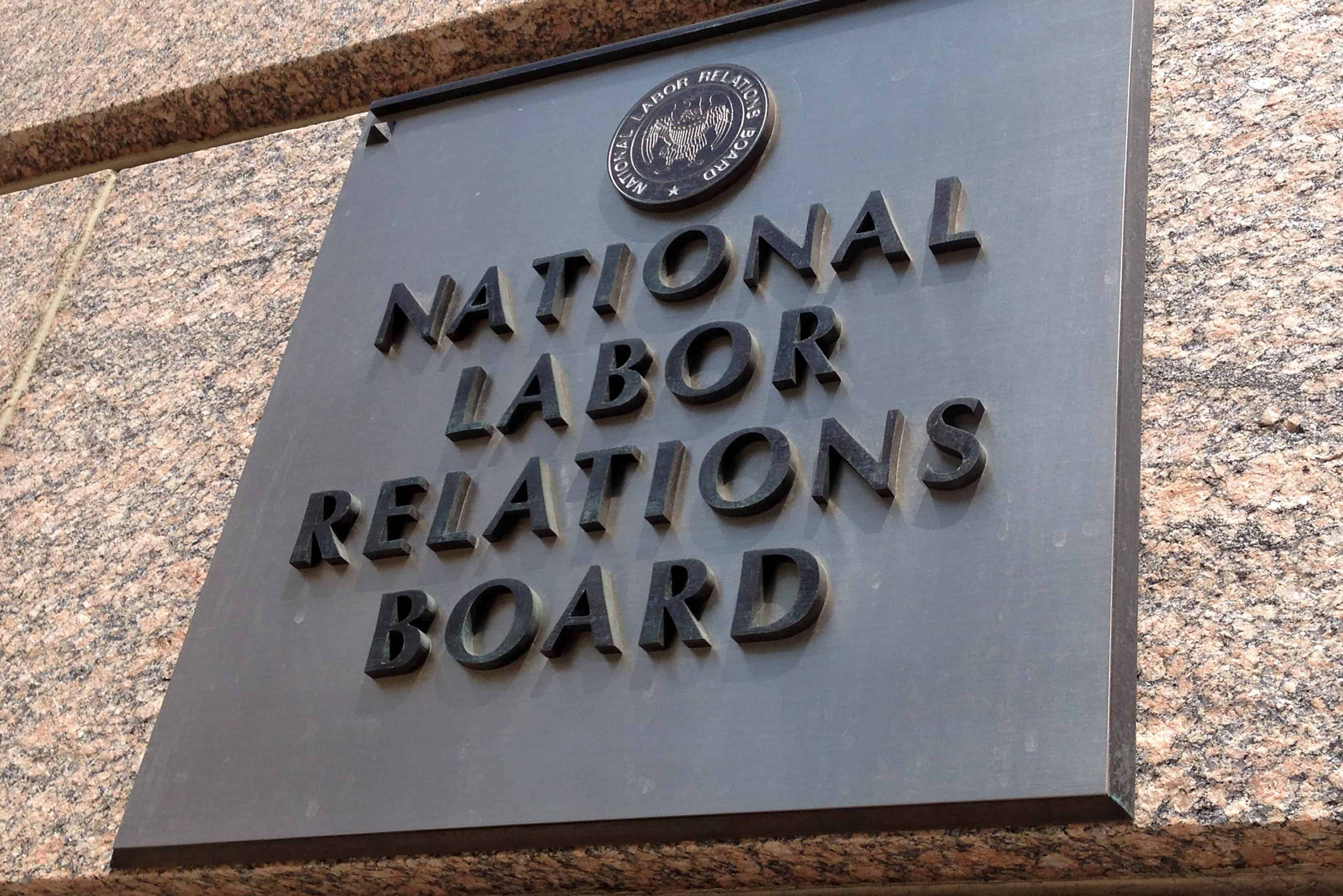
As labor lawyers brace for the Supreme Court to issue the “death blow” to the NLRB as an independent agency, former chair Lauren McFerran makes the case for a response that would best “salvage the administration of federal labor law” in the short term: inserting a private right of action into the NLRA. A private right of action would empower workers to enforce the NLRA themselves by taking their cases directly to federal court, skipping over the Board entirely. McFerran urges advocates to seize the “legislative moment” opened up by this crisis to push a “targeted and politically feasible proposal.” If Congress won’t pass the whole PRO Act, maybe it will pass this one provision. After all, private rights of action are a routine part of many employment laws and adding one would not controversially change “the substance of the NLRA’s protections.” And as McFerran lays out, this tweak could also create surprising new efficiencies in the administration of federal labor law that should appeal to lawmakers on both sides of the aisle.
Law360 reports that the Eleventh Circuit has added to the growing list of judicial decisions treating the McDonnell Douglas burden shifting framework as a punching bag. As I wrote in June, the real import of the Supreme Court’s decision in Ames v. Ohio Department of Youth Services may lie in the concurrence openly challenging McDonnell Douglas. Last month, I noted that two circuit courts have responded by relaxing the framework’s third step (where the employee must show pretext) at summary judgment. Now, the Eleventh Circuit (which employed the “convincing mosaic” standard even before Ames) has, in its own words, “take[n] one more swing at the McDonnell Douglas game of whack-a-mole,” calling the framework “not all it’s cracked up to be.” In the case, Ismael v. Roundtree, sheriff’s deputy Ahmed Ismael was fired a mere eight days after complaining about his supervisor’s Islamophobic harassment. Despite the clear inference of retaliation, the district court threw out the case at summary judgment because Ismael could not show pretext. The Eleventh Circuit said this was error: “[A] plaintiff’s inability to disprove the defendant’s rationale cannot be the sole grounds for summary judgment.” Under the convincing mosaic standard, “[t]he court should [have] ask[ed] whether Ismael’s circumstantial evidence, when artfully adhered together and viewed as one, allows a reasonable juror to envision an image of retaliation and find in Ismael’s favor.”
Finally, Bloomberg notes congressional efforts to update the Worker Adjustment and Retraining Notification (WARN) Act to reflect the current moment. The 1988 Act requires companies with more than 100 employees to give workers 60 days’ notice for layoffs affecting 50 workers at a single worksite. Today, the Act has shown its limitations. It doesn’t adequately protect remote workers and tech workers, and noncompliance is common because the Act lacks effective enforcement mechanisms. The newly proposed Fair Warning Act would require 90 days’ notice for employers with 50 or more employees and beef up enforcement by adding greater penalties. Not waiting on Congress to act, individual states have already updated their “mini-WARN Acts” in creative ways, such as requiring disclosure when layoffs are caused by AI (New York) and mandating severance for the affected workers (Hawaii, Maine, and New Jersey).


Daily News & Commentary
Start your day with our roundup of the latest labor developments. See all
April 9
California labor backs state antitrust reform; USMCA Panel finds labor rights violations in Mexican Mine, and UPS agrees to cap driver buyout offers in settlement with Teamsters.
April 8
The Writers Guild of America reaches a tentative deal with the Alliance of Motion Picture and Television Producers; the EEOC recovers almost $660 million in compensation for employment discrimination in 2025; and highly-skilled foreign workers consider leaving the United States in light of changes to the H-1B visa program.
April 7
WGA reaches deal with studios; meatpacking strike brings employer back to table; union leaders take on AI.
April 6
Trump to shrink but not eliminate CFPB, 9th Circuit nixes use of issue preclusion to invalidate arbitration agreements.
April 5
Trump proposes DOL budget cuts; NLRB rules in favor of cannabis employees; Florida warehouse workers unanimously authorize strike.
April 3
NLRB says Amazon failed to bargain with union; Harvard graduate workers authorize strike, and states move to preempt local employment law.