
Justin Cassera is a student at Harvard Law School.
In today’s news and commentary, President Trump fires the head of the Bureau of Labor Statistics and Boeing workers go on strike.
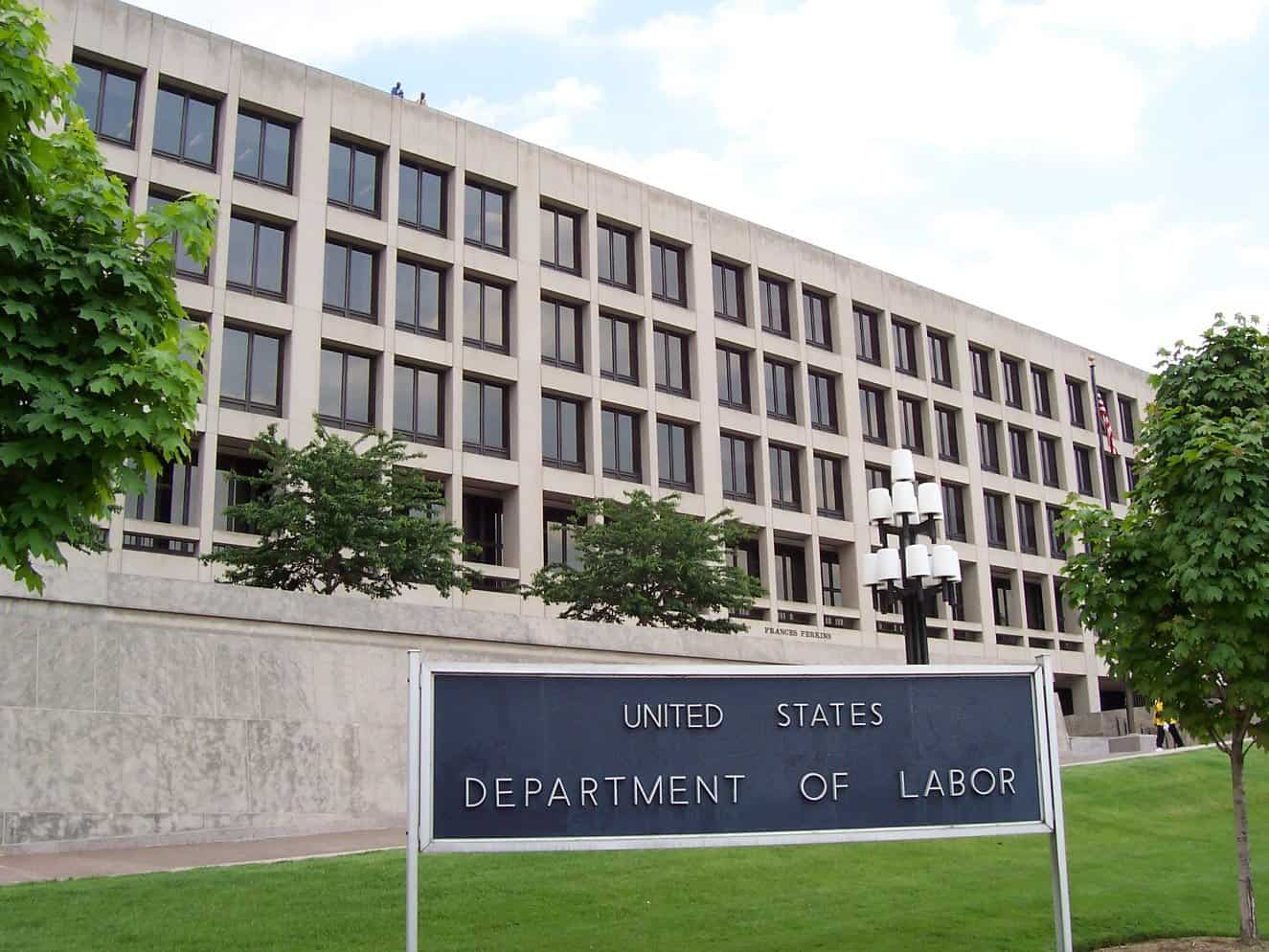
On Friday, President Trump fired the commissioner of the Bureau of Labor Statistics (BLS), Dr. Erika McEntarfer. Part of the Department of Labor, the BLS reported Friday that the economy added a paltry 73,000 jobs in July. The report also revised job gains from the previous two months down by 258,000, a significant underperformance that shocked many investors. While revisions are common, this was a surprisingly large correction. Trump took to Truth Social shortly after the report was released, stating, “I have directed my Team to fire this Biden Political Appointee, IMMEDIATELY.” A number of economists and former BLS commissioners, including a Trump appointee, condemned the firing: the “rationale for firing Dr. McEntarfer is without merit and undermines the credibility of federal economic statistics that are a cornerstone of intelligent economic decision-making by businesses, families, and policymakers.” The move comes despite zero evidence of political influence in the report.
Job growth in recent months has been almost entirely driven by the healthcare sector, which continues to grow as the nation’s population ages and requires more care. Other industries, like manufacturing and the federal workforce, each lost over 10,000 jobs in July. The report and revisions make this the worst three months of job growth since the pandemic. Slow job growth, in connection with a slight increase in the unemployment rate, signals that “cracks in the labor market are deepening” as President Trump’s “economic policies take hold.” The jobs report will likely increase pressure on the Federal Reserve to cut rates despite leader Jerome Powell’s recent descriptions of the labor market as “solid.”
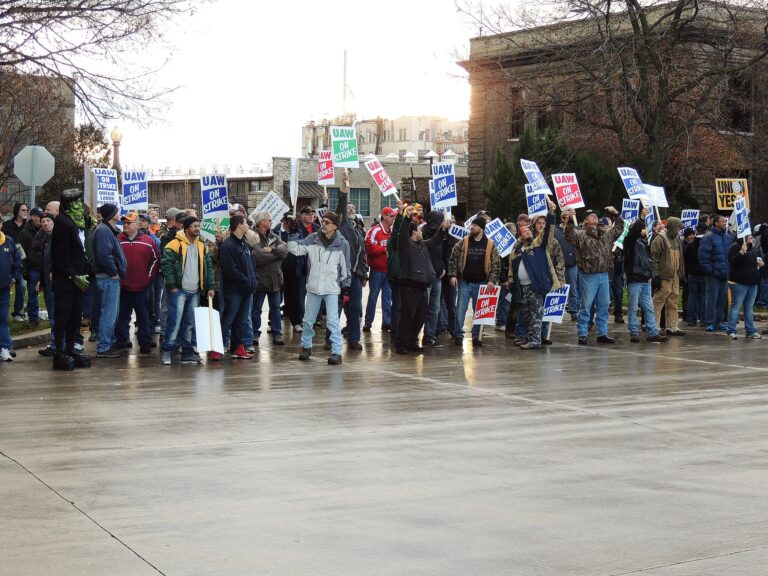
On Sunday, roughly 3,200 unionized workers at Boeing authorized a strike after failing to agree with management to terms on a new contract. The workers are located throughout weapons manufacturing facilities in Missouri and Illinois. Earlier in the day, the workers rejected an offer that would have boosted wages by nearly 20% and retirement contributions, too. Despite these increases, union leader Sam Cicinelli said the workers would continue to hold out for a “contract that keeps their families secure and recognizes their unmatched expertise.” The workers enjoy a strong bargaining position in negotiations as Boeing’s defense and space division generates over a third of the company’s revenue. The action, organized by the International Association of Machinists and Aerospace Workers District 837 , will be the first strike for the company’s defense hub in almost thirty years.




Daily News & Commentary
Start your day with our roundup of the latest labor developments. See all
March 12
EPA terminates contract with second-largest union; Florida advances bill restricting public sector unions; Trump administration seeks Supreme Court assistance in TPS termination.
March 11
The partial government shutdown results in TSA agents losing their first full paycheck; the Fifth Circuit upholds the certification of a class of former United Airline workers who were placed on unpaid leave for declining to receive the COVID-19 vaccine for religious reasons during the pandemic; and an academic group files a lawsuit against the State Department over a policy that revokes and denies visas to noncitizens for their work in fact-checking and content moderation.
March 10
Court rules Kari Lake unlawfully led USAGM, voiding mass layoffs; Florida Senate passes bill tightening union recertification rules; Fifth Circuit revives whistleblower suit against Lockheed Martin.
March 9
6th Circuit rejects Cemex, Board may overrule precedents with two members.
March 8
In today’s news and commentary, a weak jobs report, the NIH decides it will no longer recognize a research fellows’ union, and WNBA contract talks continue to stall as season approaches. On Friday, the Labor Department reported that employers cut 92,000 jobs in February while the unemployment rate rose slightly to 4.4 percent. A loss […]
March 6
The Harvard Graduate Students Union announces a strike authorization vote.