
Andrew Strom is the Legal and Policy Director for the American Guild of Musical Artists (AGMA), and has been contributing to OnLabor since 2014. The views he expresses on this blog are his personal opinions and should not be attributed to AGMA.
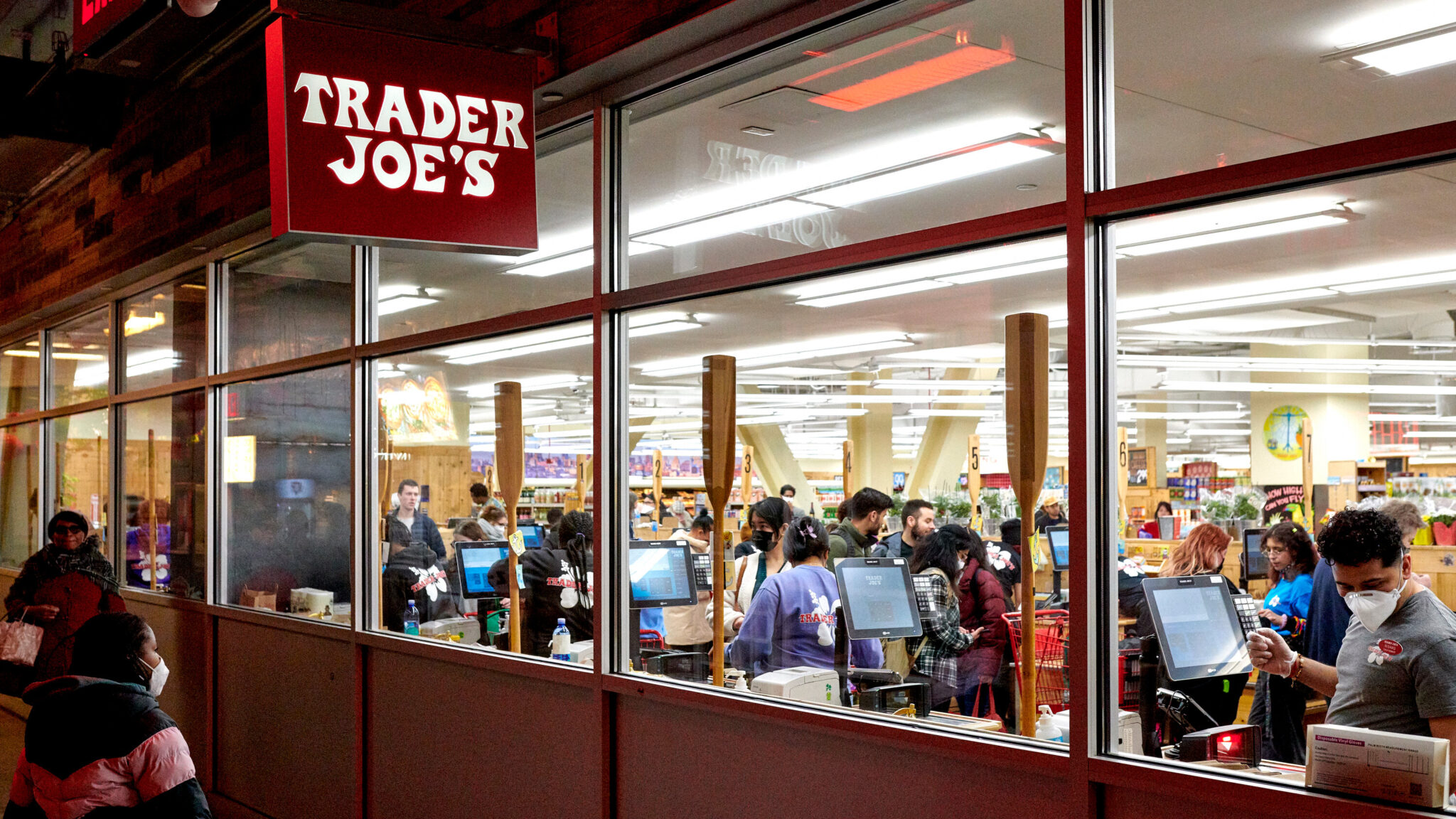
When workers at Trader Joe’s formed a union, they called themselves Trader Joe’s United (“TJU”), and they adopted a logo of a raised fist holding a box cutter. The fledgling union began selling merchandise on its website featuring the union’s logo. One item the union sold was a tote bag. Trader Joe’s sued the union, claiming a violation of trademark law. The corporation’s theory was that potential customers might stumble upon the TJU website, and inadvertently purchase a tote bag with the raised fist logo thinking that they were actually buying a corporate tote bag. The district court judge practically laughed Trader Joe’s out of court, but inexplicably, a Ninth Circuit panel found that, at a minimum, the union must suffer through an expensive round of discovery before it can get the case thrown out.
Trademark law serves a valid purpose. As the Supreme Court has explained, a trademark tells the public who is responsible for a product, and it “quickly and easily assures a potential customer that this item — the item with this mark — is made by the same producer as other similarly marked items that he or she liked (or disliked) in the past.” In other words, you want to know, before you make the purchase, whether the cola drink you are buying is actually Coca-Cola.
To prevail in a trademark infringement lawsuit, the mark holder must establish that the defendant’s use is “likely to cause confusion, or to cause mistake, or to deceive.” Here, Trader Joe’s had to show that individuals who went to the union’s website — the only place you could purchase the union tote bag — were likely to be confused about whether they were buying a union tote bag or a corporate tote bag. The district court pointed out that the union’s website contains a “.org” extension, which is one clue that it is not the supermarket chain’s website, and the union’s website is also openly critical of Trader Joe’s labor policies, not something you would expect to see on the company’s own website.
And then there is the image of the raised fist holding a box cutter. The district court accurately described the raised fist as “widely recognized as a symbol of labor, social, and political movements.” Yet, somehow the Ninth Circuit panel thought that the public might view a raised fist holding a box cutter as just another symbol of Corporate America. Based on nothing but its own intuition, the court concluded that “how a reasonable consumer might interpret the image of a raised fist holding a boxcutter is a question of fact that cannot be resolved at the pleading stage.” This means that to prevail in this lawsuit, the union likely has to commission an expensive survey of potential Trader Joe’s customers to ask them whether they think the raised fist holding a box cutter looks like a corporate logo.
To rule for Trader Joe’s, the Ninth Circuit panel marched through an eight factor test. The court found that three factors favored Trader Joe’s — the strength of its mark, the relatedness of the goods, and the similarity of the marks. The court found that TJU’s mark was “strikingly similar” to Trader Joe’s mark because both used red capital letters within concentric circles. But TJU used a noticeably different font, and most importantly, Trader Joe’s has a fruit basket rather than a raised fist holding a box cutter inside its concentric circles. The district court described the similarity of the two designs as “negligible.” Sure, the TJU logo nods to the Trader Joe’s logo — it’s not a coincidence that TJU used a circle rather than a square, or that it used red capital letters. Those elements are just enough to signal that “Trader Joe’s United” refers to workers at the supermarket chain. But, no one would confuse the two logos.
The remaining five factors are: evidence of actual confusion; marketing channels used; type of goods and the degree of care likely to be exercised by the purchaser; the defendant’s intent in selecting the mark; and likelihood of expansion of the product lines. The Ninth Circuit held that each of these factors was neutral. Trader Joe’s did not allege actual confusion. As for marketing channels, the district court found this weighed in the union’s favor because Trader Joe’s only sells its products in stores, while TJU sold the tote bags on its website. Regarding the degree of care likely to be exercised by the purchaser, courts have found that the less expensive the goods, the less likely a buyer is to exercise care in purchasing the products. Here, TJU was selling the tote bags for $32. The district court concluded that a reasonable consumer exercising ordinary care would not be confused. Between the .org extension, the content critical of Trader Joe’s labor practices, and the “About Us” page, the district court found it was not plausible that consumers buying a TJU tote bag would mistakenly believe they were buying from Trader Joe’s. But, the Ninth Circuit apparently wants the union to introduce evidence that people who bought the tote bags read the “About Us” page before making their purchase.
The district court appropriately viewed Trader Joe’s lawsuit as another weapon in its fight against the union. According to a brief filed by a group of trademark law professors in a recent Supreme Court case, even the most basic consumer survey in a trademark lawsuit costs hundreds of thousands of dollars. If the union had deeper pockets, it could just give away the tote bags, but it’s easy to see why the tote bags are an effective tool for the union. By using the union tote bags, Trader Joe’s customers can show both workers and management that they support the workers’ unionization efforts. And supporters can re-use their bag every time they go to the store. Maybe Trader Joe’s genuinely thinks its customers are clueless, but it’s hard for me to believe that Trader Joe’s is actually worried that the bags are likely to cause confusion, mistake, or deception. Instead, this seems like just another heavy-handed anti-union tactic. It’s too bad that the Ninth Circuit gave it the green light.






Daily News & Commentary
Start your day with our roundup of the latest labor developments. See all
October 16
Department of Labor reduces wage-and-hour enforcement at unionized workplaces; Fain's victory poses question of federal monitor's extension.
October 15
New reporting examines the rollback of child labor protections; California tries to block a strike; NLRB charges Wisconsin mental health provider with firing workers during union drive.
October 14
Eleventh Circuit overturns ERISA exhaustion rule; DHS finalizes removal of automatic renewal for work permits; AFGE challenges SSA over flexible scheduling policy.
October 13
Chicago hotel workers remain on strike; a coalition of Democratic states sues the Labor Department over canceled unemployment insurance grants; the Federal Labor Relations Authority establishes a new mediation framework for federal worker disputes.
October 12
Workers at the Obama Foundation begin organizing; MLB submits its latest collective bargaining agreement proposal; Brigham & Women's nurses postpone strike.
October 11
UAW President Shawn Fain succeeds in his reelection bid, and Spanish unions call for a general strike.