
Kaitlin Knocke is a student at Harvard Law School.
In today’s news and commentary, California labor backs state antitrust reform, USMCA Panel finds labor rights violations in Mexican Mine, and UPS agrees to cap their driver buyout offers in their settlement with Teamsters.
On Tuesday, AB 1776 received its first hearing before the California Assembly Judiciary Committee. The bill, also known as the Competition and Opportunity in Markets for a Prosperous, Equitable and Transparent Economy (COMPETE) Act, marks a major effort to expand antitrust policy in California. It would amend the Cartwright Act, California’s principal antitrust law enacted in 1907, to target anticompetitive behavior by two or more companies, as well as cover restraints of trade by individual companies. Although the bill is framed around lowering consumer costs, it has drawn strong support from major labor organizations across California. The California Federation of Labor Unions signed on in support, emphasizing anticompetitive conduct’s impact on workers: “Under corporate dominance, workers bear a double burden. Monopolistic companies pay lower wages and raise prices for basic goods, hitting workers’ pocketbooks twice.” At a rally to launch the COMPETE Act last month, United Food & Commercial Workers (UFCW) Local 1428 President Mark Ramos echoed the Federation’s message: “Consolidation and a lack of competition… across all industries, enable employers to suppress workers and their wages… Consumers deserve to have more choice while still being able to provide for their families and put food on the table. Workers deserve to see their paychecks grow. They deserve to prosper just as their employers have prospered.” This bill and its labor support reflect a broader trend toward integrating antitrust and labor policy.
A separate development highlights ongoing labor rights concerns abroad. The Rapid Response Labor Mechanism, created under the United States-Mexico-Canada Agreement (USMCA), found that workers at the Camino Rojo mine in Zacatecas, Mexico were denied their labor rights in a report made public two weeks ago. According to the panel, Camino Rojo interfered with workers’ labor rights by pushing the mine’s preferred union, Minas, over the workers’ then-incumbent union, Los Mineros, and by engaging in coercion, physical violence, and psychological intimidation, including threats of dismissal. Representatives of Los Mineros celebrated the ruling and discussed the violations, which they allege date back to June 2024, on their podcast, “La Voz Minera.” One of the hosts stated: “[Minas] even broke into their homes to make threats and to tell them to forget about their union…In this case, Mexico lost but its workers won.” [translated from Spanish]. The panel recommended remedies including a public apology, a commitment by management to respect freedom of association and promote workers’ rights, reinstatement and compensation for affected workers, and additional security measures for union representatives accessing the mine.
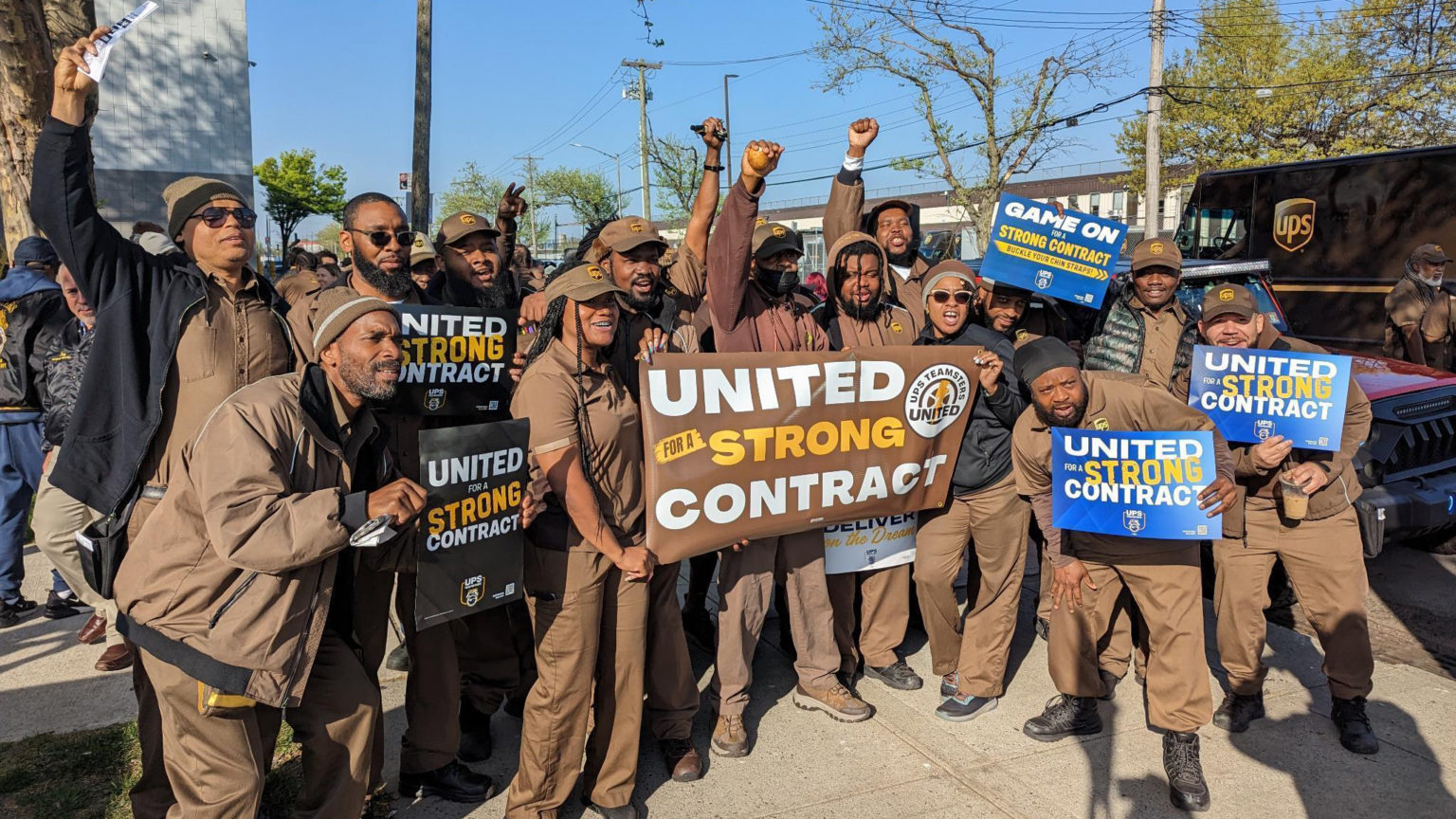
Finally, UPS has agreed to limit its buyout program to 7,500 drivers nationwide as part of its settlement with Teamsters. The union previously sued UPS in February over the buyout program, which is tied to UPS’s broader goal to cut 30,000 jobs this year, as Miriam reported two weeks ago. Under the agreement, buyout offers will be made to long-haul feeder drivers and Regular Package Car Drivers based on seniority, with those who accept receiving $150,000 in early retirement payments. Responding to the settlement, Teamsters General President Sean O’Brien emphasized the workforce’s contributions to UPS’s success: “Rank-and-file Teamsters have given their blood, sweat, tears and, most importantly, their labor to ensure UPS’s success for a century. This agreement is a powerful reminder to UPS executives that the Teamsters never want to harm the company’s ability to be competitive, but we will also never tolerate any violations of our contract or our member’s rights.”

Daily News & Commentary
Start your day with our roundup of the latest labor developments. See all
April 9
California labor backs state antitrust reform; USMCA Panel finds labor rights violations in Mexican Mine, and UPS agrees to cap driver buyout offers in settlement with Teamsters.
April 8
The Writers Guild of America reaches a tentative deal with the Alliance of Motion Picture and Television Producers; the EEOC recovers almost $660 million in compensation for employment discrimination in 2025; and highly-skilled foreign workers consider leaving the United States in light of changes to the H-1B visa program.
April 7
WGA reaches deal with studios; meatpacking strike brings employer back to table; union leaders take on AI.
April 6
Trump to shrink but not eliminate CFPB, 9th Circuit nixes use of issue preclusion to invalidate arbitration agreements.
April 5
Trump proposes DOL budget cuts; NLRB rules in favor of cannabis employees; Florida warehouse workers unanimously authorize strike.
April 3
NLRB says Amazon failed to bargain with union; Harvard graduate workers authorize strike, and states move to preempt local employment law.