
Anjali Katta is a student at Harvard Law School.
In today’s news and commentary, Aramark workers at Philly stadiums reach tentative agreement, Crystal Carey is poised to take general counsel at NLRB, President Trump’s nominees for key DOL positions, and the National Treasury Employees Union sues the Trump administration.
UNITE HERE Local 274, which represents thousands of food service workers in the Philadelphia region, announced that they reached a tentative agreement with Aramark for a new set of contracts with food service workers at three stadiums. The new 6-year contracts increase the wage floor to $20 dollars an hour for non-tipped workers, expand health care coverage and benefits, and increase the number of paid holidays. Aramark and UNITE HERE reached agreement after almost a year of negotiations which included a four-day strike last fall. Notably, the contracts will be in effect through the 2026 FIFA World Cup, which will feature games that take place at one of the three stadiums represented by the contracts.
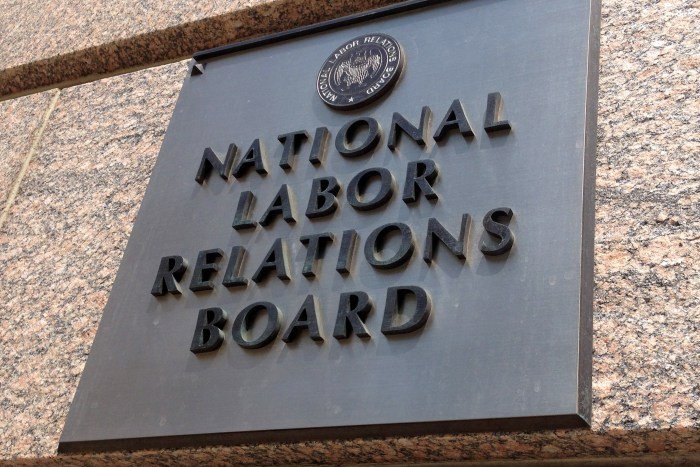
President Trump nominated Crystal Carey to serve as the general counsel of the NLRB. Carey is currently a partner at the management-side law firm Morgan, Lewis & Bockius LLP. Carey’s nomination fits within President Trump’s push to staff the NLRB with pro-employer members. Carey has worked at the NLRB for over eight years and has been a vocal critic of recent decisions issued under the Biden-era NLRB. Some unions, including the Teamsters, have vocally opposed the nomination.
The Trump administration has made their nominations to fill key positions within the Department of Labor (DOL). Andrew Rogers, EEOC’s acting general counsel, was nominated to head the DOL’s Wage and Hour division. Jonathan Berry, a partner at Boyden Gray PLLC, was nominated for labor solicitor. Both Berry and Rogers previously worked under the first Trump administration. In addition, President Trump nominated David Castillo as the DOL’s chief financial officer and Anthony D’Esposito as the agency’s inspector general.
In response to President Trump’s lawsuit against the National Treasury Employees Union (NTEU), the NTEU has filed its own lawsuit against the Trump administration. As described by Justin, the Trump administration’s lawsuit seeks to void collective bargaining agreements by referencing an executive order directing agencies to end collective bargaining with federal workers and citing to national security concerns. The NTEU’s lawsuit argues that the executive order exceeds the President’s authority and violates the law. Specifically, lawsuit alleges that the executive order contradicts the Federal Labor Relations Act (FLRA), which affirmatively allows federal workers to form unions and collectively bargain with their employers. NTEU’s lawsuit marks an escalation in the struggle between federal workers, their representatives, and the administration.



Daily News & Commentary
Start your day with our roundup of the latest labor developments. See all
October 11
UAW President Shawn Fain succeeds in his reelection bid, and Spanish unions call for a general strike.
October 9
DHS proposes a $100k fee for the foreign grad employment program; Trump suspends tech company access to green card program; and private equity perpetuates poor working conditions for home care workers.
October 8
NLRB judge finds UPS unlawfully restricted union insignia; Harvard graduate workers authorize second strike; OSHA orders Union Pacific to pay $300,000 in damages in whistleblower case.
October 7
DOL scraps plan to remove decades-old wage-and-hour guidance from federal regulations; New York enacts personnel records access law; Starbucks loses bid to dismiss Workers United trademark suit.
October 6
Protect College Sports Act dampens athlete unionization outlook; Stanford RA union decides to withdraw petition
October 5
Delaware bans captive audience meetings; EEOC settles remote work national origin discrimination claim; First Circuit stays enforcement order in VA's dispute with AFGE.