
Philippa Marks is a student at Harvard Law School.
In today’s news and commentary, the produce supplier connected to the current cyclospora outbreak is facing renewed concern over its labor practices, and a bipartisan bill to accelerate labor contracts gains momentum.
Taylor Farms, the produce supplier under scrutiny over the latest cyclospora outbreak, is facing renewed criticism over its use of state prison labor, which could include labor from incarcerated undocumented individuals. A 2023 report by Prison Legal News found that Taylor Farms was one of several Arizona companies that contracted labor from Arizona’s Department of Corrections, Rehabilitation, and Reentry (DCRR) through Arizona Correctional Industries. The report counted 26 DCRR prisoners with detainers filed by federal Immigration and Customs Enforcement (ICE). The detainers render them ineligible for employment in the U.S., and a 2007 state law makes any potential employer criminally liable for failure to check their work eligibility – though importantly the law exempts employers renting prison labor from DCRR or its for-profit subsidiary. This means that state law permits the forced labor of prisoners who would otherwise be unable eligible for work in the state. The resurfaced reporting highlights how companies can benefit from the Constitution’s own exception to its ban on slavery and forced labor in the context of incarcerated people.
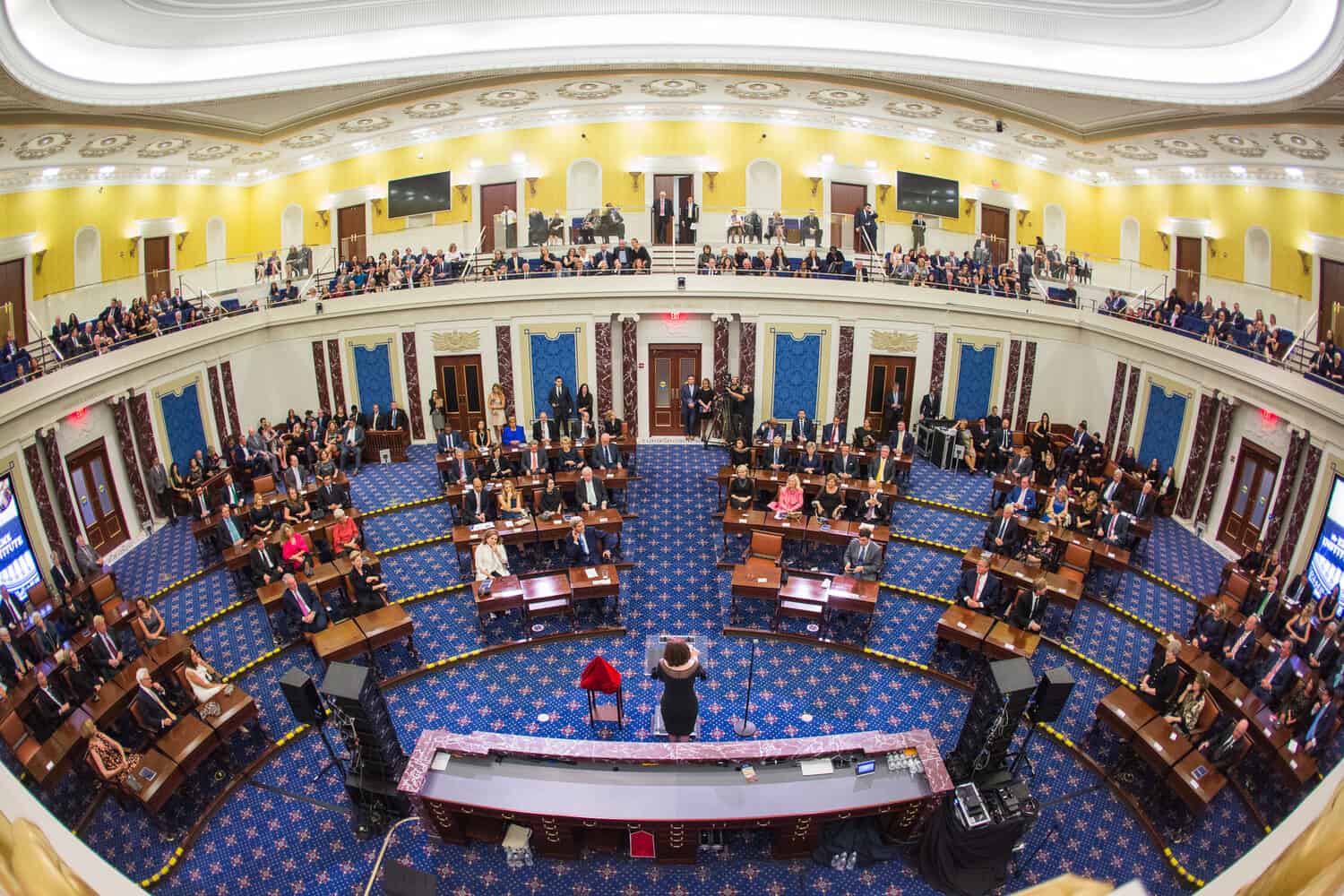
In early June, the House passed the Faster Labor Contracts Act, with 20 Republicans crossing party lines to support it. Should the Senate follow suit, the bill, backed by unions, would set firm deadlines for contract negotiations and require binding arbitration if no deal is reached within 120 days. While the bill is likely to stall in the Senate, its bipartisan support in the House points to a rising number of Republican lawmakers willing to side with organized labor. Senator Josh Hawley, who introduced the Senate version of the bill, reported that there have been discussions of the bill in the Senate labor committee, and he hopes to get a vote. Business groups including the Chamber of Commerce voiced loud opposition to the bill, arguing that the timelines set in the bill are unrealistic and could lead to an influx of expensive and uncertain arbitration.




Daily News & Commentary
Start your day with our roundup of the latest labor developments. See all
October 7
DOL scraps plan to remove decades-old wage-and-hour guidance from federal regulations; New York enacts personnel records access law; Starbucks loses bid to dismiss Workers United trademark suit.
October 6
Protect College Sports Act dampens athlete unionization outlook; Stanford RA union decides to withdraw petition
October 5
Delaware bans captive audience meetings; EEOC settles remote work national origin discrimination claim; First Circuit stays enforcement order in VA's dispute with AFGE.
October 4
Boston nurses announce open-ended strike; federal judge restores federal prison workers' union protections; St. Louis workers form the first movie theater union in Missouri.
October 2
Gov. Newsom signs bill regulating AI in workplace; federal judge blocks Trump's $100,000 H-1B visa fee.
October 1
Senate confirms Keith Sonderling as Labor Secretary; Amazon warehouse workers launch an unfair labor practice strike.